Monday, May 22, 2024

State Grid Launches 2026 Secondary Substation Equipment Tender
by
Published
Views:
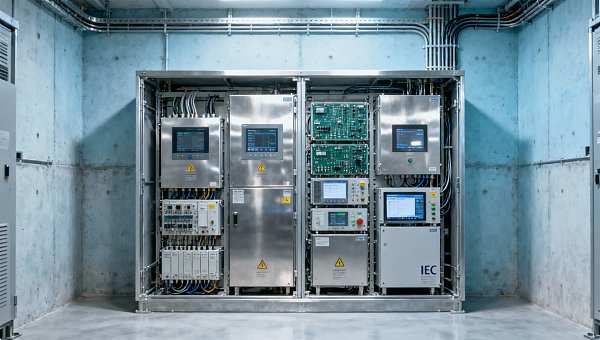
On May 4, 2026, State Grid Corporation of China launched its first centralized tender for secondary substation equipment in 2026, with a total procurement value of RMB 1.84 billion. The tender focuses on intelligent grid components and equipment supporting carbon capture integration — specifically smart monitoring & control terminals compatible with carbon capture modules, high-precision SMT-based measurement units, and edge computing gateways compliant with IEC 61850-90-15. Overseas suppliers holding both CNAS and KEMA certifications are eligible to bid as part of joint ventures. This development is particularly relevant to manufacturers of intelligent substation hardware, edge computing infrastructure providers, precision sensor developers, and international electrical equipment exporters serving China’s power sector.
Event Overview
On May 4, 2026, State Grid Corporation of China issued the official tender announcement for its 2026 First Batch of Centralized Procurement of Secondary Substation Equipment. The total budgeted amount is RMB 1.84 billion. Key technical requirements include: (1) smart monitoring and control terminals capable of integrating with carbon capture systems; (2) high-precision SMT-based measurement units; and (3) edge computing gateways conforming to IEC 61850-90-15. Eligibility for overseas bidders is conditional upon holding both CNAS (China National Accreditation Service) and KEMA (now part of DNV) certifications, and participation must occur via consortium bidding.
Industries Affected by This Tender
Intelligent Substation Equipment Manufacturers
These firms supply core secondary devices such as protection relays, merging units, and intelligent electronic devices (IEDs). The tender explicitly prioritizes interoperability with carbon capture modules and compliance with IEC 61850-90-15 — a specialized extension for distributed energy resource integration. As a result, manufacturers must verify whether their current product lines meet these functional and certification requirements, especially regarding real-time data synchronization and low-latency edge processing capabilities.
Edge Computing Hardware Providers
Vendors specializing in industrial-grade edge gateways face direct demand pressure. The specification for IEC 61850-90-15–compliant gateways implies requirements beyond generic IoT edge boxes — including deterministic time-stamping, GOOSE/SV message handling, and secure firmware update mechanisms. Firms without prior experience in power automation protocols may find qualification timelines tight, given the tender’s defined technical evaluation criteria.
Precision Sensor & Measurement Module Developers
The emphasis on “high-precision SMT-based measurement units” signals tightening accuracy thresholds — likely targeting sub-0.1% class instrumentation for voltage, current, and phase-angle sensing under dynamic load conditions. Suppliers focused on consumer or general industrial sensors may lack the metrological traceability or environmental robustness required for substation deployment, making alignment with national calibration standards (e.g., JJG 1021) increasingly critical.
International Electrical Equipment Exporters
Overseas vendors are permitted to participate only through joint ventures with Chinese entities — and only if they hold dual CNAS + KEMA accreditation. This condition effectively narrows the pool to Tier-1 global players with long-standing presence in China’s certified testing ecosystem. Smaller or regionally focused exporters lacking either certification will need to assess feasibility of partnership formation versus market exit from this specific tender cycle.
What Relevant Enterprises or Practitioners Should Focus On Now
Monitor Official Clarifications and Technical Addenda
State Grid often issues supplementary notices (e.g., Q&A documents, clarification letters) within 7–14 days after tender release. Interested bidders should track the official e-procurement platform daily for updates on interface specifications, test report formats, or documentation requirements related to carbon capture module integration — which remain undefined in the initial notice.
Validate Certification Status Against Tender Requirements
For overseas suppliers: confirm active validity of both CNAS and KEMA accreditations *specifically* for the device categories listed (e.g., edge gateway testing scope must cover IEC 61850-90-15 conformance, not just general EMC or safety). For domestic manufacturers: ensure existing type-test reports reference the latest version of IEC 61850-90-15 (2022 edition), not earlier drafts.
Distinguish Between Policy Signal and Immediate Procurement Scope
This tender covers only secondary equipment — not primary carbon capture hardware or full-system integration services. While it reflects State Grid’s strategic alignment with decarbonization goals, it does not imply near-term rollout of utility-scale carbon capture at substations. Companies should avoid overextending R&D or marketing efforts beyond the defined device-level scope.
Prepare Consortium Agreements and Documentation Early
Joint venture submissions require legally binding agreements outlining roles, liability, IP ownership, and delivery responsibility — all subject to prequalification review. Firms planning consortium bids should initiate internal legal and technical alignment at least three weeks before the bid deadline to accommodate verification cycles for shared test reports and certification copies.
Editorial Perspective / Industry Observation
Observably, this tender functions primarily as a technical signal rather than an immediate commercial inflection point. Its significance lies not in volume alone (RMB 1.84 billion represents ~3.5% of State Grid’s annual secondary equipment spend), but in the explicit coupling of grid automation upgrades with carbon capture readiness — a novel linkage in public procurement language. Analysis shows that IEC 61850-90-15 has seen limited field deployment outside pilot projects; its inclusion here suggests State Grid is institutionalizing interoperability standards ahead of broader carbon capture infrastructure scaling. From an industry perspective, this is better understood as a forward-looking specification anchor — one that sets benchmarks for future tenders, but whose operational impact depends heavily on subsequent policy implementation and pilot validation outcomes.
Conclusion: This tender marks a deliberate step toward embedding carbon-aware functionality into grid-edge intelligence layers. It does not signify immediate large-scale deployment of carbon capture at substations, nor does it alter fundamental procurement rules for primary equipment. Rather, it signals growing technical specificity in State Grid’s digitalization roadmap — where interoperability, certification rigor, and domain-specific protocol compliance now serve as de facto entry barriers. Current interpretation should emphasize standard-setting intent over short-term revenue opportunity.
Source: State Grid Corporation of China, “2026 First Batch Centralized Tender Announcement for Secondary Substation Equipment”, issued May 4, 2026. Note: Tender documents, technical appendices, and bidder clarifications remain subject to official updates; ongoing monitoring is recommended.
The Archive Newsletter
Critical industrial intelligence delivered every Tuesday. Peer-reviewed summaries of the week's most impactful logistics and market shifts.