Monday, May 22, 2024

UL Rule Tightens SMT Calibration Access in China
by
Published
Views:
The timing of the underlying market response is not clearly specified in the available information, but the issue now drawing attention is clear: after the mandatory implementation of ISO 17025:2023+A1, China’s shortage of third-party laboratories with full SMT Precision Metrics calibration qualifications is starting to affect documentation acceptance, incoming material control, and supplier access in electronics manufacturing. For EMS companies, PCBA suppliers, testing providers, and export-oriented manufacturers, this matters because the change is no longer limited to laboratory capability; it is already reaching procurement and delivery decisions tied to customer acceptance in Europe and the United States.
What the white paper confirms
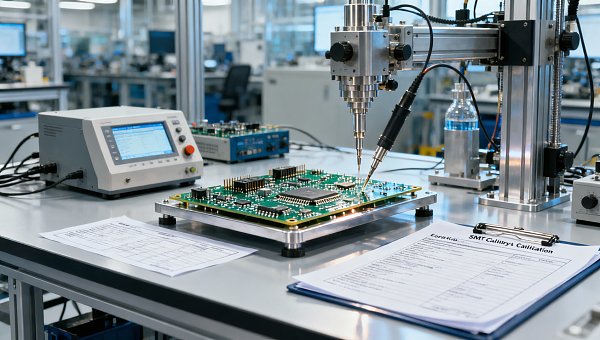
According to the Asia-Pacific SMT Calibration Capability White Paper released by UL Solutions on July 13, 2026, the mandatory implementation of ISO 17025:2023+A1 has directly affected qualification coverage in China for full-scope SMT Precision Metrics calibration services.
The white paper states that only 127 CNAS laboratories in China hold full qualification for SMT Precision Metrics calibration, accounting for 36.8% of the industry total.
It also states that SPC reports issued by laboratories without the required certification will not be accepted by customers in Europe and the United States.
Based on the same summary, several EMS manufacturers have already suspended acceptance of PCBA incoming materials from non-certified suppliers.
Where the pressure is likely to appear first
Supplier entry is moving closer to certification review
From an industry perspective, suppliers of PCBA and related manufacturing services may be affected first because the acceptance of SPC documentation is tied directly to whether the laboratory behind the calibration work holds the required qualification. The immediate business impact is likely to show up in supplier onboarding, customer audits, and incoming material approval, where certification status may become a practical gate rather than a background quality item.
EMS operations face stricter incoming material decisions
For EMS manufacturers, the reported suspension of PCBA receipts from non-certified suppliers suggests that calibration qualification is beginning to influence execution on the factory side. What deserves closer attention is the connection between laboratory status and operational continuity: if supporting SPC records are not accepted by end customers, incoming inspection, production scheduling, and shipment release may all face delays or revalidation requirements.
Testing and calibration providers may see compliance screening intensify
For third-party laboratories and related testing service providers, the issue is not only market demand but document credibility in downstream trade and delivery chains. If customers in Europe and the United States reject SPC reports from non-certified laboratories, service providers may face sharper scrutiny in tenders, technical document reviews, and qualification checks from manufacturers and buyers.
Export-facing manufacturers need to watch customer-side document rules
For exporters and manufacturers serving overseas brands or contract buyers, the rule change matters because report acceptance is now linked to external customer requirements rather than only internal quality systems. In practical terms, calibration source, report validity, and supporting qualification evidence may become part of shipment readiness and customer approval workflows.
What companies should review now
Check whether current reports remain commercially usable
Analysis shows that companies should first review whether their existing SMT Precision Metrics calibration and SPC documentation is supported by laboratories with the required qualification. The main question is not only whether testing has been completed, but whether the resulting documents remain acceptable to customers and buyers in the target market.
Recheck supplier qualification files and procurement conditions
Observably, procurement teams and quality managers should pay closer attention to supplier qualification files, especially where PCBA sourcing depends on third-party calibration evidence. Where contracts, vendor lists, or technical bid packages rely on SPC reports, companies should examine whether certification status has become an implied or explicit prerequisite for continued supply.
Prepare for longer lead times around compliant calibration capacity
Analysis shows that the reported shortage of fully qualified laboratories may translate into tighter access to compliant calibration services. While the available information does not define execution timelines, companies should closely watch whether booking cycles, document turnaround, or requalification schedules start affecting delivery commitments.
Track changes in customer wording and acceptance criteria
What deserves closer attention is not only the standard itself, but how it appears in customer specifications, audit requests, and tender documents. If overseas buyers or EMS customers begin formalizing laboratory qualification requirements in written acceptance criteria, the commercial effect could expand beyond testing into sourcing and delivery control.
Why this looks like an execution signal
Observably, this development is more than a technical standards update because the reported consequences already include document rejection and supply suspension. That gives the issue the character of an execution signal rather than a purely theoretical compliance trend.
At the same time, analysis shows that the market still needs to watch how consistently the requirement is enforced across customers, suppliers, and service providers. The current information points to a real tightening in acceptance practice, but it does not yet establish a complete industry-wide enforcement pattern or a uniform implementation timetable.
How this development is best understood now
At this stage, the most reasonable reading is that ISO 17025:2023+A1-related calibration qualification is moving from a back-end technical matter into a front-line commercial and supply chain condition for parts of the SMT and PCBA ecosystem. The significance of the development lies less in a new rule being announced and more in evidence that report acceptance, supplier eligibility, and incoming material decisions are beginning to reflect it in practice.
From an industry perspective, this should be viewed neither as a settled end-state nor as a routine standards notice. It is better understood as a concrete compliance shift with visible operational consequences, while the full scope of implementation still requires continued observation.
Basis of this article and points still to verify
This article is generated from the user-provided news title, event timing, and event summary. The underlying topic is of the type typically associated with sources such as official notices, regulator releases, trade or customs updates, industry association publications, standard-setting documents, certification body materials, and reporting by authoritative industry media.
No specific official source link was provided in the input, so the official source path still needs ongoing verification. Observably, the areas that remain worth tracking include detailed implementation language, certification enforcement practice, wording changes in tender and procurement documents, customer acceptance criteria, industry feedback, and how companies execute these requirements in actual supply arrangements.

The Archive Newsletter
Critical industrial intelligence delivered every Tuesday. Peer-reviewed summaries of the week's most impactful logistics and market shifts.