Monday, May 22, 2024

Advanced Systems Failures: Common Causes and Faster Troubleshooting Steps
by
Published
Views:
Advanced Systems Failures: Common Causes and Faster Troubleshooting Steps
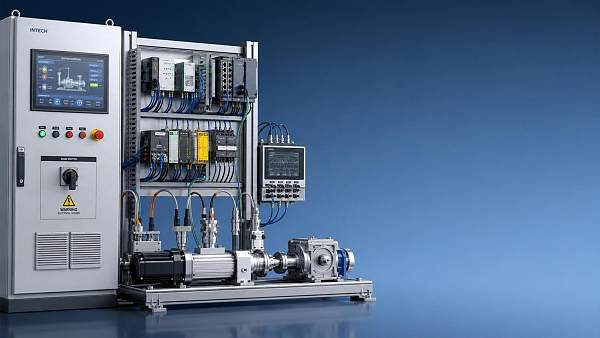
When advanced systems fail, pressure rises immediately. Service teams must restore output fast, protect uptime, and avoid repeat faults that drain labor, parts, and customer confidence.
That challenge is now broader than a single machine problem. Advanced systems often combine software, controls, sensors, power electronics, mechanical assemblies, and environmental interfaces.
In practice, one small deviation can trigger wider instability. A voltage drop, clogged filter, misaligned actuator, or firmware mismatch may look unrelated at first.
This is why troubleshooting advanced systems needs structure. Faster recovery depends on reading the failure pattern correctly before replacing parts or restarting processes too early.
Across manufacturing, mobility, agri-tech, and environmental infrastructure, the same rule applies. Good troubleshooting reduces downtime because it narrows uncertainty step by step.
Global Industrial Matrix follows this cross-sector view closely. Complex equipment rarely fails in isolation, so technical benchmarking and root-cause discipline matter more than quick assumptions.
Why Advanced Systems Fail More Often Than Expected
Modern advanced systems deliver efficiency, precision, and automation. They also increase dependency between subsystems that used to be checked separately.
A controller may rely on sensor accuracy, network stability, thermal balance, and clean power at the same time. If one layer drifts, the whole system can misbehave.
From recent service trends, failures are becoming less obvious. More faults now appear as intermittent alarms, reduced efficiency, or unstable response instead of complete shutdown.
That also means traditional trial-and-error methods are slower. Advanced systems require technicians to connect digital evidence with physical inspection in one workflow.
The Most Common Failure Causes
- Power quality issues, including voltage fluctuation, grounding faults, and unstable supply under load.
- Sensor drift or contamination that feeds incorrect values into advanced systems.
- Firmware, software, or parameter mismatches after maintenance, upgrades, or component replacement.
- Mechanical wear that causes vibration, backlash, leakage, friction, or poor alignment.
- Thermal stress in enclosures, drives, boards, and fluid systems.
- Communication loss across PLCs, CAN, Ethernet, gateways, or remote monitoring modules.
- Environmental exposure such as moisture, dust, corrosive media, and poor filtration.
These causes repeat across sectors because advanced systems share a common architecture. Data, motion, energy, and environment are tightly linked.
Start With Symptom Mapping, Not Part Swapping
The fastest troubleshooting step is often the simplest one. Define the symptom clearly before touching hardware.
Ask three questions first. What changed, when did it change, and what functions still work normally?
This creates a boundary around the fault. It prevents unnecessary work on healthy sections of advanced systems.
Useful Signals To Capture Early
- Alarm codes, timestamps, and event history.
- Operator reports about noise, smell, heat, delay, or unstable cycling.
- Recent changes in firmware, tooling, loads, recipes, or environmental conditions.
- Performance drift such as slower throughput, higher current, or lower output quality.
A good symptom map shortens diagnosis. It also helps compare current behavior against baseline values from healthy advanced systems.
A Faster Troubleshooting Sequence for Advanced Systems
Speed matters, but sequence matters more. The wrong order creates false conclusions and repeat visits.
Use a layered process that moves from simple verification to deeper isolation. This works well across most advanced systems.
1. Verify Power and Safety Conditions
Check incoming voltage, grounding integrity, breaker status, and supply stability during operation. Many advanced systems fail because power looks normal only at idle.
2. Confirm Communication Paths
Review controller links, fieldbus status, network ports, and device addressing. Intermittent communication issues often imitate sensor or actuator failure.
3. Validate Inputs Before Outputs
If the input is wrong, the output may still respond exactly as programmed. Advanced systems cannot compensate for bad source data indefinitely.
4. Compare Actual Values With Reference Limits
Use trend logs, manuals, and benchmark ranges. Temperature, current, pressure, torque, and flow values reveal hidden stress in advanced systems.
5. Isolate One Variable at a Time
Do not change multiple settings together. Controlled isolation prevents confusion and makes root cause easier to prove.
6. Test the Repair Under Real Load
A reset or part replacement is not enough. Advanced systems should be tested under actual cycle conditions to confirm stability.
High-Risk Fault Areas That Waste Time
Some failure zones repeatedly slow field service. They create misleading symptoms and drive unnecessary replacement costs.
Hidden Power Problems
Brownouts, harmonics, and weak grounding can trigger resets, communication loss, and unstable control loops. These issues are common in advanced systems with mixed loads.
Parameter Drift After Service
A replacement board or drive may work physically but fail logically. One incorrect parameter can disturb calibration, timing, or safety thresholds.
Thermal Buildup
Cooling path restrictions, fan degradation, blocked vents, and dirty heat exchangers often cause recurring faults. Thermal stress degrades advanced systems gradually, then suddenly.
Contamination and Moisture
Dust on boards, moisture in connectors, and fouling in filtration or fluid lines can distort readings and reduce component life.
Cross-Industry Examples of Advanced Systems Failure
The same troubleshooting logic applies in different sectors, even when equipment appears unrelated.
This broader view is useful because advanced systems now borrow technologies from each other. A mobility platform and a treatment module may share similar control vulnerabilities.
How to Reduce Repeat Failures
The real goal is not only faster repair. It is preventing the same advanced systems failure from returning next week.
- Store baseline operating values for healthy advanced systems.
- Track firmware versions, parameter files, and replacement history.
- Use standardized inspection points for power, temperature, communication, and contamination.
- Escalate recurring intermittent faults before they become complete shutdowns.
- Benchmark components and subsystems against ISO, IATF, IPC, and site-specific operating limits.
This is where cross-sector intelligence becomes valuable. Better comparison data improves fault judgment, especially when advanced systems combine electrical, mechanical, and ecological performance layers.
Final Troubleshooting Priorities
When advanced systems fail, the fastest path is rarely the most aggressive one. It is the most disciplined one.
Start with symptom mapping, verify power and communication, validate inputs, then isolate variables carefully. That sequence reduces guesswork and protects uptime.
More importantly, document what changed and what proved the root cause. That record turns one repair into a stronger service standard for future advanced systems issues.
In real operations, better troubleshooting is not just faster problem solving. It is a practical way to build more resilient, reliable, and predictable industrial performance.
The Archive Newsletter
Critical industrial intelligence delivered every Tuesday. Peer-reviewed summaries of the week's most impactful logistics and market shifts.