Monday, May 22, 2024

Customs Clearance Services: Key Risk Checks
by
Published
Views:
Customs Clearance Services: Key Risk Checks for Global Operations
For business evaluators, customs risk is no longer a back-office formality—it is a measurable indicator of supply chain resilience, supplier reliability, and cross-border cost exposure. This guide on customsclearanceservices highlights the key risk checks that matter most, from HS code accuracy and documentation integrity to sanctions screening, valuation controls, and regulatory alignment. By applying a structured assessment framework, decision-makers can identify hidden compliance gaps, reduce shipment delays, and benchmark logistics partners against the technical and operational standards required in modern global manufacturing.
Why customsclearanceservices Need a Checklist Approach
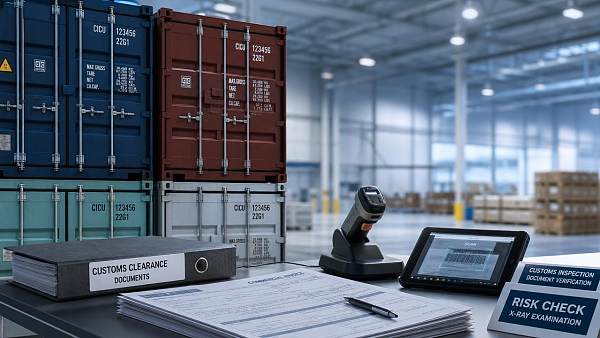
Modern supply chains move across electronics, automotive systems, agri-tech, infrastructure, and precision tooling. Each sector carries different tariff rules, certification duties, and inspection triggers.
A checklist converts customs uncertainty into visible control points. It also helps compare customsclearanceservices across ports, brokers, freight lanes, and supplier regions.
For technical benchmarking, customs performance should be treated like quality, compliance, or ESG data. Delays, fines, and seizures reveal operational weakness.
Global Industrial Matrix views customs clearance as part of a wider “System of Systems.” Documentation, engineering data, trade rules, and logistics execution must align.
Core Risk Checklist for customsclearanceservices
Use the following checks before awarding lanes, onboarding suppliers, or approving high-value imports. Each point supports measurable customs risk control.
- Verify HS code logic against product function, material composition, and end use, not only supplier invoices or historical declarations.
- Compare declared value with purchase orders, royalty terms, tooling charges, assists, freight splits, and transfer pricing records.
- Confirm country of origin using bill of materials, manufacturing steps, regional value content, and applicable free trade agreements.
- Screen all parties against sanctions, restricted entity lists, denied-party databases, and controlled end-user indicators.
- Match commercial invoice data with packing lists, transport documents, certificates, license numbers, and product descriptions.
- Check whether goods require import permits, safety approvals, radio certifications, environmental filings, or dual-use assessments.
- Review broker workflows for escalation rules, pre-clearance timing, record retention, audit trails, and correction procedures.
- Measure customsclearanceservices by release time, inspection frequency, amendment rate, duty variance, and post-entry adjustment history.
- Test data quality in digital declarations, including SKU mapping, unit measures, Incoterms, currency codes, and shipment references.
- Document exception handling for urgent shipments, engineering samples, warranty returns, temporary imports, and replacement parts.
Documentation Integrity Checks
Documentation errors often look minor, yet they create serious customs exposure. Strong customsclearanceservices should detect gaps before submission.
- Reconcile invoice descriptions with engineering names, catalog labels, and customs tariff terminology before goods reach the destination port.
- Validate quantities, gross weight, net weight, carton counts, and serial numbers against warehouse and transport records.
- Archive certificates of origin, test reports, licenses, and declarations in searchable systems for future audits.
- Flag vague product descriptions such as “parts,” “components,” or “accessories” unless technical context is attached.
Classification and Valuation Controls
HS classification is a technical decision. It should not rely only on broker convenience or supplier precedent.
For electronics, automotive assemblies, filtration modules, and tooling systems, a small classification error can change duty, licensing, and inspection outcomes.
Valuation also needs discipline. Customsclearanceservices should identify assists, design charges, commissions, royalties, and related-party pricing risks.
Regulatory and Restricted Goods Screening
Controlled technologies may appear in ordinary shipments. Sensors, chips, power modules, navigation devices, and software-enabled equipment require careful review.
Reliable customsclearanceservices should screen not only products, but also end use, destination, buyer identity, and technical specifications.
Scenario Checks Across Industrial Sectors
Semiconductor and Electronics Shipments
Semiconductor materials, HDI substrates, sensors, and test equipment often involve high declared values and sensitive technical descriptions.
Customsclearanceservices should confirm ECCN relevance, origin evidence, anti-dumping exposure, and consistency between commercial descriptions and engineering specifications.
Automotive and Mobility Components
EV powertrains, battery packs, chargers, braking systems, and electronic control units face layered customs and product compliance requirements.
The checklist should include safety markings, homologation records, lithium battery transport rules, and regional content claims for trade preference.
Smart Agriculture and Infrastructure Equipment
Autonomous tractors, irrigation controllers, MBR filtration modules, and monitoring devices may combine machinery, electronics, and environmental compliance obligations.
Customsclearanceservices must separate machine parts, embedded communication units, chemicals, membranes, and replacement kits where classification differs.
Precision Tooling and Industrial Parts
Molds, dies, CNC tooling, gauges, and fixtures may involve assists, temporary import rules, repair returns, or customer-owned equipment.
A strong customsclearanceservices process links tooling invoices with production contracts, ownership records, and valuation treatment.
Commonly Missed Risks in customsclearanceservices
Using supplier HS codes without review: Supplier codes may reflect the export country only. Import classification requires local rules, notes, rulings, and product context.
Ignoring engineering changes: A firmware update, material change, or added wireless module can alter customs classification, licenses, and certification requirements.
Overlooking related-party valuation: Intercompany transactions require proof that declared values are acceptable under customs valuation standards.
Missing post-entry corrections: Customs risk does not end at release. Refunds, amendments, audits, and voluntary disclosures need formal ownership.
Treating brokers as full compliance owners: Brokers process declarations. The importer still owns data accuracy, classification decisions, and regulatory consequences.
How to Benchmark customsclearanceservices Providers
Provider evaluation should go beyond price per entry. A low fee can hide weak controls, slow response times, and limited technical capability.
High-performing customsclearanceservices providers show evidence. They maintain escalation records, audit trails, corrective actions, and documented knowledge of industry-specific controls.
Practical Execution Plan
Start with the highest-risk lanes. Prioritize high-value goods, regulated technologies, new suppliers, and ports with frequent inspections.
- Build a customs master file that links SKU, HS code, origin, duty rate, license status, and technical owner.
- Create pre-shipment review gates for controlled products, new suppliers, unusual values, and first-time destination markets.
- Require brokers to report amendments, holds, exams, and duty changes through structured monthly performance reviews.
- Audit a sample of entries each quarter, including invoices, packing lists, declarations, permits, and payment records.
- Use corrective actions to update supplier instructions, product databases, contract terms, and logistics playbooks.
This plan makes customsclearanceservices measurable. It also connects customs decisions with engineering, sourcing, finance, and logistics data.
Data Signals That Reveal Customs Exposure
Certain metrics quickly reveal whether customsclearanceservices are under control. Watch for repeated classification changes, unexplained duty swings, and frequent document corrections.
Inspection rates should be tracked by product, origin, broker, carrier, and port. Pattern analysis helps distinguish random checks from systemic risk.
Post-entry adjustments are especially important. They show whether the original declaration process was accurate, rushed, or missing technical validation.
Summary and Next Action
Customs clearance is a resilience function, not only a shipment release activity. The strongest customsclearanceservices combine regulatory knowledge, technical product data, and disciplined execution.
The next step is simple: select ten recent entries and test them against HS code, valuation, origin, documentation, and screening controls.
If gaps appear, build a corrective checklist, assign ownership, and benchmark providers using measurable evidence. That approach turns customsclearanceservices into a practical risk-control system.

The Archive Newsletter
Critical industrial intelligence delivered every Tuesday. Peer-reviewed summaries of the week's most impactful logistics and market shifts.