Monday, May 22, 2024

Expert Insights on Where PCB Costs Rise and Why
by
Published
Views:
For enterprise decision-makers navigating volatile electronics supply chains, expert insights into where PCB costs rise and why are essential for smarter sourcing and risk control. From material selection and layer complexity to yield loss, compliance, and global capacity shifts, understanding the real cost drivers behind printed circuit boards helps organizations benchmark suppliers, protect margins, and make more resilient manufacturing decisions.
Why scenario differences matter more than headline PCB prices
A printed circuit board is rarely a commodity in the way buyers hope it will be. Two boards with similar dimensions can carry very different cost structures depending on their application, quality expectations, end-market regulations, and production risk. That is why expert insights are most valuable when they are tied to business scenarios rather than generic averages.
For a procurement officer sourcing industrial controls, the biggest concern may be laminate availability and long-term supplier stability. For an automotive program manager, cost pressure often comes from traceability, PPAP-style documentation, reliability testing, and zero-defect expectations. For an electronics OEM launching a compact connected device, rising PCB cost may come from HDI design, via density, fine line capability, and low first-pass yield.
In other words, where PCB costs rise and why depends on the job the board must perform. The right sourcing decision starts by identifying the use case, then mapping the technical requirements that create cost escalation. This is the point where expert insights become a strategic tool rather than a descriptive report.
The cost-rise background: what usually drives PCB inflation across industries
Before comparing scenarios, decision-makers should separate visible and hidden cost drivers. Visible factors include copper thickness, board size, layer count, surface finish, and order quantity. Hidden factors are often more important: process yield, drill complexity, impedance control, material qualification, testing intensity, compliance burden, and manufacturing geography.
Across the broader manufacturing ecosystem, several macro conditions repeatedly push PCB prices upward. Resin and copper foil markets remain cyclical. Skilled labor for advanced fabrication is concentrated in limited regions. Capacity for HDI, IC substrates, and automotive-grade boards is not evenly distributed. Environmental regulations also increase wastewater treatment, energy, and traceability costs at the factory level. These are not abstract pressures; they show up directly in quote volatility, lead time changes, and non-recurring engineering charges.
For business leaders, the takeaway is clear: cost inflation is rarely caused by one factor alone. Expert insights help organizations see the interaction between design choices, supplier capability, certification requirements, and regional supply risk.
Typical business scenarios where PCB costs rise differently
The most practical way to assess cost is to compare application scenarios. The table below shows how cost pressure changes depending on the operating environment and performance expectations.
This scenario view gives enterprise teams better cost context than a simple per-square-meter quote comparison. It also supports cross-functional planning between sourcing, engineering, quality, and program leadership.
Scenario 1: high-density electronics where design ambition drives fabrication cost
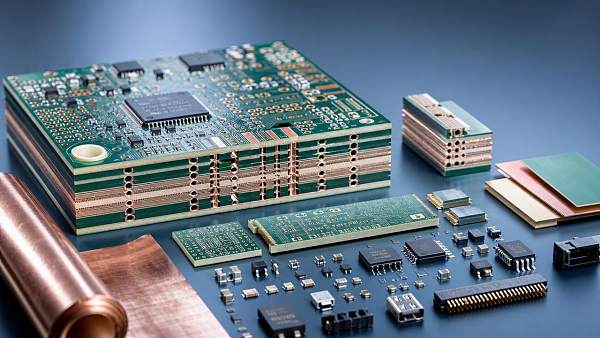
In compact consumer electronics, wearables, communication modules, and advanced control boards, PCB cost tends to rise as engineers push for smaller footprints and more functionality per square centimeter. This is the classic case where cost is not just material-driven. It is process-driven.
The main cost escalators here include higher layer counts, laser drilling for microvias, sequential lamination, stacked or staggered via structures, tighter annular ring control, and finer line-and-space capability. Each of these requirements narrows the pool of capable suppliers and increases the chance of yield loss. Even if the raw board area is small, the cost per unit can rise sharply because scrap and rework become more likely.
For this scenario, expert insights should focus on DFM discipline. Enterprise buyers should ask whether the current design truly requires every advanced feature or whether some routing demands can be relaxed to improve manufacturability. A slightly larger board with fewer process steps may reduce total cost more than a lower quoted unit price from a high-risk supplier.
Scenario 2: automotive and mobility programs where reliability costs more than fabrication
PCB sourcing for EV systems, ADAS modules, battery management, charging systems, and mobility controls follows a very different logic. Here, cost rise is often tied to assurance, not only complexity. Automotive customers expect robust process control, lot traceability, stable materials, and evidence that the board will perform under vibration, thermal cycling, humidity, and long service intervals.
The board may require high Tg materials, heavier copper, controlled impedance, selective finishes, and strict cleanliness standards. Beyond fabrication, costs increase through qualification testing, documentation, supplier audits, change control, and capacity reservation. If one approved material goes out of supply, the requalification burden alone can be substantial.
In this scenario, expert insights should guide leaders to evaluate total program risk. A lower-cost fabricator without automotive discipline can create expensive downstream failures: launch delays, warranty exposure, or redesign. The right question is not “Who is cheapest?” but “Who can support the reliability model and change-control model of this platform?”
Scenario 3: industrial, energy, and infrastructure boards where durability reshapes cost priorities
In industrial automation, motor drives, power conversion, filtration controls, agricultural equipment, and environmental infrastructure, PCBs often operate in harsher conditions than office or consumer devices. Cost rises here because the board must tolerate heat, contamination, mechanical stress, electrical load, and longer maintenance cycles.
Typical cost drivers include thicker copper, wider spacing for power handling, larger panel loss due to irregular layouts, conformal coating compatibility, stronger laminate performance, and more intensive test coverage. If the product is deployed globally, certification alignment and spare-part continuity may also add cost over time.
For this scenario, expert insights should connect technical need to field economics. A board that survives longer in pumps, controllers, tractors, or industrial sensors may carry a higher unit price but a lower lifecycle cost. Enterprise decision-makers should compare not only purchase price, but downtime risk, serviceability, and expected replacement frequency.
Scenario 4: regulated sectors where compliance and documentation become cost centers
Medical devices, aerospace electronics, and highly regulated instrumentation show another pattern: PCB costs rise because every process must be explainable, repeatable, and auditable. Materials may require tighter pedigree. Test records may need longer retention. Any deviation may trigger formal review. In such environments, administrative quality is part of the product cost.
This is why expert insights are critical for executive planning. Teams often underestimate the price impact of certification scope, export controls, approved vendor lists, and specialized inspection regimes. The board itself may not look extreme, but the supporting quality infrastructure raises cost significantly. Businesses entering regulated sectors should budget for onboarding and quality documentation as early as sourcing strategy, not as an afterthought.
How different business roles should judge PCB cost increases
Different stakeholders often interpret the same quote in different ways. That is why expert insights should be translated into role-based decision criteria.
Common misjudgments that make PCB spending rise unexpectedly
Several repeat mistakes cause avoidable cost escalation. First, companies compare quotes without aligning stack-up assumptions, test scope, and reliability standards. Second, they treat prototype pricing as a predictor of volume economics, even when production yields will behave differently. Third, they approve aggressive board density before validating process capability across at least two qualified suppliers.
Another common error is separating engineering and sourcing decisions too late. By the time procurement sees the board, critical cost drivers may already be locked in. Expert insights are most useful when they enter during architecture review, supplier prequalification, and costed design iteration—not only during RFQ comparison.
Finally, global manufacturers often underestimate geopolitical and regional capacity shifts. A board that is economical in one region can become expensive if trade controls, logistics disruptions, or energy costs alter the supply landscape. Strategic dual-sourcing and benchmark visibility are often cheaper than reactive redesigns.
Practical adaptation steps for enterprise teams
The most effective response is to build a scenario-based PCB cost review process. Start by grouping boards into application families: high-density digital, automotive reliability, industrial power, or regulated systems. Then define the small number of cost variables that matter most in each family. This avoids chasing the wrong savings lever.
Next, require joint review between engineering, sourcing, and quality before major design freeze. Ask suppliers to identify yield-sensitive features, material constraints, and qualification bottlenecks. Use benchmark data to distinguish market-wide inflation from self-inflicted specification cost. These are the kinds of expert insights that improve negotiation strength because they expose what is structurally expensive and what is merely over-specified.
Organizations with global exposure should also map PCB categories to risk tiers. A simple two-layer control board may tolerate broader supplier choice. A safety-critical, high-layer, tightly qualified board may require deeper partnerships and more formal continuity planning. Cost strategy should follow criticality, not habit.
FAQ: expert insights enterprise buyers often need first
Is layer count always the biggest reason PCB costs rise?
Not always. Layer count matters, but yield risk, via structure, material qualification, and inspection scope can be more important in advanced or regulated scenarios.
Why can a small board cost more than a larger one?
Because cost is linked to process difficulty, not just size. Fine features, HDI construction, special finishes, and low yields often outweigh area-based assumptions.
When should executives worry about PCB cost increases?
When rising costs reflect constrained capability, single-region dependency, or qualification-heavy redesign risk. Those signals affect continuity and margin, not only unit economics.
Turning expert insights into a stronger sourcing decision
The real value of expert insights lies in helping enterprises judge PCB cost through the lens of application fit. Boards for compact electronics, automotive systems, industrial infrastructure, and regulated platforms do not become expensive for the same reasons. Each scenario has its own technical triggers, quality burden, and supply chain exposure.
For decision-makers, the next step is practical: define your board category, identify the true cost escalators, and benchmark suppliers against the demands of that specific use case. Organizations that do this well do not just buy cheaper boards. They build more resilient products, more predictable launches, and more defensible operating margins.

The Archive Newsletter
Critical industrial intelligence delivered every Tuesday. Peer-reviewed summaries of the week's most impactful logistics and market shifts.