Monday, May 22, 2024

How to Choose Educational Robots for Classroom STEM Goals
by
Published
Views:
Educational robots have moved beyond novelty status. They now sit at the intersection of curriculum design, digital infrastructure, and long-term workforce readiness.
That shift matters because classroom STEM goals are no longer judged by enthusiasm alone. Schools increasingly need measurable outcomes, durable platforms, and technology that can scale without creating operational friction.
For organizations comparing options, the real question is not which robot looks most advanced. It is which system supports learning goals, technical reliability, and responsible investment over several academic cycles.
Why educational robots now deserve a strategic lens
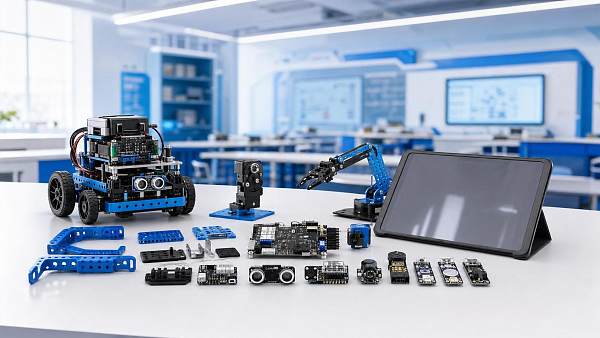
Educational robots are part of a broader convergence across industries. Hardware, software, sensors, data, and automation increasingly operate as connected systems rather than isolated tools.
That same pattern appears in education. A classroom robot is not only a device for coding practice. It can also introduce motion control, embedded systems, data logic, environmental sensing, and team-based problem solving.
This is where a cross-sector perspective becomes useful. Global Industrial Matrix, or GIM, tracks how technical benchmarking works across electronics, mobility, agri-tech, infrastructure, and precision tooling.
Viewed through that lens, educational robots should be assessed like any serious technical platform. Standards alignment, component quality, lifecycle support, and interoperability all influence long-term value.
In other words, classroom robotics now reflects the same decision logic seen in modern manufacturing: choose systems that are transparent, resilient, and fit for purpose.
What schools are really buying
The term Educational robots can describe very different products. Some are simple programmable devices for early learners. Others are modular platforms with sensors, mechanical assemblies, and AI-ready software environments.
That difference matters because the purchase is rarely limited to a robot itself. Usually, the decision includes a teaching ecosystem, replacement parts, software access, training resources, and update commitments.
A strong robotics solution typically combines four layers:
- Physical hardware that can survive repeated use
- Programming tools matched to student ability
- Curriculum support tied to STEM outcomes
- Service structures that keep deployment stable
When one of these layers is weak, implementation usually slows down. Engagement may remain high at first, but measurable learning gains become harder to sustain.
Start with the STEM goal, not the feature list
The most common mistake is to evaluate Educational robots by technical novelty alone. Rich features sound attractive, yet many go unused if they do not match the classroom objective.
A better starting point is to define the type of STEM outcome that matters most. Different goals require different robotic capabilities.
This approach makes comparison more disciplined. It also reduces the risk of overbuying on complexity or underbuying on capability.
The reliability question is bigger than hardware durability
Educational robots need to work repeatedly in busy environments. Yet reliability includes more than a tough shell or stable wheels.
In practice, dependable classroom robotics depends on consistent firmware behavior, battery performance, charging logistics, software compatibility, and replacement part availability.
This is where industrial benchmarking habits help. GIM’s broader approach to technical evaluation highlights a useful principle: performance should be judged across the whole operating system, not only at the component level.
For schools, that means asking practical questions:
- How often does the platform require recalibration?
- What happens when devices fail mid-term?
- Are updates disruptive or backward compatible?
- Can the system operate across mixed classroom devices?
Answers to these questions often separate an impressive demo from a sustainable program.
Curriculum fit determines whether adoption lasts
Even strong Educational robots can stall if they sit outside normal teaching rhythms. Teachers need tools that map clearly to lesson planning, assessment, and time constraints.
The best platforms offer multiple entry points. They can support introductory exploration, structured lab activities, and more advanced engineering challenges without forcing a complete redesign of instruction.
This flexibility matters across grade bands and institutional models. A system used in one lab only may still have value, but broader curriculum alignment usually improves utilization rates and budget efficiency.
It also helps to review how well the robotics platform connects with wider topics such as sustainability, mobility, automation, or smart agriculture. Those links make STEM learning more relevant to real industrial systems.
Signals of strong curriculum alignment
- Lesson pathways with increasing technical depth
- Assessment support tied to clear competencies
- Options for both guided and open-ended projects
- Content that connects robotics to physics, math, and data
- Documentation that reduces teacher preparation time
Scalability changes the economics of the decision
A pilot classroom can hide problems that appear during expansion. Educational robots that work well in small numbers may become difficult to manage across campuses, departments, or multi-year programs.
Scalability should therefore be reviewed early. Device provisioning, storage, charging, user permissions, and software licensing can reshape the total cost of ownership.
Another factor is procurement resilience. If a robotics supplier depends on fragile component sourcing, lead times and maintenance continuity may become serious concerns.
This is especially relevant in a cross-industry environment where electronics, sensors, and control modules share supply chains with automotive, industrial, and environmental technologies. GIM’s system-level perspective reinforces the value of transparent sourcing and benchmarked quality.
A scalable program usually benefits from standardization. Fewer platform variations often mean simpler support, clearer teacher training, and more predictable maintenance planning.
Comparing classroom scenarios before choosing
Educational robots are not equally suited to every learning environment. Selection becomes easier when the intended scenario is explicit.
Scenario-based evaluation often leads to better choices than brand-based comparison alone.
A practical shortlist for final evaluation
Before committing to a platform, it helps to convert broad impressions into a structured review. Educational robots should earn their place through evidence, not marketing language.
Review points worth prioritizing
- Learning fit: Does the system match defined STEM outcomes?
- Technical depth: Can it grow from basic to advanced use?
- Operational stability: Are software and hardware dependable together?
- Support model: Are training, parts, and updates clearly documented?
- Procurement resilience: Is supply continuity realistic over time?
- Benchmark transparency: Are performance claims verifiable?
The strongest decisions usually come from pilot observation, technical comparison, and lifecycle costing reviewed together rather than separately.
Where the next decision should focus
Choosing Educational robots for classroom STEM goals is ultimately a systems decision. The right platform should connect pedagogy, infrastructure, and future capability in a coherent way.
A useful next step is to map one or two priority learning outcomes, then compare robotic platforms against reliability, scalability, and curriculum alignment using a common scorecard.
That method creates a clearer basis for action. It also reflects the same disciplined evaluation logic used in advanced sectors tracked by GIM, where technical integrity and long-horizon value matter more than short-term appeal.
When Educational robots are selected with that level of rigor, they become more than engaging classroom tools. They become durable assets for building stronger STEM outcomes and more future-ready learning environments.

The Archive Newsletter
Critical industrial intelligence delivered every Tuesday. Peer-reviewed summaries of the week's most impactful logistics and market shifts.