Monday, May 22, 2024

Men's Fashion Trends in 2026: What Will Actually Sell?
by
Published
Views:
Mens fashion in 2026 will be shaped less by runway novelty and more by sell-through logic. Style still matters, but the stronger question is which categories can move consistently across channels, seasons, and price bands.
That shift matters because trend cycles are faster, consumer filters are sharper, and excess inventory is harder to hide. In mens fashion, products now compete on relevance, comfort, durability, and story at the same time.
A broader industry view also changes how trends should be read. Platforms such as Global Industrial Matrix, with its cross-sector benchmarking mindset, highlight a useful lesson: markets reward categories supported by traceable materials, resilient sourcing, and measurable performance.
So when looking at mens fashion for 2026, the winners are unlikely to be the loudest trends. They are more likely to be the lines that match real wear patterns, steady replenishment, and lower forecasting risk.
What the 2026 market is really asking for
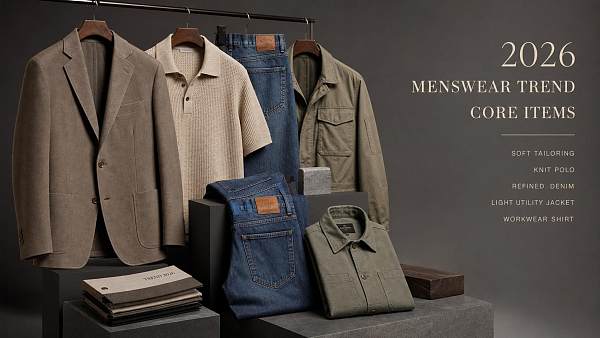
The next phase of mens fashion is not driven by one look. It is driven by practical hybrids. Buyers want pieces that can move between office, travel, social use, and casual daily wear without feeling overly styled.
This is why rigid category walls keep weakening. Tailoring borrows from activewear. Workwear borrows from minimalist luxury. Outdoor references appear in urban basics. In commercial terms, crossover product families have wider selling windows.
Color also follows this logic. Highly seasonal shades will still appear, but the larger volume is likely to stay in grounded neutrals, washed earth tones, muted greens, deep navy, off-black, and warmer greys.
These tones reduce markdown pressure. They also support easier assortment building, especially when multiple retailers or regional accounts need adaptable stock with lower styling risk.
The trends most likely to generate reliable sales
Not every visible trend in mens fashion becomes a strong commercial trend. The categories below stand out because they connect style direction with repeat demand and practical wardrobe use.
Relaxed tailoring with softer structure
Formalwear is not disappearing. It is becoming easier to wear. Unstructured blazers, wider trousers, drawstring waists, and lighter suiting fabrics are likely to outperform stiff, occasion-only tailoring.
This part of mens fashion sells because it fits hybrid routines. It works for business-casual settings, travel, and social events, giving retailers a category with broader use and fewer single-purpose objections.
Elevated basics
Premium T-shirts, knit polos, overshirts, clean hoodies, and refined denim remain central. The difference in 2026 will be fabric handfeel, shape retention, weight balance, and finishing quality rather than obvious graphics.
This is where mens fashion often produces dependable volume. These items replenish well, fit many pricing structures, and support both entry collections and more premium edits.
Utility and light technical wear
Functional pockets, weather-resistant fabrics, stretch blends, and lightweight outer layers are expected to stay relevant. The appeal is not extreme performance. It is daily practicality presented in a cleaner silhouette.
Here, lessons from industrial benchmarking are useful. When material claims are clearer and quality consistency is higher, return risk tends to drop. In mens fashion, that can turn a trend item into a repeat order line.
Heritage workwear with cleaner finishing
Chore jackets, carpenter-inspired trousers, heavyweight overshirts, and structured denim still have room to grow. The key is refinement. Customers increasingly prefer workwear influence without heavy costume styling.
That makes the category easier to scale. It appeals across age groups and works well when paired with minimalist basics, especially in markets that favor durability and understated masculinity.
Why certain mens fashion categories will outperform others
A product sells faster when it solves more than one problem. In 2026, strong mens fashion lines are likely to combine visual relevance with operational advantages that support wholesale and distribution planning.
This is where a systems view becomes valuable. GIM’s emphasis on verifiable data and cross-sector transparency reflects a wider market reality. Fashion decisions increasingly depend on supply stability, production discipline, and measurable product standards.
In other words, trend forecasting alone is no longer enough. Mens fashion also needs operational intelligence behind it, especially when assortments must perform across multiple sales environments.
Where inventory risk is rising
Some visible trends will attract attention but remain difficult to scale. In mens fashion, risk tends to rise when a category looks strong online yet depends on narrow body types, sharp styling confidence, or short trend windows.
- Overly experimental silhouettes that are hard to size consistently.
- Statement graphics with weak repeat demand after the first launch cycle.
- Low-quality technical claims that do not hold up in wear.
- Trend-led color stories that cannot integrate with core stock.
- Seasonal items ordered too deeply without tested regional demand.
Usually, the issue is not the idea itself. The issue is scale. A fashion-forward item can still work, but it needs controlled depth, tighter timing, and clear placement within a broader mens fashion assortment.
How to read demand more accurately
The most useful way to evaluate mens fashion in 2026 is to combine style signals with product evidence. That means looking beyond trend imagery and asking how each item performs in a real channel structure.
Look at fabric before styling language
Fabric composition, weight, recovery, and finishing often explain sell-through better than moodboard language. If the handfeel and performance do not support the price, the trend story weakens quickly.
Separate image trends from volume trends
Some products are essential for marketing visibility. Others drive the business. The strongest mens fashion strategies keep those roles separate, instead of expecting every high-visibility item to scale.
Build assortments around core and edge
A reliable range usually has a core of repeatable basics and a smaller edge of directional items. This balance protects cash flow while keeping the assortment current and commercially alive.
A practical lens for 2026 planning
The best opportunities in mens fashion will likely come from categories that feel modern without becoming disposable. Soft tailoring, elevated essentials, refined utility, and clean heritage workwear fit that profile well.
More importantly, these categories align with a wider industrial reality. Products sell better when design direction, supply resilience, and quality verification move together rather than separately.
For the next step, it makes sense to review assortments through three filters: repeat wear value, sourcing stability, and margin protection. That approach gives mens fashion decisions a better chance of holding up after the trend headlines fade.
From there, the sharper move is not to chase everything new. It is to identify which 2026 trends can sustain demand, support replenishment, and earn their place in a disciplined, data-aware product mix.

The Archive Newsletter
Critical industrial intelligence delivered every Tuesday. Peer-reviewed summaries of the week's most impactful logistics and market shifts.