Monday, May 22, 2024

Modern Innovation in PCBA: Trends Reshaping Factory Performance
by
Published
Views:
Modern innovation in PCBA is redefining how factories improve speed, precision, and resilience in a volatile global market. For enterprise decision-makers, understanding these shifts is essential to reducing supply chain risk, boosting production efficiency, and aligning with international quality standards.
This article explores the key trends reshaping factory performance and what they mean for smarter, data-driven manufacturing strategies.
Why does modern innovation in PCBA matter more to factory leaders now?
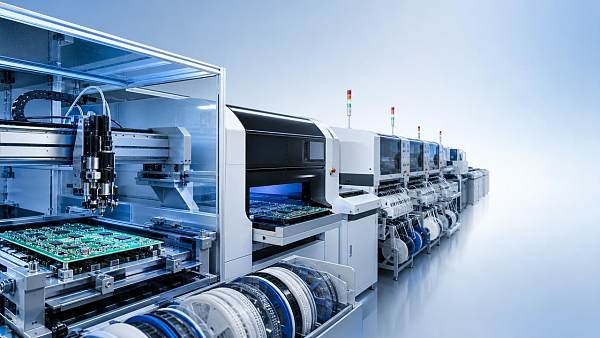
PCBA is no longer a narrow electronics topic. It now influences automotive controllers, industrial sensors, smart agricultural systems, energy monitoring hardware, and environmental infrastructure equipment. As product architectures become more connected, board-level quality has a direct impact on uptime, traceability, warranty cost, and regulatory compliance.
For decision-makers, modern innovation in PCBA is not only about adding advanced machines. It is about building a manufacturing system that can absorb supply disruption, handle mixed-volume production, and maintain repeatable quality across global sites and supplier tiers.
This shift is especially important in cross-sector manufacturing, where one factory may support mobility electronics, industrial control units, and smart infrastructure assemblies under different qualification expectations. In such conditions, fragmented data creates delays, but benchmarked intelligence improves confidence.
- Shorter product life cycles force factories to switch from fixed, single-program production to agile, multi-SKU execution.
- Tighter customer audits increase pressure on process documentation, defect traceability, and supplier verification.
- Rising labor and energy costs make first-pass yield, automation strategy, and line balancing critical investment variables.
Global Industrial Matrix supports this transition by connecting electronics data with mobility, ESG infrastructure, precision tooling, and industrial sourcing benchmarks. That wider context helps leadership teams judge whether a PCBA upgrade fits a larger operational strategy rather than a single departmental target.
Which trends are reshaping factory performance in PCBA?
The most relevant modern innovation trends in PCBA are those that improve measurable factory outcomes. Leaders should look beyond promotional language and focus on whether a trend reduces defects, improves planning visibility, or shortens qualification and delivery cycles.
1. Closed-loop data from SPI, AOI, AXI, and MES
Inspection tools are more valuable when they are connected. Solder paste inspection, automated optical inspection, X-ray inspection, and manufacturing execution systems now feed process data back into setup optimization and operator response workflows. This improves root-cause speed instead of just detecting defects after they happen.
2. Flexible automation for mixed production volumes
Factories increasingly need to support prototypes, pilot runs, and mature volume products on shared assets. Modern innovation includes smarter feeders, faster changeovers, digital work instructions, and modular line design. These improvements reduce downtime without forcing oversized capital spending.
3. Material traceability and component risk intelligence
Component volatility remains a major board-level risk. Modern PCBA strategies now combine lot traceability, approved vendor control, lifecycle monitoring, and substitution review processes. This matters when a single semiconductor shortage can delay multiple programs across sectors.
4. Design-for-manufacturing aligned with reliability goals
Factories perform better when engineering rules are aligned early with assembly capability. Pad geometry, thermal balance, panelization strategy, via design, and test point access all influence line efficiency. In high-reliability sectors, early DFM review can prevent expensive late-stage process changes.
5. Quality benchmarking against international standards
As customers compare suppliers globally, standard alignment becomes a performance tool. IPC criteria, ISO process discipline, and sector-specific frameworks such as IATF expectations in mobility-related applications are increasingly used to compare supplier maturity and process consistency.
The following table shows how modern innovation in PCBA translates into practical factory outcomes across sectors relevant to enterprise procurement and operations teams.
The value of these trends depends on integration. A factory with advanced equipment but poor data governance may still underperform a more balanced site with stronger process discipline and supplier control.
How should enterprise buyers compare PCBA factory capabilities?
Many procurement teams focus heavily on quoted unit cost. That is understandable, but incomplete. In practice, the stronger purchasing decision compares process maturity, responsiveness, material resilience, and quality traceability alongside price.
What separates a capable supplier from a risky one?
A capable PCBA partner can explain not only what equipment is installed, but how process windows are controlled, how material substitutions are approved, and how nonconformance data feeds continuous improvement. These details often predict delivery stability better than headline capacity figures.
This comparison table can support modern innovation assessments during RFQ review, supplier qualification, or multi-site benchmarking.
For enterprise decision-makers, advanced capability usually lowers total cost over time, even if the initial quote is not the lowest. Scrap, delays, field failures, and requalification effort can quickly erase nominal savings from a weak supplier choice.
Which application scenarios make modern innovation in PCBA a strategic priority?
Not every factory needs the same modernization path. Priorities should reflect application risk, service environment, product complexity, and customer documentation expectations. Cross-sector benchmarking is useful because the same board technology may serve very different operational demands.
Automotive and mobility electronics
Board assemblies in mobility systems often face vibration, thermal cycling, and long qualification cycles. Here, process repeatability, traceability, and disciplined change control matter as much as throughput. Even supporting subassemblies may inherit strict documentation expectations.
Industrial controls and environmental infrastructure
Controllers used in treatment systems, monitoring equipment, or facility automation must balance reliability with maintainability. Modern innovation helps factories support stable builds, better test coverage, and clearer lifecycle planning for long-service products.
Smart agriculture and distributed field equipment
Agricultural electronics often operate in demanding outdoor conditions while facing cost sensitivity and irregular demand volumes. Flexible manufacturing, ruggedization awareness, and supplier agility become especially relevant in this segment.
- High-mix industrial portfolios benefit from rapid line changeover and digital work instructions.
- Long-life equipment benefits from component obsolescence monitoring and approved substitute management.
- Harsh-environment products benefit from stronger DFM review, test planning, and process validation.
GIM’s cross-disciplinary model is useful here because it allows leaders to compare PCBA decisions in relation to larger system performance, from EV subsystems and autonomous machinery to filtration controls and advanced substrates. That context sharpens investment priorities.
What should procurement teams ask before approving a PCBA modernization plan?
A good modernization plan is measurable. It should define what problem is being solved, what data proves improvement, and how changes affect lead time, quality cost, and supplier dependence. Without those links, modern innovation can become expensive but directionless.
- Ask which KPIs are targeted first, such as first-pass yield, changeover time, defect escape rate, or on-time delivery under material constraint.
- Ask whether equipment upgrades are supported by process engineering, operator training, and data governance, not just machine installation.
- Ask how the plan addresses component shortages, alternate sourcing, and engineering change approval timelines.
- Ask how international standards and customer-specific requirements will be mapped into practical control plans.
Leaders should also separate critical needs from attractive extras. For some sites, better traceability may deliver more value than adding another placement platform. For others, test strategy redesign may unlock more savings than a full line expansion.
How do standards and benchmarking reduce hidden PCBA risk?
Standards are often viewed as compliance documents, but for enterprise manufacturing they also function as risk filters. They create a common language for workmanship, process control, documentation, and corrective action. In modern innovation programs, that common language is essential when multiple regions, suppliers, and product categories are involved.
Benchmarking against frameworks such as ISO, IATF, and IPC helps teams compare maturity across sites without relying only on sales claims. It also helps identify where a supplier may be technically capable but operationally weak in traceability, escalation, or documentation discipline.
- IPC references help align workmanship expectations for soldering, acceptability, and assembly quality review.
- ISO-oriented systems support documented process control, corrective action structure, and audit consistency.
- IATF-related discipline becomes relevant when mobility-linked electronics require stricter change management and supplier accountability.
GIM’s benchmarking value lies in translating these standards into comparative operational insight. That helps procurement leaders and industrial strategists move from checklist compliance to smarter sourcing and investment decisions.
FAQ: what do decision-makers usually ask about modern innovation in PCBA?
How should we prioritize investment when budget is limited?
Start with the bottleneck that affects total cost most clearly. If scrap and rework are high, strengthen inspection feedback and process control. If deliveries slip because of material issues, improve traceability and component risk visibility first. If product mix is expanding, focus on changeover efficiency and digital execution tools.
Is modern innovation in PCBA only relevant for large-volume factories?
No. Mid-volume and high-mix factories often gain significant value because they face frequent setup changes, engineering revisions, and variable demand. In these environments, flexible automation, structured DFM review, and stronger execution data can improve both responsiveness and cost control.
What is the most common procurement mistake?
The most common mistake is treating PCBA sourcing as a simple price comparison. A lower quote may hide weak process feedback, narrow supplier options, slow engineering response, or poor audit readiness. These gaps often surface only after delays, escapes, or customer complaints.
How can we evaluate a supplier faster without lowering quality standards?
Use a structured scorecard that covers quality systems, engineering support, traceability, material strategy, reporting discipline, and relevant standard alignment. Benchmarking across sectors can also reveal whether a supplier’s strengths are real and transferable or limited to a narrow application profile.
Why choose us for cross-sector PCBA intelligence and benchmarking?
Global Industrial Matrix helps enterprise teams evaluate modern innovation in PCBA with wider industrial context. Instead of looking at assembly performance in isolation, we connect board-level manufacturing decisions to supply chain resilience, system reliability, compliance expectations, and cross-sector sourcing realities.
Our value is especially relevant when your business spans electronics, mobility, smart agriculture, ESG infrastructure, or precision tooling. We support clearer decisions through benchmark-driven insight grounded in internationally recognized manufacturing frameworks and practical operational comparison.
- Consult us for parameter confirmation when comparing assembly capability, traceability depth, or inspection architecture across suppliers.
- Engage us for selection support when you need to assess factory fit for automotive, industrial, agri-tech, or infrastructure electronics programs.
- Discuss delivery cycle risks, component sourcing exposure, and alternate supply pathways before finalizing procurement strategy.
- Request guidance on custom benchmarking, certification expectations, sample evaluation criteria, and quote comparison logic for multi-region sourcing.
If your team is reviewing a PCBA program, planning a supplier transition, or validating a modernization roadmap, GIM can help translate modern innovation into clear evaluation criteria, actionable risk controls, and better-informed investment decisions.

The Archive Newsletter
Critical industrial intelligence delivered every Tuesday. Peer-reviewed summaries of the week's most impactful logistics and market shifts.