Monday, May 22, 2024

Next-Generation Semiconductors for Efficient Power
by
Published
Views:
Next-generation semiconductors are moving from niche innovation to a practical foundation for efficient power. For information researchers, the central question is not whether these devices matter, but where they deliver measurable value, what trade-offs they introduce, and how they affect sourcing, reliability, and long-term manufacturing strategy.
Across electric vehicles, industrial drives, renewable energy systems, and smart infrastructure, advanced semiconductor materials and device architectures are reducing switching losses, enabling higher operating temperatures, shrinking system size, and improving control precision. Those gains can translate into lower energy consumption, higher power density, and more resilient equipment platforms.
At the same time, decision-making is more complex than simply choosing the newest device. Performance claims must be evaluated against packaging quality, thermal design, application conditions, qualification standards, and supply chain maturity. In practice, the best option depends on the balance between efficiency targets, reliability requirements, and procurement risk.
This article examines how next-generation semiconductors support efficient power, what technologies matter most today, where the strongest industrial use cases are emerging, and how researchers can assess value with greater technical and commercial confidence.
What information researchers are really trying to understand about next-generation semiconductors
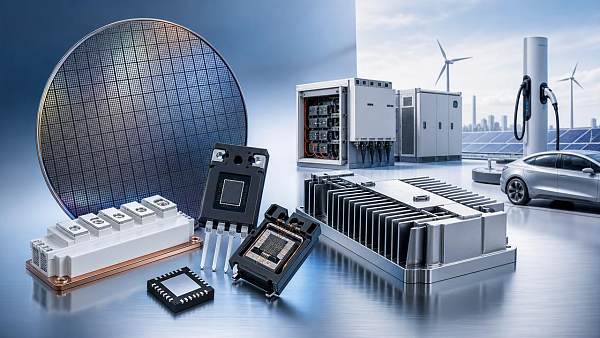
When users search for next-generation semiconductors, they are usually looking for more than a basic definition. They want to know which materials and device families are changing power conversion performance, whether these advances are commercially relevant today, and how to compare benefits across industries.
For an information researcher, the most useful perspective is comparative rather than purely theoretical. The key questions include: Which devices reduce losses most effectively? Which applications justify higher component cost? What reliability data exists? And how exposed is a given technology to supply chain volatility or qualification delays?
This means the discussion should focus less on broad semiconductor history and more on decision-oriented insights. Readers need a framework for judging where advanced power devices create practical efficiency gains, where adoption remains early-stage, and how benchmarking should be approached across sectors such as mobility, electronics, and infrastructure.
Why efficient power is becoming a strategic manufacturing priority
Efficient power is no longer only an engineering objective. It has become a business issue shaped by energy costs, electrification, carbon reduction goals, thermal management constraints, and the need for more compact, high-output systems. Every percentage point of efficiency can influence operating cost, cooling needs, and product competitiveness.
In electric vehicles, improved power conversion supports longer driving range, lighter inverter systems, and faster charging performance. In industrial automation, efficient motor drives reduce electricity demand and heat generation while helping factories meet tighter uptime and sustainability targets.
In renewable energy and smart infrastructure, better power devices help manage variable loads, distributed generation, and higher switching frequencies. These capabilities matter because efficient power systems improve both technical performance and lifecycle economics, especially where equipment runs continuously or under demanding environmental conditions.
For cross-sector intelligence platforms like GIM, efficient power is also a systems-level issue. Semiconductor selection affects mechanical design, thermal architecture, software control, compliance pathways, and supplier qualification. That interdependence is why benchmarking cannot be limited to chip-level specifications alone.
Which technologies define the current wave of next-generation semiconductors
The phrase next-generation semiconductors usually refers to advanced materials and device structures that outperform conventional silicon in key power applications. The most important categories today are silicon carbide, gallium nitride, and continuing innovations within high-performance silicon power devices.
Silicon carbide, or SiC, is especially important in high-voltage, high-temperature environments. It offers lower switching losses, higher breakdown strength, and better thermal performance than conventional silicon. These features make it highly attractive for EV traction inverters, onboard chargers, industrial power supplies, and grid-connected equipment.
Gallium nitride, or GaN, is gaining ground in lower- to mid-power applications where very high switching frequency and compact design are critical. GaN devices can enable smaller magnetic components, lighter converters, and faster transient response. This is valuable in data centers, consumer fast chargers, telecom power systems, and some industrial applications.
Advanced silicon remains relevant as well. Superjunction MOSFETs, insulated-gate bipolar transistor improvements, and packaging innovations continue to push silicon performance higher at lower cost. In many use cases, enhanced silicon still provides the most economical solution, particularly where voltage, heat, and switching frequency demands remain moderate.
The market therefore is not a simple replacement story. It is a layered transition in which SiC, GaN, and advanced silicon each occupy different performance and cost positions. Good research compares them within real operating windows rather than assuming one technology will dominate every segment.
How next-generation semiconductors improve efficient power in practical terms
The main technical value of next-generation semiconductors comes from lower conduction and switching losses. When a device wastes less energy during on-state operation and transitions, the overall converter or inverter becomes more efficient. That can reduce electricity costs directly and decrease the cooling burden on the system.
Higher switching frequency is another major advantage. Devices such as GaN and SiC can operate efficiently at frequencies that would create excessive losses in conventional silicon. This makes it possible to reduce the size of passive components like inductors, transformers, and capacitors, which supports lighter and more compact system designs.
Thermal performance is equally important. Many advanced power devices can operate at higher junction temperatures, which broadens design flexibility in demanding environments. That does not eliminate the need for careful thermal engineering, but it can improve robustness in applications exposed to heavy loads, harsh climates, or space constraints.
These device characteristics also support better control behavior. Faster switching and improved efficiency can help engineers optimize dynamic response, power density, and conversion precision. In sectors where system responsiveness affects productivity or energy quality, that control advantage can be commercially meaningful.
For researchers, the key takeaway is that efficient power gains are rarely isolated to one metric. A better semiconductor may improve energy efficiency, reduce cooling hardware, shrink enclosure size, and increase usable performance simultaneously. The total value often emerges at the system level, not just in chip efficiency numbers.
Where adoption is strongest across industries
Electric mobility is one of the clearest growth areas. SiC devices are increasingly used in traction inverters, onboard chargers, and DC-DC converters because they improve efficiency and help reduce overall system weight. In high-volume EV platforms, these gains can support both driving performance and manufacturing differentiation.
Industrial motor drives and factory automation are another strong area. Facilities seeking lower energy use and higher reliability are evaluating advanced power semiconductors for variable-speed drives, robotics, and power conversion units. In these environments, the payoff often comes from reduced losses over long operating hours and better thermal margins.
Renewable energy systems also benefit significantly. Solar inverters, energy storage converters, and grid-interface equipment need efficient, durable power electronics that can handle variable loads and environmental stress. SiC in particular is attractive where voltage demands and efficiency targets are high.
Data centers and telecom infrastructure are important for GaN adoption. The push for compact, efficient power supplies aligns well with GaN’s high-frequency strengths. As operators try to lower energy intensity and fit more computing capacity into constrained footprints, advanced semiconductors become strategically relevant.
Even agriculture and environmental infrastructure are becoming meaningful use cases. Electrified farm equipment, intelligent pumping systems, filtration control modules, and distributed monitoring assets all depend on efficient power conversion. Cross-sector research increasingly shows that semiconductor choice influences resilience well beyond traditional electronics markets.
What trade-offs and risks should be evaluated before assuming value
Despite their advantages, next-generation semiconductors are not automatically the best choice in every design. Upfront component costs are often higher, especially for SiC. That means value must be tested against total system savings, including energy reduction, cooling simplification, space savings, maintenance benefits, and performance improvement.
Packaging and assembly quality also matter. A high-performance die can underdeliver if module integration, interconnect reliability, or substrate quality is weak. Researchers should examine not only device specifications but also package architecture, thermal interface design, and field reliability under actual operating stress.
Qualification standards are another critical factor. Automotive, industrial, and infrastructure applications demand different reliability evidence. Standards such as IATF, ISO-related process controls, and sector-specific testing requirements can significantly affect time-to-market and supplier eligibility.
Supply chain maturity remains a major concern. Wafer capacity, substrate availability, geopolitical concentration, and second-source options all influence procurement risk. A technology may look excellent on paper but still create vulnerability if qualified vendors are limited or lead times are unstable.
Design complexity should not be underestimated either. Faster switching devices may require careful gate driving, electromagnetic interference control, insulation strategy, and updated thermal models. In some cases, organizations must invest in new engineering capabilities before they can capture the full value of advanced semiconductor platforms.
How to benchmark next-generation semiconductors more effectively
For information researchers, the most useful benchmarking approach starts with application context. Rather than comparing devices only by datasheet claims, define the voltage range, power level, thermal envelope, switching frequency, duty cycle, and reliability target of the intended use case.
Next, compare performance on a system basis. Evaluate efficiency curves across real operating conditions, not only peak values. Consider whether a device allows smaller magnetics, reduced heatsinking, simplified cooling, or lower enclosure mass. These secondary effects often determine whether a premium component is economically justified.
Supplier comparison should include process quality and ecosystem support. Packaging consistency, module design expertise, qualification documentation, simulation tools, and application engineering support can matter as much as raw device performance. A strong vendor ecosystem reduces implementation risk and accelerates validation.
Lifecycle risk should also be part of the benchmark. Researchers should examine capacity expansion plans, geographic manufacturing concentration, standards compliance, and compatibility with broader product roadmaps. This is especially important for organizations designing long-life assets in automotive, industrial, or infrastructure markets.
A cross-disciplinary platform like GIM is valuable here because it connects semiconductor benchmarking with adjacent system realities. Efficient power decisions do not live only in the electronics domain; they affect drivetrain performance, automation reliability, sustainability metrics, and procurement resilience across entire industrial ecosystems.
What the next few years are likely to look like
The near-term future will not be defined by a single winner but by broader segmentation. SiC is likely to expand further in high-voltage, high-power systems where efficiency and thermal performance justify premium pricing. GaN should continue gaining traction in compact, high-frequency converters and infrastructure power supplies.
At the same time, advanced silicon will remain highly relevant because cost, manufacturing maturity, and design familiarity are still powerful advantages. Many manufacturers will adopt a portfolio strategy, using different semiconductor technologies across product tiers rather than forcing one material into every application.
We should also expect progress in packaging, module integration, and co-optimization with control software. As power electronics become more system-aware, value will come not just from better materials but from tighter integration between semiconductors, thermal systems, digital monitoring, and predictive maintenance tools.
For researchers, this means the best opportunities may appear where industries intersect. Electric mobility, industrial automation, distributed energy, and intelligent infrastructure are increasingly converging around common power efficiency challenges. The companies that understand these overlaps will be better positioned to benchmark technologies accurately and source more strategically.
Conclusion: how to form a practical view of next-generation semiconductors
Next-generation semiconductors are central to the future of efficient power because they improve conversion efficiency, support higher power density, and enable more compact, resilient system designs. But their real value depends on application fit, qualification rigor, thermal design quality, and supply chain stability.
For information researchers, the most productive approach is to move beyond headline claims. Compare SiC, GaN, and advanced silicon in specific operating contexts. Look at system-level gains, not only device-level metrics. Test supplier maturity and standards alignment as carefully as performance potential.
In short, next-generation semiconductors are not just better components; they are strategic enablers across manufacturing, mobility, infrastructure, and energy systems. Organizations that benchmark them with technical discipline and cross-sector awareness will be better equipped to improve efficiency, reduce risk, and make smarter long-term industrial decisions.

The Archive Newsletter
Critical industrial intelligence delivered every Tuesday. Peer-reviewed summaries of the week's most impactful logistics and market shifts.