Monday, May 22, 2024

What steam load tells you when sizing industrial boilers
by
Published
Views:
When technical evaluators size industrial boilers, the core search intent is practical and decision-oriented: they want to know how steam load translates into a boiler selection that will actually support production, control operating cost, and avoid reliability problems. They are not looking for a generic definition of steam load. They want to understand what steam load reveals about process demand patterns, reserve margin, response behavior, and whether a proposed boiler is correctly matched to the plant.
For this audience, the biggest concerns are usually straightforward. Will the boiler meet real peak demand without pressure instability? Will it cycle inefficiently at low load? Is the sizing basis built on measured operating data or rough assumptions? How much future capacity should be included? And what risks appear when suppliers size from nameplate output instead of actual steam consumption profiles?
The most useful content, therefore, is not broad boiler theory. It is decision support: how to interpret steam load, what data to request, how to distinguish average load from peak and dynamic load, what sizing mistakes create operational or commercial risk, and how to compare boiler options against lifecycle performance. The article should emphasize evaluation criteria, plant realities, and procurement judgment, while minimizing generic background on boiler types unless it affects sizing outcomes.
What steam load tells you when sizing industrial boilers
When sizing industrial boilers, steam load is more than a single capacity number. It is one of the clearest indicators of how a plant really consumes energy, how stable the process needs to be, and how much operating flexibility the boiler system must provide.
For technical evaluators, that matters because an industrial boiler is rarely judged only by whether it can produce steam on paper. It is judged by whether it can support the process through peak events, startup swings, partial-load operation, maintenance windows, and future expansion without creating avoidable fuel, reliability, or control problems.
A boiler sized only to a nominal demand figure may look economical during specification review, yet fail under real plant conditions. A boiler sized too conservatively may meet every peak but operate inefficiently for most of the year. Steam load helps expose that balance.
Why steam load is the first serious filter in industrial boiler sizing
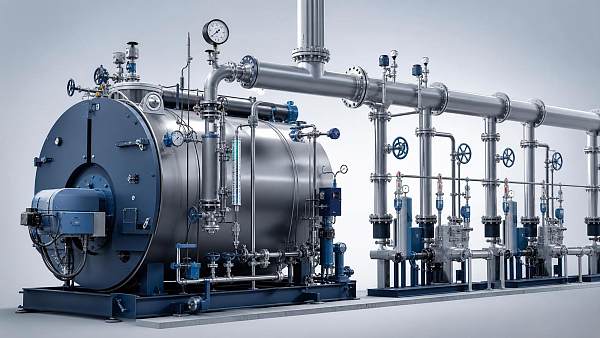
Steam load tells you how much steam the plant requires, but the deeper value lies in what that demand profile says about operations. It connects process equipment, production rhythm, thermal losses, and expansion plans into one sizing logic.
In practical terms, steam load helps evaluators answer four questions early. First, what is the continuous demand? Second, what are the true peaks? Third, how quickly does demand change? Fourth, how much resilience is needed if one unit is offline or process conditions shift?
Those questions affect more than installed capacity. They influence boiler turndown, burner control range, feedwater system design, header stability, and whether a single large boiler or multiple smaller units will perform better across the load curve.
That is why experienced buyers and engineers treat steam load as a system signal, not just a line item in a datasheet. It shows whether the proposed industrial boilers are being sized for actual operations or merely for budgetary simplicity.
Average load is useful, but peak load usually decides risk
One of the most common mistakes in boiler evaluation is relying too heavily on average steam consumption. Average load is relevant for estimating annual fuel use and base operating efficiency, but it does not protect production during short-duration peaks.
If a plant averages 8 tons per hour but reaches 12 tons per hour during batch charging, sterilization, washdown recovery, or parallel line startup, a boiler sized only around the average may struggle to maintain stable steam pressure. That can affect throughput, temperature control, and product consistency.
Peak load, however, should not be interpreted casually either. Some peaks are brief and manageable through steam storage, header buffering, or sequencing controls. Others are long enough that the boiler must carry them directly. Technical evaluators need to distinguish between the two.
The important point is that steam load must be time-based, not static. A one-hour peak, a ten-minute spike, and a repeated startup surge may all show the same maximum number on paper, but they do not imply the same boiler sizing response.
Load variation tells you whether the boiler must be flexible, not just large
In many facilities, the bigger risk is not insufficient maximum capacity but poor part-load behavior. Industrial boilers often spend far more time at partial load than at rated output, especially in plants with variable production schedules or seasonal operating patterns.
If the steam load falls sharply between shifts or between production stages, an oversized boiler may short-cycle. That leads to lower combustion efficiency, higher thermal stress, more wear on controls and burners, and potentially higher emissions during repeated starts.
This is where steam load becomes a selection tool rather than a capacity figure. A plant with wide load swings may benefit from multiple modular boilers, a high turndown burner, or advanced controls that keep the system stable across changing demand.
For evaluators, the lesson is clear: sizing industrial boilers is not about buying the most capacity for the money. It is about matching the load profile with equipment that can operate efficiently and predictably across the full operating range.
What steam load reveals about process criticality
Not every steam user in a plant carries the same business risk. Steam load analysis becomes more valuable when tied to process criticality, because a missed steam demand event in one area may be a minor inconvenience, while in another it can halt production or compromise quality.
For example, a temporary pressure drop in comfort heating is very different from a pressure drop affecting sterilization, reactor temperature control, drying, or precision surface treatment. The same load number can carry very different operational consequences depending on where and when it occurs.
Technical evaluators should therefore ask whether the steam load includes critical and noncritical users together, whether priority logic exists, and whether production can tolerate staged response during peak demand. Those answers often change the preferred sizing strategy.
In high-consequence applications, sizing margin may justifiably be more conservative. In less critical systems, the better choice may be a tighter sizing basis with stronger controls and clearer operating discipline.
Good sizing depends on how steam load data is built
Steam load is only as reliable as the data behind it. Many sizing errors start long before boiler selection, when load assumptions are built from outdated production rates, nameplate equipment values, or theoretical steam use without diversity factors.
A stronger evaluation starts with measured or reconstructed demand by process area. That includes hourly or sub-hourly load patterns, startup conditions, condensate return performance, blowdown assumptions, line losses, and known changes in operating schedules.
Evaluators should also verify whether the stated steam load is based on current production, debottlenecked future production, or a strategic growth case. Vendors may size to whichever basis is supplied, even when that basis has not been properly validated.
Requesting a transparent load table is often more useful than requesting another brochure. It allows reviewers to trace how the total was developed, where the peaks come from, and whether the assumptions align with actual plant behavior.
How much margin should be added to steam load?
This is one of the most debated issues in industrial boiler projects. Margin is necessary because real plants are not perfectly stable, but too much margin can lock in higher capital cost and lower operating efficiency for years.
There is no universal percentage that works for every site. Appropriate margin depends on load uncertainty, process criticality, future capacity plans, redundancy philosophy, and how fast the boiler system must recover from disturbances.
A plant with highly stable, well-metered demand and modular standby capability may need less installed oversizing than a plant with volatile batch demand, poor historical data, and strict uptime requirements. In other words, margin should be engineered, not copied from precedent.
For technical evaluators, this is a key review point. If a proposal includes generous sizing margin, the supplier should explain exactly what risk that margin addresses and why alternative system configurations would not address it more efficiently.
Steam load also shapes the single-versus-multiple boiler decision
The right boiler architecture often becomes obvious once the steam load profile is understood. A single boiler may suit a stable process with strong load continuity and limited maintenance constraints. It can simplify layout and controls if the duty is predictable.
But when load varies widely, production uptime is critical, or future expansion is likely, multiple industrial boilers often provide better resilience and part-load efficiency. They can stage on and off to follow demand more closely and reduce the penalty of oversizing.
Steam load data helps quantify that decision. If the plant spends most of its time well below peak demand, modularity may create fuel and maintenance advantages. If the plant stays near full load continuously, a different configuration may be justified.
This is where technical benchmarking becomes valuable. Boiler selection should be compared against real operating scenarios, not just installed capacity and upfront purchase price.
What to ask suppliers when reviewing industrial boiler sizing
Strong evaluation depends on disciplined questions. Ask suppliers which steam load basis they used, what peak duration they assumed, what margin is included, and how the proposed boiler performs at the plant’s most common operating load rather than only at full load.
Ask for expected efficiency at several load points, not just one reference condition. Ask how quickly the system can respond to step changes in demand. Ask how the design handles future expansion, maintenance downtime, and low-load cycling risk.
It is also worth asking what assumptions were made about feedwater temperature, condensate return, steam pressure, and blowdown, because those factors can materially affect the true steam generation requirement and the apparent adequacy of sizing.
These questions move the conversation from catalog capacity to operational fit. That is exactly where technical evaluators create value.
Common warning signs that steam load has been misread
Several patterns should trigger closer review. One is a proposal sized directly from connected equipment totals without diversity adjustment. Another is a design based only on average demand with no explanation of peak events.
A third warning sign is excessive installed capacity justified vaguely as “future proofing,” without a defined expansion case. Another is a vendor efficiency claim that looks strong at full load but provides no part-load performance data.
Technical evaluators should also be cautious when the steam load appears precise but no metering history, production logic, or operating profile is shown. Apparent precision without traceable assumptions is not a strong basis for procurement decisions.
In most cases, the risk is not only that the boiler will be too small. It may be too large, too inflexible, or too expensive to operate efficiently under real conditions.
Conclusion: steam load is the operating story behind boiler capacity
When sizing industrial boilers, steam load should be treated as an operating narrative rather than a standalone number. It tells you how the plant consumes steam, where the risks sit, how demand changes over time, and what level of flexibility the system must deliver.
For technical evaluators, that makes steam load one of the most important inputs in boiler selection. It informs capacity, redundancy, efficiency expectations, control strategy, and expansion planning in ways that directly affect lifecycle performance.
The practical takeaway is simple. Do not ask only whether the boiler can meet the load. Ask what the load actually means. That is the difference between buying boiler capacity and selecting a boiler system that will perform reliably in the real industrial environment.

The Archive Newsletter
Critical industrial intelligence delivered every Tuesday. Peer-reviewed summaries of the week's most impactful logistics and market shifts.