Monday, May 22, 2024

Direct Air Carbon Capture Technology: What Drives Project Costs
by
Published
Views:
For financial decision-makers, direct air carbon capture technology is not just a climate solution—it is a capital-intensive infrastructure choice shaped by energy demand, equipment scale, materials, and long-term operating efficiency. Understanding what drives project costs is essential for evaluating risk, forecasting returns, and identifying which system designs can deliver credible performance with stronger economic viability.
In practical terms, the cost profile of direct air carbon capture technology depends less on headline carbon targets and more on engineering realities: air handling volumes, sorbent durability, heat integration, electrical load, site logistics, and utilization rates over 15–25 years. For CFOs, investment committees, and industrial planners, the key question is not whether carbon removal matters, but which project architecture can move from pilot economics to bankable infrastructure.
That is where cross-sector benchmarking becomes critical. A platform such as Global Industrial Matrix (GIM) is valuable because direct air carbon capture technology sits at the intersection of industrial ESG infrastructure, precision tooling, power electronics, process equipment, and supply chain resilience. Cost discipline comes from comparing components, materials, operating assumptions, and compliance pathways with the same rigor used in automotive, semiconductor, and advanced manufacturing programs.
Why Direct Air Carbon Capture Technology Has a Complex Cost Structure
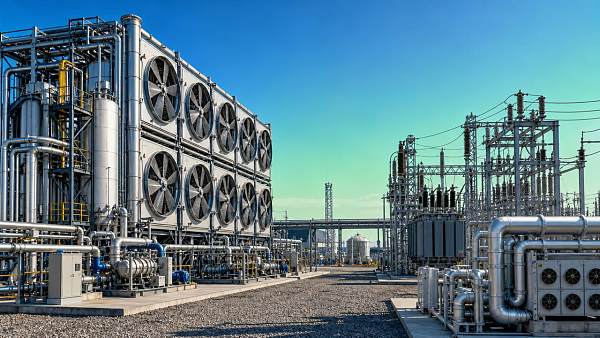
Unlike point-source capture, direct air carbon capture technology processes ambient air with CO2 concentrations near 0.04%, which means the system must move very large air volumes to capture 1 ton of carbon dioxide. That low concentration drives fan energy, contactor size, land use, and maintenance frequency. Even small design inefficiencies can compound across 8,000 operating hours per year.
For finance teams, this creates a different approval framework from standard decarbonization retrofits. Instead of assessing only a process skid or emissions add-on, they must evaluate a full infrastructure stack: energy supply, thermal integration, process controls, balance of plant, sorbent replacement, and downstream compression or storage. Each layer adds both capital expenditure and operating expenditure sensitivity.
The four main cost buckets
Most projects can be broken into 4 major cost buckets. First is core capture equipment, often representing 30%–45% of installed capital. Second is energy infrastructure, which can range from 20%–40% depending on whether low-carbon heat and power already exist on-site. Third is civil and balance-of-plant scope, usually 15%–25%. Fourth is operations and maintenance, which shapes long-term levelized cost.
- Air contactors, fans, sorbent systems, regeneration units
- Electrical interconnection, transformers, thermal delivery systems
- Foundations, piping, compression, controls, water handling
- Labor, consumables, maintenance shutdowns, monitoring, sorbent replenishment
Why scale does not automatically solve cost
Economies of scale matter, but only up to a point. A 10,000-ton-per-year demonstration unit may carry a much higher per-ton cost than a 500,000-ton-per-year project, yet large systems also face heavier financing needs, longer procurement cycles, and more exposure to construction inflation. In some cases, moving from 50 modules to 500 modules improves procurement leverage but increases commissioning complexity by 2–3 times.
This is especially relevant for financial approvers reviewing phased investment. A modular buildout can limit first-stage capital risk, but fragmented deployment may delay the cost advantages of shared infrastructure. The tradeoff is not simply small versus large; it is staged flexibility versus integrated efficiency.
Typical cost sensitivity areas
The table below highlights the categories that most often shift project economics during feasibility and front-end engineering reviews.
The key takeaway is that direct air carbon capture technology should not be evaluated on capture capacity alone. Financial quality improves when cost sensitivity is mapped to physical drivers early, especially energy intensity, replacement cycles, and site-specific infrastructure dependencies.
What Actually Drives CAPEX in Direct Air Carbon Capture Projects
Capital expenditure for direct air carbon capture technology usually rises from a combination of process equipment cost, construction complexity, and supply chain specialization. In mature manufacturing sectors, buyers can benchmark pumps, control systems, steelwork, and power conversion hardware against known standards. In DAC projects, however, the mix often includes custom air contactors, proprietary sorbent modules, and thermal regeneration equipment with limited sourcing depth.
Air handling systems and contactor design
Air handling is often one of the largest engineering cost drivers because moving enough atmospheric air requires large fans, low-pressure-drop pathways, and durable structures. Pressure losses that appear minor in design review can materially increase energy consumption over 20 years. Larger contactor surfaces may improve capture, but they also add steel, coatings, access platforms, and cleaning requirements.
From a procurement standpoint, this part of direct air carbon capture technology resembles a hybrid of HVAC, chemical processing, and industrial corrosion control. Cost risks often emerge when mechanical specifications are under-defined, especially in coastal, dusty, or high-humidity environments where coating systems and filtration choices differ.
Sorbents, chemicals, and materials durability
Sorbent chemistry influences both the initial equipment design and recurring replacement cost. Solid sorbent systems may need structured modules, temperature swing controls, and contamination management. Liquid systems may require larger circulation loops and chemical handling safeguards. Financially, the issue is not just sorbent price per kilogram; it is performance decay, regeneration efficiency, and replacement frequency over 3, 5, or 10-year planning windows.
Durability also matters across gaskets, valves, filters, and coated steel. If material selection is optimized only for first cost, lifecycle expense can rise through unplanned outages. A 2% annual increase in maintenance assumptions may materially alter net present value for projects with heavy front-loaded debt service.
Power systems, thermal integration, and interconnection
Many first-pass budgets underestimate electrical integration. Direct air carbon capture technology can require medium-voltage interconnection, transformers, motor control centers, power quality management, and backup operating strategies. If the site also includes heat pumps, electric boilers, or compression trains, the power architecture becomes more capital intensive.
Thermal supply is equally important. Access to waste heat can improve economics, but not every industrial site offers reliable low-carbon heat at the right temperature band. Creating a dedicated heat system adds equipment count, installation labor, insulation, controls, and commissioning steps. This is where cross-industry benchmarking is useful, because lessons from environmental infrastructure and automotive utility systems can reduce overdesign.
Capital items that deserve line-by-line review
Financial approvers should request a granular breakdown rather than a single blended installed-cost figure. The following framework helps isolate the largest CAPEX variables.
A disciplined CAPEX review should tie each equipment line to a physical performance assumption. If a project sponsor cannot explain why a given contactor size, energy package, or redundancy ratio is necessary, financial confidence should remain limited until the design basis is clarified.
OPEX, Utilization, and the Long-Term Economics That Matter Most
For many projects, the decisive factor is not initial capital alone but the levelized cost over 10–20 years. Direct air carbon capture technology can look acceptable in a static budget model yet become unattractive if annual operating hours, sorbent replacement, or power pricing move outside the base case. OPEX sensitivity is therefore central to investment approval.
Energy cost is the dominant recurring variable
Electricity and heat often represent the largest ongoing cost categories. If a project depends on merchant electricity markets with seasonal volatility, annual capture cost can fluctuate significantly. A difference of even 15%–25% in delivered energy pricing can outweigh savings achieved through minor equipment discounts during procurement.
That is why serious buyers model at least 3 scenarios: base case, stressed energy price case, and reduced utilization case. A project that performs well only at ideal power tariffs may not be financially robust enough for scaled deployment.
Uptime, staffing, and planned maintenance windows
A design target of 90% uptime is very different from sustained real-world availability of 75%–80%. Lower uptime spreads fixed operating costs across fewer captured tons. It can also affect contracted carbon delivery obligations. Maintenance planning should therefore examine mean time between service events, fan bearing life, filter fouling rates, valve replacement intervals, and controls reliability.
Staffing models should be equally realistic. A highly automated plant may still need specialized technicians for mechanical inspection, instrumentation calibration, safety compliance, and sorbent handling. Labor assumptions built around minimal headcount may understate true operating cost, especially during the first 12–24 months after commissioning.
Operational questions finance teams should ask
- What annual operating hours are assumed: 6,500, 7,500, or more than 8,000?
- How often does the sorbent need replacement or reconditioning under local air quality conditions?
- Is maintenance labor embedded in the base model or treated as a variable placeholder?
- What happens to project economics if capture efficiency declines by 5%–10% over time?
- How is parasitic load from compression, cooling, and monitoring accounted for?
Verification, reporting, and marketability of captured tons
The economics of direct air carbon capture technology also depend on how captured tons are verified and accepted in commercial frameworks. Measurement, reporting, and verification systems add cost, but weak verification can reduce the value of carbon removal outputs. For financial stakeholders, that means revenue quality and technical quality are linked.
This is particularly relevant in B2B procurement, where buyers increasingly expect traceable data, performance logs, maintenance records, and standards-aligned documentation. GIM’s industrial benchmarking perspective is useful here because cost is best understood alongside technical integrity, not as an isolated spreadsheet exercise.
How Financial Approvers Can Evaluate Project Risk Before Commitment
A sound approval process for direct air carbon capture technology should combine technical diligence, supplier scrutiny, and staged commercial controls. This is especially important in a market where some systems remain pre-scale and long-term operating datasets are still limited.
Use a five-part diligence framework
Financial decision-makers can reduce uncertainty by reviewing 5 areas in sequence rather than treating the project as a single sustainability spend. This mirrors capital discipline used in other industrial sectors where process risk and supply chain risk are tightly linked.
- Design basis: capture target, operating profile, and energy source assumptions
- Equipment maturity: prototype, pilot, or commercially repeatable module set
- Supply chain resilience: critical materials, lead times, alternate vendors
- Site integration: utilities, permitting path, transport or storage interface
- Commercial structure: warranties, performance guarantees, escalation clauses
Watch for three common budgeting mistakes
The first mistake is treating energy availability as guaranteed rather than contracted. The second is using pilot-level performance assumptions for commercial-scale forecasts. The third is omitting lifecycle replacement costs for sorbents, filters, and rotating equipment. Any one of these can materially distort the investment case.
Another frequent issue is underestimating lead times. Depending on system complexity, specialized components may require 20–40 weeks, and grid interconnection or environmental approvals can extend the total development timeline by 6–12 months. Delays matter because financing costs and inflation exposure continue even before full operations begin.
Questions to include in supplier and EPC reviews
A disciplined review process improves comparability across bids and reduces the chance of approving low-visibility risks.
The strongest proposals are usually not the cheapest on paper. They are the ones with transparent assumptions, controllable interfaces, and credible maintenance planning. In direct air carbon capture technology, ambiguity itself is often a hidden cost.
Strategic Procurement Implications for Cross-Sector Industrial Buyers
Because direct air carbon capture technology draws on components and disciplines from multiple sectors, procurement strategy should not be siloed. Lessons from semiconductor utilities, automotive production engineering, environmental treatment systems, and precision fabrication all have direct relevance to cost control and deployment reliability.
For example, buyers can apply supplier scorecards used in advanced manufacturing to evaluate lead-time risk, quality repeatability, replacement-part localization, and digital monitoring capability. They can also benchmark fabrication tolerances, corrosion resistance requirements, and controls architecture against proven industrial standards rather than accepting loosely defined performance claims.
Where GIM adds value in cost evaluation
GIM’s role as a multi-disciplinary intelligence hub is especially useful when financial approvers need to compare infrastructure choices across industries. Direct air carbon capture technology is not an isolated climate purchase; it is a composite industrial system. Better cost decisions come from understanding how motors, control electronics, filtration modules, fabricated assemblies, and utility interfaces perform across adjacent sectors and standards frameworks such as ISO, IATF, and IPC where relevant.
That perspective supports more accurate benchmarking, tighter supplier due diligence, and stronger internal approval cases. Instead of relying on generalized carbon-removal narratives, procurement and finance teams can evaluate component maturity, serviceability, and performance transparency in a disciplined, engineering-led format.
What a bankable project often looks like
A more bankable direct air carbon capture technology project usually has 6 visible traits: clearly defined energy sourcing, modular but standardized equipment, realistic uptime assumptions, documented maintenance plans, measurable verification protocols, and a supply chain with backup options for critical parts. These features do not eliminate risk, but they make it quantifiable.
For financial decision-makers, the objective is not to find a perfect project. It is to separate technically disciplined systems from under-specified concepts. When the cost base, operating assumptions, and infrastructure dependencies are transparent, capital can be allocated with greater confidence.
Direct air carbon capture technology will remain cost-sensitive until deployment scales, supply chains mature, and energy integration improves. Yet project quality already varies widely based on equipment design, materials strategy, utility planning, and lifecycle operating discipline. That is why careful benchmarking matters more than broad market optimism.
If your team is evaluating industrial ESG infrastructure, GIM can help you compare system architectures, procurement risks, component maturity, and cross-sector technical benchmarks with greater clarity. To assess direct air carbon capture technology through a finance-ready and engineering-grounded lens, contact us to get a tailored evaluation framework, discuss project details, or explore broader industrial intelligence solutions.
The Archive Newsletter
Critical industrial intelligence delivered every Tuesday. Peer-reviewed summaries of the week's most impactful logistics and market shifts.