Monday, May 22, 2024

Shenyang Launches 500kt Biomass Green Alcohol Project
by
Published
Views:
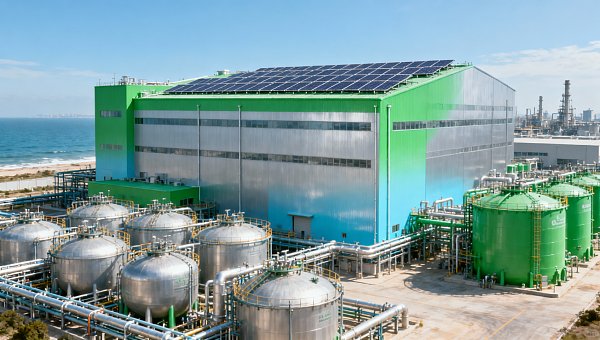
On April 28, 2026, Shenyang City, Liaoning Province, commenced construction of a 500,000-ton-per-year biomass green alcohol (including bio-methanol and bio-ethanol) demonstration project — the first in China to deploy Xie Heping’s novel ‘direct seawater electrolysis coupled with CO₂ electrocatalytic reduction’ process. This development signals material implications for marine fuel suppliers, chemical intermediates traders, carbon credit participants, and bio-based feedstock processors.
Event Overview
On April 28, 2026, Shenyang officially broke ground on a 500,000-ton/year biomass green alcohol project. The facility will produce bio-methanol and bio-ethanol using a newly industrialized process developed by Professor Xie Heping’s team: direct seawater electrolysis for hydrogen generation, integrated with CO₂ electrocatalytic reduction. Upon full operation, the project is expected to enable over 1.2 million tons of annual bio-methanol export capacity from China — positioning China among the top three global bio-methanol exporters. Target markets include Northern European maritime fuel buyers and Southeast Asian chemical intermediates purchasers. The process’s carbon intensity falls below the EU Renewable Energy Directive II (RED II) threshold, qualifying its output for inclusion in the EU Emissions Trading System (EU ETS) carbon credit framework.
Impact on Specific Industry Segments
Maritime Fuel Importers & Bunker Suppliers
This project directly expands certified low-carbon methanol supply eligible for EU ETS compliance. Since bio-methanol qualifies as a RED II-compliant advanced biofuel, bunker suppliers targeting EU-flagged vessels must now assess procurement readiness for volume-scale, RED II-aligned imports from China — especially given growing EU FuelEU Maritime requirements.
Chemical Intermediates Buyers (Southeast Asia)
For Southeast Asian downstream chemical producers sourcing methanol as a C1 building block (e.g., for formaldehyde, MTBE, or olefins), this project introduces a new regional supply source with verified low carbon intensity. Buyers may face revised sustainability documentation requirements — particularly if their own products are subject to EU CBAM or corporate Scope 3 reporting.
Carbon Credit Market Participants
Because the process meets EU RED II carbon intensity thresholds, its output may be registered under EU ETS as eligible emission reductions. This creates potential for dual-value streams: physical methanol sales + separable carbon credit monetization. Entities active in voluntary or compliance carbon markets should monitor official validation pathways for Chinese bio-methanol under EU frameworks.
Biomass Feedstock Procurement & Logistics Providers
Although the press release does not specify feedstock origin, the term ‘biomass green alcohol’ implies reliance on non-food, lignocellulosic, or waste-derived biomass. Feedstock aggregators and logistics operators serving Northeast China should track upcoming feedstock sourcing criteria — especially any certification mandates linked to RED II traceability or sustainability criteria (e.g., ISCC EU).
What Relevant Companies or Practitioners Should Focus On Now
Monitor official EU technical guidance on third-country bio-methanol eligibility
The project’s EU ETS eligibility hinges on formal recognition under EU delegated acts. Stakeholders should track updates from the European Commission’s Directorate-General for Energy and ENTSO-E’s biofuels working group — not just project announcements.
Assess contractual readiness for RED II-compliant documentation
Importers and end-users should review existing supply agreements for clauses covering sustainability proof, mass balance accounting, and chain-of-custody certification. Preparing templates aligned with ISCC EU or RSB standards now avoids delays at commercial scale-up.
Distinguish between policy qualification and actual credit issuance
Meeting RED II carbon intensity is necessary but insufficient for EU ETS credit issuance. Actual registration requires verification under EU-recognized schemes and inclusion in the Union Registry. Companies should avoid treating ‘carbon-intensity compliant’ as equivalent to ‘credit-ready’.
Engage early with Chinese project operators on offtake terms and certification timelines
Given limited public detail on commissioning schedule and certification roadmap, forward-looking buyers should initiate technical dialogue with the project consortium — focusing on anticipated timeline for first RED II-conformant batch, audit readiness, and feedstock origin disclosure protocols.
Editorial Perspective / Industry Observation
Observably, this milestone reflects a strategic shift: China is moving beyond domestic decarbonization goals toward structuring export-grade biofuels for compliance-driven international markets. Analysis shows the emphasis on seawater-based hydrogen and CO₂ utilization — rather than fossil-derived syngas — signals intent to meet stringent upstream carbon accounting rules, not just end-product specs. From an industry perspective, this is less a near-term supply shock and more a medium-term signal that EU-aligned bio-methanol sourcing is entering a new phase of geographic diversification — one where Northeast Asia becomes a verifiable node. Continued observation is warranted on whether other Chinese provinces replicate this seawater-CO₂ integration model, and how quickly EU authorities finalize recognition procedures for such novel production routes.
Conclusion
This project does not immediately alter global bio-methanol trade flows, but it materially advances China’s capacity to deliver RED II-compliant, EU ETS-eligible bio-methanol at scale. Its significance lies not in current volume, but in the precedent it sets for integrating carbon capture, renewable hydrogen, and biomass conversion into a single export-certifiable pathway. For stakeholders, it is best understood not as a market entry event, but as a structural inflection point in the alignment of Chinese biofuel infrastructure with EU regulatory architecture.
Source Disclosure
Main source: Official announcement issued by Shenyang Municipal Government on April 28, 2026.
Note: EU ETS registration procedures for this specific process remain pending formal validation; ongoing monitoring of European Commission technical documents is advised.
The Archive Newsletter
Critical industrial intelligence delivered every Tuesday. Peer-reviewed summaries of the week's most impactful logistics and market shifts.