Monday, May 22, 2024

US ITC Opens 337 Probe Into Carbon Capture Modules
by
Published
Views:
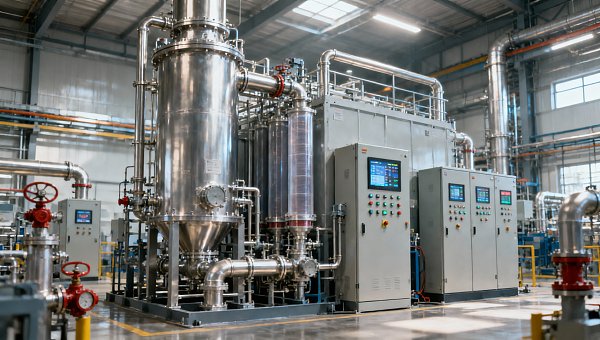
On June 6, 2026, the US International Trade Commission (ITC) opened a Section 337 investigation into imported carbon capture modules, placing 12 Chinese manufacturers under scrutiny over alleged patent infringement. The case matters beyond a single product line because the modules involved—covering MEA absorption towers, membrane separation components, and intelligent control units—are used in power plants, cement kilns, and hydrogen production, making this a development that exporters, buyers, and compliance teams in both Wastewater & Filtration and Carbon Capture Tech need to watch closely.
What the ITC action specifically covers
According to the information provided, the ITC’s June 6, 2026 action is a Section 337 investigation focused on imported carbon capture modules. The products named in the case include MEA absorption towers, membrane separation components, and intelligent control units.
The allegations concern patent infringement involving three technical areas: sensor integration, thermal management algorithms, and corrosion-resistant coatings. The case lists 12 Chinese manufacturers.
The products involved are widely used in power generation, cement kiln operations, and hydrogen production scenarios. The development directly affects export compliance planning across the Wastewater & Filtration and Carbon Capture Tech categories.
Why the impact reaches beyond the named products
Export-facing manufacturers may face closer product-level review
From an industry perspective, manufacturers shipping carbon capture modules or closely related assemblies to the US market may feel the impact first because the investigation targets specific technical features embedded in equipment rather than only a broad product label. What deserves closer attention is whether sensor integration, control logic, and coating-related specifications appear in export documentation, product descriptions, or customer-facing technical files.
Buyers and project contractors may reassess sourcing risk
For procurement teams and project-side buyers in power, cement, and hydrogen applications, the immediate issue is not only supply availability but also transaction certainty. Analysis shows that when a product category enters a 337 process, purchasers often need to pay closer attention to delivery timing, model selection, and whether supplier commitments match the compliance requirements of the destination market.
Compliance and supply chain service teams may see wider screening demands
Supply chain service providers, trade compliance staff, and documentation teams may also be affected because the case directly touches export compliance strategy in both Wastewater & Filtration and Carbon Capture Tech. The practical pressure point is whether product classification, technical declarations, and supporting documents are sufficiently aligned with the actual configuration of the goods being shipped.
What companies should monitor now
Watch for further official wording and procedural updates
What deserves closer attention is the evolution of official language around the scope of products and the technical points under dispute. For affected businesses, the difference between a general category description and a feature-specific description can shape internal review priorities.
Recheck products that combine hardware and control functions
Because the allegations involve sensor integration and thermal management algorithms alongside physical equipment, companies should pay particular attention to modules where process hardware and intelligent control functions are delivered together. This is especially relevant for businesses managing mixed portfolios across filtration, emissions control, and carbon capture applications.
Review supplier files and shipment documentation
Analysis shows that supplier qualifications, technical specifications, coating descriptions, and control-unit documentation may become more important in commercial communication and export review. Firms involved in delivery execution should closely examine whether internal records and customer-facing materials describe the product consistently.
Prepare communication plans for customers and partners
For sales, account management, and project delivery teams, a key practical issue is expectation management. Observably, customers in application areas such as power plants, cement kilns, and hydrogen production may seek clarification on shipment continuity, affected configurations, or alternative sourcing arrangements, even before any final outcome is known.
How this should be interpreted at this stage
Observation and analysis suggest that this development is best understood as an active regulatory and trade-compliance signal rather than a settled market outcome. The confirmed fact is that the ITC has opened a 337 investigation and identified the product scope, technical dispute areas, and the number of Chinese manufacturers involved.
It is more appropriate to understand this as an event that could influence transaction screening, supplier review, and export compliance decisions in the near term, while the broader commercial effect still requires continued observation. The industry should therefore separate what is already confirmed from what may emerge later through official procedure.
Why the market will keep following this case
The significance of this news lies in the combination of three factors already visible from the disclosed information: the case concerns carbon capture modules used in multiple industrial settings, the disputed issues involve both materials and control-related technologies, and the implications extend across two export-relevant categories. That makes the case relevant not only to the listed manufacturers but also to surrounding participants in procurement, compliance, and project delivery.
At the current stage, a neutral reading is more appropriate than a definitive one. The event should be viewed as a compliance-sensitive industry development with cross-category implications, not yet as a final conclusion on market access or long-term trade outcomes.
Basis of this article and follow-up points
This article is generated based on the user-provided news title, event date, and event summary. The specific official source link was not provided in the input, so further verification is still needed against materials such as official announcements, company statements, industry association updates, authoritative media reporting, and relevant standard or technical documents where available.
For follow-up observation, the most relevant points are any later official clarification on product scope, technical claim boundaries, procedural developments in the 337 investigation, and any compliance implications for exports involving Wastewater & Filtration and Carbon Capture Tech product lines.
The Archive Newsletter
Critical industrial intelligence delivered every Tuesday. Peer-reviewed summaries of the week's most impactful logistics and market shifts.