Monday, May 22, 2024

Xie Pinghe Team Releases Seawater Direct H2 Framework
by
Published
Views:
On May 18, 2026, the research team led by Academician Xie Pinghe released the world’s first comprehensive review and life-cycle assessment framework for seawater direct electrolysis hydrogen production. This development introduces new technical benchmarks for international green hydrogen equipment exports—particularly where carbon capture technologies integrate with seawater-based hydrogen systems—triggering immediate implications for manufacturers, exporters, system integrators, and supply chain service providers operating across the clean energy value chain.
Event Overview
Academician Xie Pinghe’s team published a globally unprecedented assessment framework for seawater direct electrolysis hydrogen production on May 18, 2026. The framework defines 12 core evaluation criteria—including energy efficiency, corrosion resistance, and marine biofouling inhibition—and has been formally adopted by the International Association for Hydrogen Energy (IAHE) as a recommended basis for green hydrogen equipment export assessments. It now directly affects joint tender eligibility and technical white paper structuring standards for companies co-developing carbon capture technologies and seawater electrolysis hydrogen systems.
Industries Affected
Direct trade enterprises: Export-oriented equipment vendors—especially those marketing integrated carbon capture–hydrogen generation units—must now align product documentation, test reports, and certification dossiers with the IAHE-endorsed framework. Non-compliance may restrict market access in jurisdictions referencing IAHE guidelines (e.g., EU Green Hydrogen Certification Scheme updates or Japan’s J-credit-aligned procurement rules).
Raw material procurement enterprises: Suppliers of corrosion-resistant alloys (e.g., Ni–Mo–Cr superalloys), selective membranes, and antifouling coatings face revised specification demands. Procurement teams must verify material performance data against the framework’s 12 metrics—not just generic durability claims—to support downstream compliance validation.
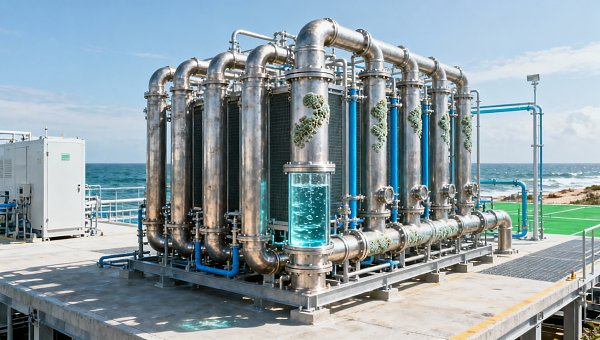
Manufacturing enterprises: Electrolyzer OEMs and system integrators engaged in offshore or coastal deployment must re-evaluate stack design, balance-of-plant controls, and real-time monitoring architecture to meet the framework’s lifecycle-oriented verification requirements—including dynamic salinity tolerance and long-term biofilm suppression efficacy.
Supply chain service enterprises: Third-party testing labs, certification bodies, and technical advisory firms must update their service portfolios to include framework-aligned LCA modeling, accelerated marine corrosion validation protocols, and biofouling mitigation benchmarking—otherwise risking exclusion from vendor-qualified service lists.
Key Focus Areas and Recommended Actions
Update technical white papers using the 12-metric structure
Vendors should revise white papers to explicitly map each claimed performance attribute (e.g., “92% system efficiency”) to one or more of the 12 defined framework indicators—including boundary conditions (e.g., salinity range, temperature, flow rate). IAHE now treats such alignment as prerequisite for inclusion in prequalified supplier databases.
Initiate cross-functional validation of corrosion and biofouling test data
Manufacturers must coordinate materials R&D, field testing, and LCA teams to generate traceable datasets demonstrating compliance with the framework’s corrosion lifetime thresholds and biofilm growth inhibition benchmarks—especially under simulated tidal cycling and sediment-laden inflow conditions.
Engage early with IAHE-accredited conformity assessment bodies
Companies planning 2027–2028 export campaigns should identify and engage laboratories already undergoing IAHE observer status accreditation for seawater electrolysis verification. Lead times for full framework-aligned certification are projected at 4–6 months due to newly mandated multi-site marine exposure trials.
Editorial Perspective / Industry Observation
Analysis shows this framework does not merely add another compliance layer—it reorients technical credibility toward operational resilience in real marine environments, rather than lab-optimized metrics. Observably, it shifts competitive advantage toward firms with proven offshore deployment experience and vertically integrated materials validation capabilities. From an industry perspective, the emphasis on biofouling inhibition—as a standalone metric alongside efficiency and durability—signals growing regulatory attention to ecological interoperability of marine energy infrastructure. Current trends suggest this could presage similar requirements in upcoming EU Blue Economy Standards or IMO low-carbon maritime tech guidelines.
Conclusion
This framework marks a structural inflection point: green hydrogen export readiness is no longer defined solely by electrolyzer efficiency or renewable power sourcing, but by verifiable adaptation to complex marine biogeochemical conditions. A rational interpretation is that it accelerates consolidation among system integrators capable of end-to-end marine environmental validation—and raises the barrier to entry for vendors relying on terrestrial-grade components or fragmented supply assurance.
Source Attribution
Primary source: Official release by the Shenzhen Institute of Advanced Technology, Chinese Academy of Sciences (May 18, 2026); IAHE Policy Bulletin #H2-2026-05, issued May 19, 2026. Further developments to be monitored include: (1) national adoption timelines by IEA Hydrogen Implementing Agreement member countries; (2) integration of framework metrics into ISO/TC 197 working drafts on marine hydrogen systems; (3) pilot validation results from the Qingdao Offshore Hydrogen Testbed, scheduled for Q4 2026 reporting.
The Archive Newsletter
Critical industrial intelligence delivered every Tuesday. Peer-reviewed summaries of the week's most impactful logistics and market shifts.