Monday, May 22, 2024

Xie's Team Releases Seawater Direct H2 Framework
by
Published
Views:
On May 17, 2026, a landmark technical framework for seawater direct electrolysis hydrogen production—developed by Academician Xie Heping’s team—was published in Nature Energy’s sister journal. Its adoption as a procurement prerequisite by Masdar City’s flagship hydrogen project signals an emerging regulatory inflection point for global green hydrogen supply chains, particularly affecting exporters of carbon capture and coupled electrolysis systems.
Event Overview
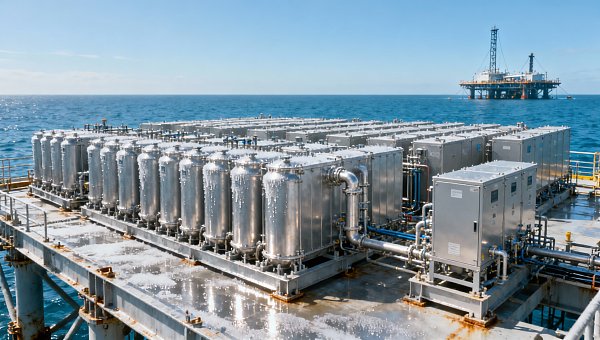
On May 17, 2026, Academician Xie Heping’s research team published the world’s first comprehensive evaluation framework for seawater direct electrolysis hydrogen production in a Nature Energy sub-journal. The framework defines 12 technical parameters—including energy efficiency thresholds, corrosion-resistant material grading, and marine biofouling inhibition protocols. It has been formally adopted by Masdar City’s hydrogen project in the UAE as a mandatory pre-procurement standard. Chinese carbon capture technology (CCT) enterprises supplying integrated hydrogen-coupling modules—such as CO₂ capture units co-located with alkaline electrolyzers—must now comply simultaneously with ISO 21940-2 (mechanical vibration under marine environments) and IEC 62282-8 (safety requirements for water electrolysis systems).
Industries Affected
Direct Exporters
Export-oriented manufacturers of carbon capture–electrolysis integrated systems face immediate compliance pressure. Because Masdar City’s procurement process now mandates conformance with the Xie framework—and specifically its cross-referenced ISO and IEC standards—exporters must revalidate mechanical robustness and safety certification for marine deployment. This extends lead times for export documentation and may trigger third-party retesting under maritime environmental conditions.
Raw Material Procurement Firms
Firms sourcing corrosion-resistant alloys (e.g., super-austenitic stainless steels, nickel-based duplex grades) or anti-biofouling coatings must now align specifications with the framework’s defined material grading tiers. Non-compliant stock—even if certified to general industrial standards—may no longer qualify for downstream integration into framework-aligned modules, increasing procurement scrutiny and potentially narrowing supplier pools.
Equipment Manufacturers
Manufacturers assembling alkaline electrolyzers or modular CO₂ capture units must revise design validation protocols. In particular, vibration resistance testing per ISO 21940-2 (which addresses wave-induced oscillation and platform motion in offshore or coastal settings) is newly required—not just for structural integrity, but as a gatekeeping criterion for tender eligibility. This implies hardware redesigns or retrofitting for mounting interfaces and damping systems.
Supply Chain Service Providers
Third-party certification bodies, marine logistics integrators, and compliance consultants are seeing demand shift toward specialized verification services: e.g., on-site salt-spray + vibration combined testing, biofouling simulation trials, and traceable material pedigree audits. Standard ISO/IEC certification alone is no longer sufficient; evidence of framework-specific parameter compliance must be embedded in technical dossiers.
Key Considerations and Response Measures
Verify Cross-Referenced Standard Alignment
Enterprises should audit existing product certifications against ISO 21940-2 and IEC 62282-8—not only for conformity, but for test scope coverage (e.g., whether vibration profiles simulate realistic marine operational envelopes). Gaps require targeted re-testing, not blanket recertification.
Update Technical Documentation for Tender Submissions
Procurement packages for Middle Eastern or island-based hydrogen projects must now explicitly reference Xie framework parameters—especially corrosion grade (e.g., “Grade C3 per Section 4.2”) and biofouling mitigation method (e.g., “ultrasonic + low-leach antifoulant coating”). Generic performance claims are insufficient.
Engage Early with Certification Partners Specializing in Marine Hydrogen
Given limited global capacity for combined marine-environment safety + electrolysis testing, firms should initiate engagement with labs already accredited for both ISO 21940-2 and IEC 62282-8—particularly those with coastal test facilities—to avoid bottlenecks in 2026 Q3–Q4 tender cycles.
Editorial Perspective / Industry Observation
Observably, this framework does not introduce new regulations per se—but crystallizes de facto technical expectations for marine-integrated hydrogen infrastructure. Its rapid adoption by Masdar suggests that early-mover jurisdictions are shifting from technology demonstration to procurement standardization. Analysis shows that the inclusion of biological fouling control—a historically under-prioritized factor—reflects growing awareness of long-term O&M cost drivers in offshore deployments. From an industry perspective, the framework functions less as a barrier and more as a signal: marine hydrogen is transitioning from lab-scale feasibility to site-specific engineering accountability.
Conclusion
This development marks a step toward operational harmonization—not just technological advancement—in green hydrogen deployment. Rather than indicating stricter regulation across all hydrogen applications, it signals a maturing specialization: seawater-based systems now demand distinct, environment-aware validation. A rational interpretation is that compliance burden is concentrated, not universal; firms targeting terrestrial freshwater electrolysis remain unaffected, while those pursuing coastal or offshore markets must now embed marine resilience into core design logic.
Source Attribution
Primary source: Nature Energy sub-journal publication (May 17, 2026); Masdar City Hydrogen Project procurement notice (Version 3.1, issued May 18, 2026). Note: Framework implementation timelines for other Gulf Cooperation Council (GCC) projects and EU offshore initiatives remain unannounced and are under active monitoring.
The Archive Newsletter
Critical industrial intelligence delivered every Tuesday. Peer-reviewed summaries of the week's most impactful logistics and market shifts.