Monday, May 22, 2024

Grid Efficiency Upgrades That Deliver Measurable Energy Savings
by
Published
Views:
For enterprise decision-makers facing rising energy costs, regulatory pressure, and aging infrastructure, grid efficiency is no longer a technical upgrade but a strategic priority. Measurable energy savings come from targeted improvements in monitoring, power distribution, automation, and asset performance. This article explores practical grid efficiency upgrades that help organizations reduce waste, strengthen resilience, and make data-backed investment decisions with long-term operational value.
The core search intent behind “grid efficiency” in this context is not academic. Decision-makers want to know which upgrades actually reduce energy waste, how savings can be measured, what level of capital commitment is required, and which investments improve both reliability and compliance. They are looking for a clear path from technical intervention to business outcome.
For most enterprises, the answer is straightforward: the highest-value grid efficiency improvements are rarely one large transformation. They are usually a coordinated set of upgrades in visibility, controls, power quality, asset optimization, and demand management. When these are selected based on operational data rather than broad assumptions, organizations can capture measurable energy savings while reducing downtime risk and improving resilience.
What enterprise leaders really need from a grid efficiency strategy
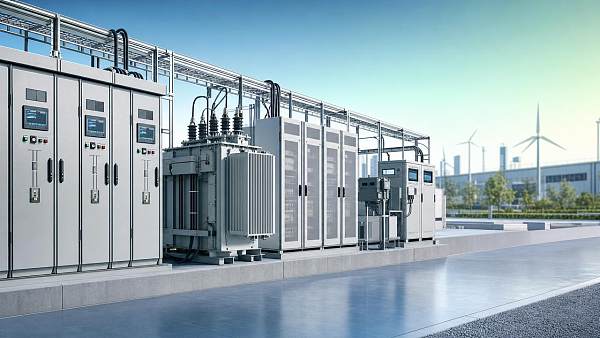
Enterprise leaders are typically not asking whether grid efficiency matters. They are asking where to start, what to prioritize, and how to justify the investment. In manufacturing, logistics, utilities, food processing, mobility, and infrastructure-heavy operations, grid inefficiency shows up as excess consumption, unstable power quality, avoidable losses, and underperforming assets.
That matters because energy spend is now tied to several board-level concerns at once: margin protection, emissions reporting, operational continuity, and supply chain resilience. A facility may be paying more for electricity not only because tariff rates have increased, but because its internal electrical architecture is no longer aligned with current load profiles, equipment age, or production patterns.
A strong grid efficiency strategy therefore needs to answer four practical questions. First, where is energy being lost or poorly managed? Second, which upgrades will produce savings that can be verified? Third, how do those upgrades affect risk, uptime, and maintenance? Fourth, how quickly can the organization see payback without disrupting operations?
The organizations that move fastest are those that treat grid efficiency as an operational intelligence problem rather than only a hardware replacement exercise. Better equipment matters, but better visibility and smarter control are often what turn isolated upgrades into measurable results.
Where measurable energy savings usually come from
Many companies assume energy savings depend mainly on replacing old equipment with new equipment. In practice, measurable savings from grid efficiency often come from a combination of loss reduction, load balancing, control improvements, and smarter use of existing infrastructure.
One common source of savings is reduced technical loss across electrical distribution. Transformers, switchgear, cables, and power conversion systems all create losses. When assets are oversized, degraded, or operating outside optimal ranges, those losses increase. Upgrading transformers, correcting conductor sizing issues, or improving power conversion efficiency can deliver steady reductions in wasted energy.
Another major source is power quality improvement. Poor power factor, harmonics, phase imbalance, and voltage instability can increase effective energy use and shorten equipment life. Capacitor banks, harmonic filters, and dynamic compensation systems may not always seem as visible as renewable installations, but they often produce strong returns because they address persistent inefficiencies in the underlying grid environment.
Automation and controls also drive measurable savings. Facilities that still rely on static schedules, manual switching, or fragmented building and process controls often consume more power than necessary during partial-load conditions. Intelligent control systems can optimize when and how energy-intensive assets operate, especially across HVAC, pumping, compressed air, water treatment, and process lines.
Load management is equally important. Peak demand charges can materially increase total electricity cost even when consumption remains flat. Demand response logic, battery-supported peak shaving, and production-aware scheduling reduce stress on both the internal network and the utility interface. In these cases, grid efficiency supports savings not only in kilowatt-hours but in total cost-to-serve.
Why advanced monitoring is often the highest-return first step
If an organization cannot see how power is flowing, where losses occur, or when abnormal conditions arise, it is difficult to improve grid efficiency in a disciplined way. This is why submetering, power monitoring, and digital energy management platforms are often the best first investment.
Monitoring creates measurable baselines. Instead of relying on monthly utility bills or broad engineering estimates, decision-makers gain interval-level data across feeders, lines, buildings, or critical loads. That makes it possible to identify hidden inefficiencies such as overnight drift, idle-load waste, poor sequencing, transformer overloading, or repeated voltage events.
For enterprise environments with multiple facilities or mixed industrial processes, monitoring also enables benchmarking. One plant may consume significantly more energy per unit output than another due to legacy controls, power quality issues, or lower distribution efficiency. Without granular data, these differences are hard to isolate and even harder to correct.
From a capital planning perspective, monitoring reduces investment uncertainty. It helps organizations validate whether a proposed upgrade should focus on motors, distribution assets, automation, storage, or operational changes. In other words, better data improves not just visibility but investment quality.
This matters particularly for large industrial groups and infrastructure operators. In a cross-sector operating environment, the same grid efficiency framework can be applied to electronics assembly, automotive systems, irrigation networks, filtration plants, or tooling operations, provided the data architecture is consistent and actionable.
Which grid efficiency upgrades usually deserve priority
Not every site needs the same solution, but several upgrade categories consistently offer strong business value when supported by good diagnostics.
1. Smart metering and submetering. These upgrades create the foundation for all later actions. They reveal where electricity is used, when peaks occur, and which assets behave inefficiently under variable conditions.
2. Power factor correction and harmonic mitigation. Facilities with inductive loads, variable frequency drives, welders, pumps, or high-density electronics often suffer from poor power quality. Fixing these issues can reduce losses, avoid penalties, and improve equipment performance.
3. Transformer and distribution upgrades. Replacing aging or poorly matched transformers, reconfiguring feeders, and modernizing switchgear can lower losses and increase reliability. This is especially relevant for sites that have expanded production without re-optimizing their electrical backbone.
4. Intelligent automation and load control. Grid efficiency improves when systems respond dynamically to actual operating conditions. Automated controls can sequence loads, reduce simultaneous peaks, and minimize unnecessary runtime across support systems.
5. Energy storage and peak demand management. Batteries and hybrid control strategies are increasingly valuable where demand charges are high, grid instability is a concern, or operations require greater resilience. Their value rises further when integrated with forecasting and dispatch logic.
6. DER integration and microgrid readiness. For some enterprises, distributed energy resources such as solar, combined heat and power, or localized storage can improve both cost and resilience. However, the real benefit depends on how well these assets are integrated into site-level controls and grid interaction strategy.
7. Asset performance optimization. Motors, pumps, compressors, chillers, and process equipment often account for a significant share of electrical load. Efficiency gains here may sit outside the traditional “grid” category, but from an enterprise standpoint they are essential to total electrical performance.
How to evaluate measurable savings before approving capital
Executives do not need perfect certainty before acting, but they do need a credible method for evaluating return. The most effective approach is to assess grid efficiency upgrades across three dimensions: direct energy savings, avoided operational cost, and strategic risk reduction.
Direct energy savings include reduced technical losses, improved equipment efficiency, lower idle consumption, and decreased peak demand charges. These can often be estimated through baseline interval data, load studies, power quality analysis, and modeled operating profiles.
Avoided operational cost includes fewer outages, lower maintenance burden, extended asset life, and reduced quality losses caused by unstable power. In many sectors, a single unplanned disruption can erase months of nominal energy savings. That is why reliability should be part of the business case, not treated as a separate issue.
Strategic risk reduction includes compliance readiness, emissions reporting support, tariff exposure reduction, and improved resilience against supply instability. These factors may be harder to express in simple payback terms, but they are increasingly material in board-level planning.
Decision-makers should ask vendors and internal teams for a measurement and verification plan before approving major upgrades. Savings claims should be tied to a defined baseline, operating assumptions, reporting period, and adjustment logic. If results cannot be measured clearly, the investment case is weaker regardless of how promising the technology appears.
Common mistakes that reduce the value of grid efficiency programs
The first common mistake is treating grid efficiency as a one-time equipment procurement event. Enterprises sometimes invest in devices without creating the analytics, governance, or process discipline needed to sustain results. A smart meter that no one reviews, or a storage system that is not integrated into operations, will underdeliver.
The second mistake is focusing only on energy price rather than energy performance. When tariffs rise, organizations may rush into headline solutions while ignoring basic inefficiencies in power quality, controls, or distribution architecture. The simplest losses are often the cheapest to fix.
The third mistake is evaluating each site in isolation when the organization operates a broader asset network. Multi-site benchmarking can reveal repeatable inefficiencies and standardize high-performing solutions. Enterprises with global or regional footprints should think in terms of portfolio optimization, not only facility optimization.
The fourth mistake is underestimating implementation risk. Some upgrades are technically sound but difficult to deploy in continuous production environments. Planning should consider outage windows, commissioning complexity, interoperability with legacy systems, cybersecurity, and internal maintenance capability.
Finally, companies often prioritize short payback to the exclusion of resilience. This can lead to underinvestment in infrastructure that protects against future disruption. The strongest grid efficiency programs balance near-term savings with long-term operating stability.
How enterprise leaders can build a practical roadmap
A practical roadmap starts with segmentation. Not all facilities, substations, or process lines have the same energy intensity, criticality, or upgrade potential. Leaders should first identify high-cost, high-load, or high-risk sites where improvements in grid efficiency will have the greatest business impact.
The next step is diagnostic assessment. This includes submetering strategy, power quality review, load profile analysis, asset condition evaluation, and tariff structure assessment. The goal is to move from assumptions to evidence.
Then comes prioritization. Quick-win actions such as control changes, load balancing, or power factor correction may be implemented first to generate visible savings. Medium-term capital projects such as transformer replacement, switchgear modernization, or storage integration can follow once the baseline and business case are established.
Governance is also critical. Ownership should not sit only with facilities or only with procurement. Effective programs usually involve operations, engineering, energy management, finance, and risk functions. This cross-functional structure is particularly important in complex industrial environments where technical upgrades affect production continuity and supplier performance.
Finally, leaders should define what success looks like beyond general efficiency language. Metrics may include kilowatt-hour reduction, peak demand reduction, avoided downtime, power quality improvement, maintenance savings, emissions intensity, and payback by site. Clear metrics make grid efficiency a managed business initiative rather than a loose sustainability objective.
Why grid efficiency is now a strategic capability, not just an engineering topic
For enterprise decision-makers, grid efficiency has become a strategic capability because it sits at the intersection of cost, resilience, compliance, and competitiveness. Facilities that use electricity more intelligently are not only cheaper to run. They are also easier to scale, easier to decarbonize, and better protected against volatility in the external energy environment.
This is especially true in modern manufacturing ecosystems where electrical performance influences everything from semiconductor processing stability to EV component production, precision tooling uptime, cold-chain reliability, water treatment continuity, and automated agricultural operations. As industrial systems become more connected, the value of efficient, observable, and controllable power infrastructure increases.
The most measurable energy savings do not come from chasing trends. They come from disciplined upgrades that address real inefficiencies, guided by data and aligned with operational priorities. In that sense, grid efficiency is not a narrow utility concern. It is a foundation for better enterprise performance.
For organizations deciding where to invest next, the right question is not whether to improve grid efficiency. It is which upgrades will generate verifiable savings, strengthen resilience, and support long-term operating strategy. Companies that answer that question well will gain more than lower energy bills. They will gain a more resilient and better-informed industrial future.

The Archive Newsletter
Critical industrial intelligence delivered every Tuesday. Peer-reviewed summaries of the week's most impactful logistics and market shifts.