Monday, May 22, 2024

Lighting Manufacturer Trends in Energy Efficiency for 2026
by
Published
Views:
Energy efficiency stops being a single metric in 2026
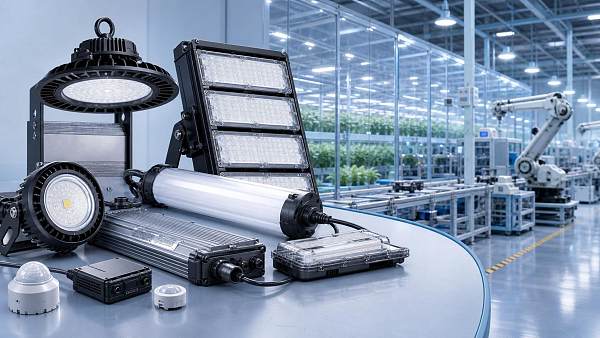
The conversation around every lighting manufacturer is changing fast in 2026.
Efficiency is no longer judged by lumen output alone, or by a simple product datasheet claim.
Rising electricity prices, stricter carbon reporting, and broader supply chain reviews are reshaping how lighting systems are compared.
That shift matters across the wider industrial economy, not only in commercial buildings or urban infrastructure.
Lighting now interacts with electronics, mobility sites, agri-tech facilities, and environmental infrastructure in more measurable ways.
A capable lighting manufacturer is therefore being assessed as part of a larger operational system.
This is where cross-sector benchmarking becomes useful.
Global Industrial Matrix tracks how hardware decisions connect with standards, operating costs, and resilience across multiple industrial pillars.
In that context, lighting efficiency becomes a strategic indicator of engineering maturity, not just a purchasing line item.
The more visible signal is that buyers now want proof of sustained performance under real operating conditions.
Why the pressure on the lighting manufacturer has become more complex
Several forces are converging at the same time, and they reinforce one another.
Energy budgets remain under pressure, but the market is also watching maintenance cycles, embedded carbon, and control-system compatibility.
A lighting manufacturer that cannot address all of these points starts to look incomplete.
More importantly, industrial end users are moving from component procurement toward lifecycle evaluation.
This broader view is especially relevant in facilities where lighting affects safety, machine uptime, inspection quality, or environmental control.
The strongest efficiency gains are now coming from design choices behind the fixture
From recent project comparisons, the most important changes are often invisible at first glance.
The leading lighting manufacturer is improving efficiency through system architecture rather than headline claims alone.
Thermal design is one clear example.
Poor heat management lowers real-world efficacy, shortens driver life, and increases lumen depreciation under demanding duty cycles.
That matters in automotive plants, electronics assembly lines, greenhouse operations, and wastewater sites alike.
Material optimization is another major signal.
Manufacturers are reducing unnecessary mass, improving reflectors, and using more durable housings without sacrificing optical performance.
The outcome is not just energy reduction.
It also supports easier installation, lower transport burden, and better service intervals.
More worth watching is the driver and control layer.
- Adaptive dimming now delivers better savings than static output reduction.
- Occupancy sensing is becoming standard in industrial retrofits, not an optional add-on.
- Daylight harvesting is improving in precision environments where sensor calibration used to be unreliable.
- Remote diagnostics help identify thermal drift, driver anomalies, and maintenance timing earlier.
So when a lighting manufacturer talks about efficiency in 2026, the real question is how that efficiency is engineered and preserved.
Demand-side expectations are shifting across industrial settings
The demand shift is not uniform, but the direction is consistent.
Users now expect lighting to support process quality, environmental control, and digital visibility at the same time.
In electronics manufacturing, stable illumination supports inspection accuracy and operator endurance.
In mobility and EV facilities, rugged fixtures and smart controls reduce energy waste during variable production schedules.
In smart agriculture, spectrum management, moisture resistance, and thermal discipline directly affect productivity.
In industrial ESG infrastructure, lighting performance influences safety, site serviceability, and compliance reporting.
This wider relevance aligns with the way GIM interprets manufacturing assets as connected systems rather than isolated categories.
A lighting manufacturer that understands cross-industry application pressure will usually present better evidence, not just broader catalogs.
That evidence often includes field performance consistency, component qualification discipline, and standard alignment.
Compliance readiness is becoming part of the efficiency story
One of the clearest 2026 changes is that compliance data now influences technical preference earlier in the review cycle.
A lighting manufacturer may still offer strong efficacy numbers, yet lose ground if test methods, materials disclosure, or reliability records feel incomplete.
This is not only about regulation.
It is about reducing the risk of hidden lifecycle cost, redesign exposure, and delayed approvals across regions.
Standards-based benchmarking matters more in this environment.
Whether the reference point is ISO discipline, IPC-linked electronics quality, or sector-specific validation, buyers are looking for repeatable methods.
The better lighting manufacturer is therefore presenting compliance as operational readiness.
That includes documented thermal testing, driver traceability, optical consistency, ingress protection, and substitution control for critical parts.
In practical terms, efficiency claims without verification depth now have a shorter shelf life.
What deserves closer attention when comparing a lighting manufacturer
The most useful comparisons in 2026 look beyond the advertised wattage reduction.
A more reliable view comes from checking how technical, sourcing, and service variables work together.
- Review efficacy retention under heat, dust, vibration, or moisture, depending on site conditions.
- Check whether the control platform supports open integration or creates lock-in through limited protocols.
- Look at driver architecture and semiconductor sourcing, especially where long-term availability is critical.
- Compare maintenance logic, including modular replacement, remote diagnostics, and failure predictability.
- Assess materials and housing design for transport efficiency, durability, and environmental exposure.
- Confirm whether compliance files are current, consistent, and aligned with the intended region or sector.
This kind of review gives a sharper picture of total value than initial pricing comparisons alone.
It also helps separate a genuinely capable lighting manufacturer from one relying on narrow specification highlights.
The next phase will favor manufacturers that think in systems
The next wave of competition will likely reward the lighting manufacturer that can prove system-level efficiency.
That means connecting fixture performance, controls, serviceability, and compliance into one defensible operating model.
It also means understanding that lighting choices now influence broader industrial objectives.
Those objectives include plant uptime, ESG reporting quality, automation readiness, and regional sourcing resilience.
From a market perspective, this is why cross-sector intelligence is becoming more valuable than isolated product comparisons.
A structured benchmark, such as the kind used by GIM, helps reveal whether a supplier fits future operating demands, not only current specifications.
The practical next step is clear.
Track efficiency claims against thermal evidence, control interoperability, sourcing stability, and standards alignment.
Then compare those findings by application setting, because the strongest lighting manufacturer for 2026 will be the one that performs reliably in context.
That approach makes it easier to reduce lifecycle uncertainty and build a more resilient evaluation framework for the years ahead.
The Archive Newsletter
Critical industrial intelligence delivered every Tuesday. Peer-reviewed summaries of the week's most impactful logistics and market shifts.