Monday, May 22, 2024

Renewable Energy Manufacturer Trends Shaping 2026 Projects
by
Published
Views:
As 2026 projects accelerate, every renewable energy manufacturer faces rising pressure to balance cost, compliance, supply chain resilience, and performance. For enterprise decision-making, the challenge is no longer limited to choosing solar, wind, storage, or hybrid assets in isolation. Project success increasingly depends on how well equipment, digital systems, materials sourcing, certification, and lifecycle metrics work together. In a cross-sector environment shaped by electrification, industrial ESG targets, and infrastructure modernization, understanding the next wave of renewable energy manufacturer trends is essential for lowering risk and improving long-term project value.
What is changing fastest for a renewable energy manufacturer in 2026?
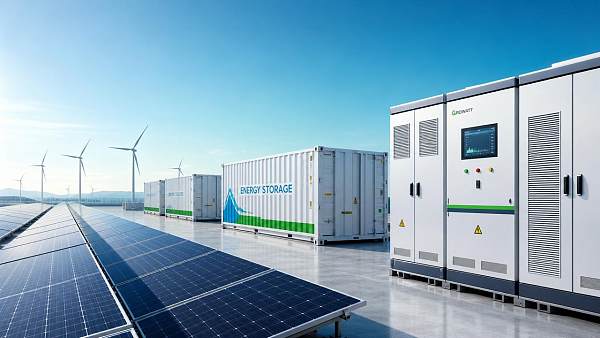
The biggest shift is convergence. A modern renewable energy manufacturer is no longer judged only by unit cost or nameplate output. Evaluation now includes grid compatibility, embedded software quality, traceable components, carbon reporting, repairability, and regional compliance readiness. Solar module suppliers are being compared on degradation profiles and recyclability. Battery system providers are being reviewed for thermal safety, cybersecurity, and warranty structures. Wind equipment vendors are being assessed on gearbox reliability, offshore corrosion protection, and remote diagnostics.
Another fast-moving change is the transition from standalone hardware procurement to system-level benchmarking. In practice, this means buyers and engineering teams increasingly compare inverters, control systems, power electronics, structural components, and monitoring platforms as an integrated stack. A renewable energy manufacturer that can prove interoperability with industrial standards, grid codes, and digital asset management tools is far more likely to secure large 2026 project pipelines than one that competes on price alone.
Geographic diversification is also redefining supplier strategy. Trade restrictions, local content rules, and logistics volatility have reduced confidence in single-region dependence. As a result, leading projects now prefer a renewable energy manufacturer with multi-country sourcing visibility, validated second-source components, and documented contingency planning for semiconductors, rare earths, specialty steel, and battery materials.
Why does supply chain resilience matter more than headline pricing?
A low quoted price can quickly lose value if lead times slip, certification documents are incomplete, or substitutions affect performance guarantees. For 2026 developments, the hidden costs of procurement disruption are often greater than the savings achieved through aggressive unit-price negotiation. That is why supply chain resilience has become a primary differentiator for every serious renewable energy manufacturer.
Resilience should be assessed in layers. The first layer is material exposure: polysilicon, copper, aluminum, lithium compounds, magnets, power semiconductors, membranes, and composite materials all carry varying risk profiles. The second layer is manufacturing transparency: where are cells, packs, controllers, castings, and precision parts actually made, assembled, and tested? The third layer is quality continuity: can the renewable energy manufacturer maintain the same tolerances, firmware compatibility, and certification status when alternate sources are activated?
A practical way to evaluate this is to move beyond supplier declarations and request benchmark evidence. Useful indicators include process capability records, failure analysis reporting, traceability depth, audit frequency, and alignment with recognized standards such as ISO, IATF, IPC, IEC, or UL where relevant. In cross-industry projects involving energy storage, water treatment, EV charging, smart agriculture, or industrial microgrids, this technical transparency often determines whether project schedules remain stable.
- Check if the renewable energy manufacturer has approved second-source strategies for critical components.
- Review average lead-time volatility, not just nominal delivery promises.
- Confirm firmware, controls, and spare parts continuity across production lots.
- Assess whether regional warehousing and service networks support uptime expectations.
How are digital integration and technical benchmarking reshaping vendor selection?
In 2026, hardware without data value is becoming less competitive. A renewable energy manufacturer is increasingly expected to support predictive maintenance, secure telemetry, digital twins, and performance analytics that integrate with broader industrial systems. This matters because renewable projects are no longer isolated assets; they interact with EV infrastructure, factory energy management, smart irrigation, distributed storage, and building automation.
Technical benchmarking helps separate marketing claims from measurable capability. For example, two battery energy storage suppliers may offer similar capacity and warranty periods, yet differ significantly in cell balancing logic, thermal containment design, response time, and round-trip efficiency under real duty cycles. Likewise, two solar equipment providers may quote comparable output ratings while showing very different behavior in high-temperature environments, dust-heavy regions, or weak-grid conditions.
This is where cross-sector intelligence becomes powerful. A renewable energy manufacturer that borrows quality discipline from automotive electronics, fault detection architecture from industrial automation, and lifecycle traceability from semiconductor supply chains can often outperform competitors that remain siloed. The most future-ready vendors are those able to demonstrate measurable performance under application-specific conditions rather than generic laboratory claims.
Which compliance and ESG issues will influence project decisions most?
Compliance is expanding from a checkbox exercise into a financing and market-access requirement. For many 2026 projects, a renewable energy manufacturer must demonstrate not only product safety and electrical conformity, but also reporting readiness around emissions, responsible sourcing, labor practices, recyclability, and end-of-life handling. This is especially relevant in public infrastructure, large industrial campuses, export-oriented manufacturing, and multinational energy portfolios.
One common mistake is treating ESG claims as separate from technical performance. In reality, they are increasingly linked. Poor-quality components create waste, service events, and early replacement cycles. Weak process control raises both defect risk and compliance exposure. A well-prepared renewable energy manufacturer should therefore provide evidence that environmental and quality management systems reinforce each other.
Another issue is regional variation. Incentive eligibility, domestic content policies, and certification pathways differ widely by market. A project may be technically sound but commercially disadvantaged if the selected equipment cannot satisfy local documentation, testing, or origin requirements. Early review of these constraints prevents redesign, import delays, and financing complications later in the project cycle.
Key compliance checkpoints to review
- Electrical and safety certifications relevant to deployment region
- Material disclosure and restricted-substance compliance
- Lifecycle documentation, repair policy, and recycling pathway
- Change management records for components, software, and sub-suppliers
- Audit trail linking ESG claims to measurable operational data
How should 2026 projects compare renewable energy manufacturer options?
The best comparisons start with application fit, not catalog breadth. A utility-scale solar farm, a food-processing microgrid, an agricultural pumping system, and a port electrification project all place different demands on equipment design, service support, and environmental durability. Selecting a renewable energy manufacturer based only on top-line efficiency or capex may overlook integration costs, maintenance burdens, or site-specific constraints that affect total value.
A stronger evaluation framework combines five factors: technical compatibility, resilience of sourcing, lifecycle economics, compliance readiness, and service capability. This structure allows decision-makers to compare not only current quotations but also the vendor’s ability to perform under changing market conditions. In many cases, the winning renewable energy manufacturer is not the one with the lowest upfront price, but the one with the most stable operating profile over ten to twenty years.
It is also wise to test assumptions using scenario analysis. What happens if semiconductor lead times expand? If ambient temperatures exceed design norms? If local interconnection rules change? If spare parts need to be localized? These questions reveal how prepared each renewable energy manufacturer is for uncertainty, and they often expose hidden weaknesses in otherwise attractive bids.
What mistakes should be avoided when preparing next-generation renewable investments?
The first mistake is reducing vendor assessment to price and basic specifications. In a volatile market, a renewable energy manufacturer must be evaluated for operational discipline, documentation quality, and engineering responsiveness. The second mistake is ignoring interfaces between systems. Even high-performing components can create underperformance if controls, software, structural tolerances, or communications standards are misaligned.
A third mistake is delaying benchmarking until late-stage procurement. By then, redesign costs and schedule risks are harder to absorb. Early technical comparison, including cross-industry references where relevant, improves confidence before commitments are locked. This is particularly important for hybrid systems that combine storage, filtration, mobility charging, automation, or distributed generation.
Finally, do not assume all sustainability narratives are equal. The most credible renewable energy manufacturer is one that can connect ESG positioning with verifiable process control, measurable uptime, traceable sourcing, and realistic lifecycle support. That level of evidence is increasingly decisive for project bankability and long-term asset performance.
In summary, 2026 projects will reward a renewable energy manufacturer that combines strong engineering, resilient sourcing, digital readiness, and transparent compliance. The most effective next step is to build a structured evaluation model that benchmarks suppliers across technical, operational, and ESG dimensions before final selection. With cross-sector intelligence and disciplined verification, renewable investments can move from reactive procurement to resilient, high-performance project design.

The Archive Newsletter
Critical industrial intelligence delivered every Tuesday. Peer-reviewed summaries of the week's most impactful logistics and market shifts.