Monday, May 22, 2024

Smart Grid Technology Trends Shaping Grid Upgrades in 2026
by
Published
Views:
Why smart grid technology moves to the center of 2026 upgrades
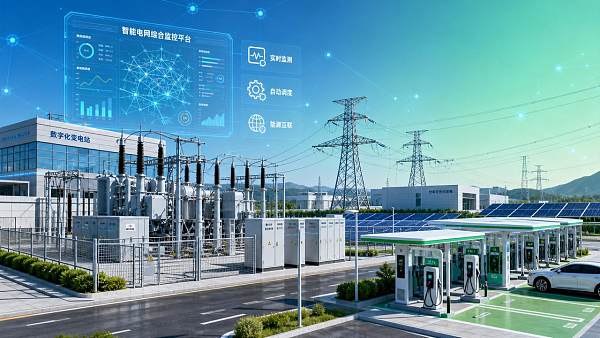
Grid upgrades are no longer defined by wire, steel, and substation capacity alone.
By 2026, smart grid technology is shaping how utilities judge resilience, dispatch power, and recover from disruption.
The change feels more urgent because power networks now carry heavier digital and operational expectations.
Electric vehicles add volatile charging demand.
Distributed solar changes midday load behavior.
Industrial sites want cleaner electricity without compromising uptime.
Water systems, transport corridors, farms, and manufacturing plants are becoming more power sensitive at the same time.
That is why smart grid technology is not just a utility story.
It increasingly connects electronics, mobility, environmental infrastructure, and automation into one operating question.
This cross-sector view matters.
A benchmarking mindset, similar to the one used by Global Industrial Matrix across industrial systems, is becoming essential for grid decisions.
Leaders are comparing hardware readiness, communications reliability, standards alignment, and lifecycle risk together rather than separately.
The strongest signals are coming from visibility and control
One clear signal is the move from periodic monitoring to near real-time awareness.
Legacy grid upgrades often focused on replacement cycles.
Now the bigger question is whether operators can actually see fast-changing conditions early enough to respond.
Smart grid technology makes that possible through advanced sensors, digital substations, feeder automation, edge analytics, and stronger SCADA integration.
From recent deployment patterns, three shifts stand out.
- Distribution networks are receiving more intelligence, not only transmission assets.
- Outage management is merging with predictive condition monitoring.
- Data quality is becoming as important as device quantity.
This last point is easy to underestimate.
Utilities may install more connected devices, yet still struggle if timestamps drift, protocols conflict, or asset data remains fragmented.
In practice, the next wave of smart grid technology depends less on isolated equipment counts and more on system coherence.
Why these trends are accelerating now
The momentum behind smart grid technology is not driven by one policy or one hardware cycle.
It comes from several pressures converging at once.
What makes 2026 different is the interaction between these drivers.
A charging corridor near a logistics cluster can also depend on semiconductor availability, transformer lead times, and local resilience rules.
That broader systems perspective is becoming a practical necessity, not a strategic slogan.
The impact extends far beyond the utility perimeter
Smart grid technology increasingly affects how industrial and infrastructure assets are designed and operated.
Factories with electrified heat loads need better grid interaction models.
Agricultural operations using connected irrigation or autonomous equipment need steadier voltage quality and remote energy visibility.
Water treatment facilities depend on continuity because power instability quickly becomes a public service issue.
This is where smart grid technology starts to resemble a shared industrial backbone.
In electronics and mobility, it shapes charging logic, battery storage integration, and grid-aware controls.
In environmental infrastructure, it affects pumping schedules, resilience planning, and energy optimization windows.
In precision equipment environments, it influences power quality tolerance and maintenance timing.
The common thread is operational coordination.
Organizations that once treated the grid as an external constraint are beginning to treat it as an active interface.
Where smart grid technology projects often become difficult
The market conversation often highlights innovation, but the harder issues appear during execution.
Interoperability remains one of the biggest practical hurdles.
Field devices may support modern protocols on paper while still creating integration delays in mixed fleets.
Cybersecurity is another constraint with direct design consequences.
If segmentation, authentication, and patch governance are considered too late, retrofit costs rise quickly.
There is also a supply chain angle that deserves more attention.
Upgrades depend on semiconductors, communications modules, transformers, sensors, relays, and specialized software support.
A delay in one layer can stall the entire commissioning sequence.
- Watch component standardization early, especially for communications and protection hardware.
- Check whether asset data models can survive future expansion, not only current deployment.
- Validate vendor support depth across firmware, cyber response, and field replacement cycles.
These checks sound technical, yet they strongly influence capex efficiency and delivery confidence.
What deserves closer attention before budgets lock in
A useful way to judge smart grid technology plans is to look at operational fit before feature count.
More sensors do not automatically mean better decisions.
Better decisions usually come from cleaner integration between asset condition data, outage logic, load forecasting, and maintenance workflows.
Several questions help separate mature upgrades from attractive but shallow proposals.
- Can the architecture support distributed energy resources without frequent redesign?
- Will the communications layer handle rural, urban, and industrial environments consistently?
- Are cybersecurity controls embedded at device, network, and operations levels?
- Does the upgrade improve restoration speed in measurable field conditions?
- Is standards alignment clear across hardware, data exchange, and maintenance documentation?
This is where technical benchmarking becomes valuable.
Cross-sector comparison can reveal whether a grid component is genuinely robust or merely well marketed.
That discipline mirrors how advanced industrial platforms evaluate EV systems, electronics assemblies, and infrastructure modules against verifiable standards.
The next phase will favor disciplined, modular decisions
Looking ahead, smart grid technology is likely to move toward modularity rather than one-time transformation programs.
That means phased upgrades, stronger digital twins, more edge intelligence, and tighter links between asset health and dispatch logic.
It also means decisions will be judged by adaptability.
The most durable grid upgrades will not be the most complex ones.
They will be the ones that handle changing load patterns, integrate new equipment cleanly, and maintain trust under cyber and climate stress.
A sensible next step is to map current assets against likely 2026 operating conditions.
Then compare blind spots in visibility, interoperability, and resilience rather than chasing every emerging feature.
Smart grid technology is becoming a decision framework as much as a technical stack.
Those who treat it that way will be in a stronger position to prioritize upgrades, reduce execution risk, and build networks ready for the industrial reality of 2026.

The Archive Newsletter
Critical industrial intelligence delivered every Tuesday. Peer-reviewed summaries of the week's most impactful logistics and market shifts.