Monday, May 22, 2024

Smart grid technology risks utilities should not ignore
by
Published
Views:
As utilities modernize around smart grid technology, the biggest risk is not adoption itself but underestimating how digital, operational, and supply-chain vulnerabilities can turn grid upgrades into reliability, safety, compliance, and cost problems. For utilities, engineering teams, procurement leaders, and business decision-makers, the real question is not whether smart grids deliver value—they do—but whether the organization can manage cyber exposure, interoperability gaps, data integrity issues, vendor lock-in, asset lifecycle complexity, and downstream impacts on mobility, industrial infrastructure, and critical services. In a world where grid intelligence increasingly supports EV charging, distributed energy resources, automated operations, and future mobility ecosystems, overlooking these risks can damage resilience and weaken long-term investment returns.
Which smart grid technology risks matter most to utilities?
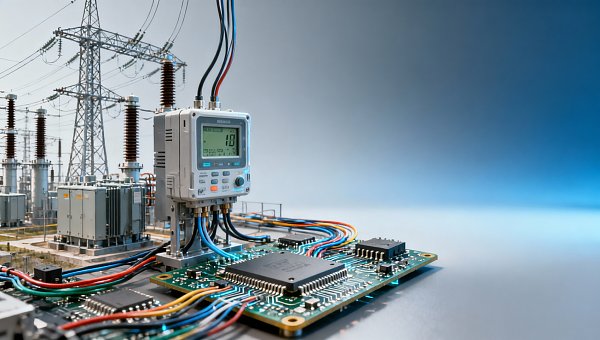
When people search for smart grid technology risks utilities should not ignore, they are usually not looking for abstract definitions. They want to know which risks are most likely to disrupt operations, delay projects, raise compliance costs, or create long-term technical debt. For most utilities, the highest-priority risks fall into six categories:
- Cybersecurity risk: Expanded digital connectivity creates more attack surfaces across substations, smart meters, edge devices, cloud platforms, and vendor access points.
- Interoperability risk: Devices and software from multiple vendors may not integrate cleanly, reducing visibility and increasing maintenance burden.
- Data quality and governance risk: Smart grids depend on accurate, timely, and trusted data. Poor data can lead to wrong operational decisions.
- Operational resilience risk: Automation can improve speed and efficiency, but failures in communication networks, sensors, or control logic can cascade quickly.
- Supply chain and component risk: Utility modernization increasingly depends on semiconductors, communications modules, PCB assemblies, sensors, and power electronics that may face sourcing, quality, or obsolescence issues.
- Financial and regulatory risk: Projects that look strategic on paper can lose value if total lifecycle cost, compliance obligations, or upgrade dependencies are underestimated.
The key takeaway is simple: smart grid risk is not just an IT issue. It is a system-level issue spanning engineering, procurement, compliance, safety, operations, and capital planning.
Why cyber risk is the first issue utilities should evaluate
Cybersecurity is often the most urgent concern because smart grid modernization connects operational technology with data networks, remote management tools, enterprise platforms, and in many cases third-party ecosystems. That connectivity increases operational intelligence, but it also expands exposure.
Utilities should be particularly concerned about:
- Legacy equipment connected to modern networks without sufficient hardening
- Weak authentication and access control for field devices and contractor accounts
- Unpatched firmware in intelligent electronic devices, meters, gateways, and controllers
- Poor segmentation between IT and OT environments
- Insufficient incident response capabilities for grid-specific attack scenarios
For decision-makers, the business consequence of cyber weakness is broader than service interruption. It can include regulatory penalties, reputational loss, delayed grid programs, insurance complications, and downstream effects on EV charging infrastructure, industrial operations, and public services that increasingly rely on digital grid stability.
A practical evaluation question is: if one connected device, software module, or vendor access channel is compromised, how far can the disruption spread? Utilities that cannot answer that clearly typically have a visibility gap that needs immediate attention.
How interoperability and vendor lock-in quietly raise long-term costs
Many utilities focus on deployment milestones but underestimate the risk of fragmented architecture. Smart grid environments often combine legacy assets with new communications layers, cloud analytics, distributed energy resource management tools, advanced metering infrastructure, and substation automation platforms. If these systems do not communicate through robust, standards-aligned methods, the result is usually higher integration cost and lower flexibility.
This matters for both technical and commercial reasons:
- Engineering teams face more customization, troubleshooting, and upgrade complexity.
- Procurement teams may become dependent on a limited vendor pool for spares, software changes, and service support.
- Finance leaders may see rising total cost of ownership long after the original capital approval.
- Project managers may encounter delays when scaling pilots into full deployment.
Utilities can reduce this risk by benchmarking solutions against relevant standards, validating protocol compatibility early, and requiring clearer documentation for APIs, firmware support periods, data export formats, and migration paths. This is especially important in cross-sector environments where grid infrastructure increasingly intersects with automotive charging systems, industrial energy management, and environmental infrastructure.
Why data integrity is just as important as data volume
Smart grid investments often promise better decision-making through more data. But more data does not automatically mean better outcomes. If data is incomplete, delayed, duplicated, badly labeled, or poorly governed, utilities may make incorrect decisions about load balancing, fault detection, predictive maintenance, demand response, and asset replacement.
Common data-related risks include:
- Inconsistent readings across devices from different manufacturers
- Weak timestamp synchronization in distributed systems
- Poor master data management for assets and field equipment
- Limited traceability from raw data to control-room decisions
- Insufficient governance over who owns, validates, and secures operational data
This issue also matters beyond the utility itself. Smart grid data increasingly influences connected sectors such as EV infrastructure, driver assistance ecosystems, charging load planning, and industrial automation. If the underlying electrical and operational data is unreliable, decisions made in adjacent systems may also be flawed.
For quality and safety managers, a strong question is: can the organization prove that the data driving automated or semi-automated decisions is accurate enough for the operational risk involved?
What utilities often miss about physical infrastructure and component risk
Smart grid conversations are often dominated by software, connectivity, and analytics. However, physical hardware remains a major source of hidden risk. Every intelligent grid deployment depends on the quality and durability of its electrical, electronic, and communication components.
That includes:
- Power electronics and control modules
- Semiconductors and active components
- Sensor arrays and communications hardware
- PCB fabrication and assembly quality
- Battery-backed devices and field enclosures
- Connectors, relays, transformers, and switchgear interfaces
If component quality is inconsistent, utilities can face premature failures, inaccurate sensing, overheating, maintenance spikes, and field replacement costs. This is one reason cross-sector benchmarking matters. Hardware and supplier quality issues seen in automotive powertrains, industrial controls, or environmental systems can also appear in smart grid infrastructure.
For organizations evaluating new partners, including an electric motor manufacturer, electronics supplier, or integrated controls vendor, supplier assessment should go beyond price and lead time. It should include standards alignment, traceability, reliability testing, change control discipline, and resilience of the vendor’s own supply chain.
How automation can create resilience gains and operational fragility at the same time
Automation is one of the strongest business cases for smart grid technology. It can improve outage response, voltage optimization, distributed energy integration, and labor efficiency. But automation also compresses the time available to detect and correct errors. A flawed rule set, software update issue, sensor fault, or communications breakdown can trigger actions at machine speed.
Utilities should pay close attention to:
- Whether automated controls have safe fallback modes
- How manual override works during communication loss
- Whether operators are trained to manage partially automated failures
- How frequently control logic is tested under real-world stress conditions
- Whether resilience planning covers compound events such as cyber incidents plus weather disruption
This is where operational users and project leads often need more than strategic messaging. They need clear procedures, escalation logic, simulation exercises, and maintenance workflows that reflect how systems actually behave in the field.
What a practical risk assessment framework should include
Utilities do not need to delay modernization until every uncertainty disappears. But they do need a decision framework that treats smart grid technology as an interconnected industrial system rather than a standalone digital upgrade.
A practical assessment should cover these areas:
- Criticality mapping: Identify which assets, data flows, and interfaces are most important to safety, uptime, compliance, and revenue protection.
- Architecture review: Evaluate interoperability, segmentation, remote access pathways, and single points of failure.
- Supplier benchmarking: Assess technical capability, certification posture, quality systems, lifecycle support, and supply continuity.
- Lifecycle cost analysis: Estimate not just deployment cost but maintenance, patching, retraining, integration updates, and replacement timing.
- Data governance validation: Define data ownership, validation rules, retention policies, and traceability requirements.
- Operational resilience testing: Run scenarios for outage recovery, communication failure, cyber compromise, and degraded-mode operation.
- Compliance and reporting review: Align programs with applicable regulatory, safety, and standards requirements from the start.
This approach helps both technical evaluators and business stakeholders make better decisions. It also supports clearer approval processes for financial reviewers who need evidence that modernization investments are resilient, measurable, and not likely to create unmanaged downstream liabilities.
How utilities can make better investment decisions in a more connected industrial ecosystem
Smart grid projects should now be assessed in the context of a larger industrial transformation. Grid intelligence increasingly influences electrified mobility, charging reliability, emissions reduction targets, industrial productivity, and environmental infrastructure performance. That means the cost of getting risk assessment wrong is growing.
The most effective organizations are not the ones that move fastest without friction. They are the ones that modernize with stronger technical verification, better supplier intelligence, and more realistic assumptions about lifecycle complexity.
For leaders making investment decisions, three questions are especially useful:
- Does this deployment improve resilience as well as efficiency?
- Can we validate the quality and interoperability of the underlying hardware, software, and supplier network?
- Will this architecture still be supportable and adaptable five to ten years from now?
If the answer to any of these is uncertain, the project may need deeper benchmarking before scale-up.
Conclusion: smart grid value is real, but unmanaged risk can erase it
Smart grid technology can help utilities improve visibility, automation, reliability, and support for future energy and mobility systems. But the risks utilities should not ignore are equally real: cyber exposure, interoperability failure, poor data integrity, hardware quality issues, vendor dependence, operational fragility, and underestimated lifecycle cost.
The best path forward is not fear-based delay or technology-first enthusiasm. It is disciplined evaluation. Utilities that combine engineering rigor, supplier benchmarking, standards-based assessment, and practical resilience planning are far more likely to capture the value of smart grid modernization without inheriting avoidable risk. In a connected industrial landscape shaped by electronics, automotive systems, infrastructure modernization, and sustainability demands, that balanced approach is becoming a competitive necessity.
The Archive Newsletter
Critical industrial intelligence delivered every Tuesday. Peer-reviewed summaries of the week's most impactful logistics and market shifts.