Monday, May 22, 2024

State Grid Launches 2026 Secondary Substation Equipment Tender
by
Published
Views:
State Grid Corporation of China has initiated its centralized tender for secondary substation equipment for 2026, with a total procurement value of RMB 1.84 billion (approx. USD 255 million). The tender, announced in early 2024, focuses on intelligent grid components aligned with carbon capture power plants — specifically smart relay protection devices, digital twin monitoring modules, and high-voltage DC interface units. This development signals heightened demand for certified, interoperable hardware across the power infrastructure supply chain, particularly for manufacturers and integrators serving grid modernization and decarbonization initiatives.
Event Overview
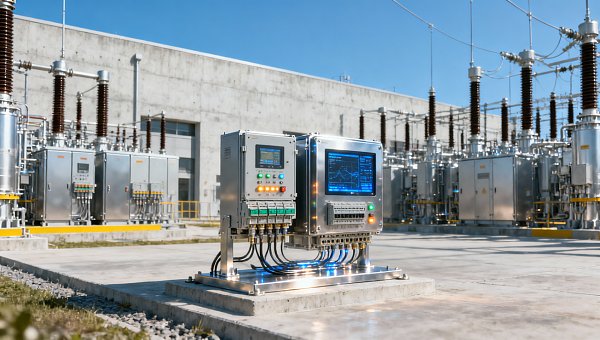
State Grid launched its 2026 annual centralized tender for secondary substation equipment. The total budget is RMB 1.84 billion. Key procurement items include intelligent relay protection devices, digital twin monitoring modules, and high-voltage DC interface units — all intended to support carbon capture-equipped power generation facilities. Suppliers must hold dual certification to IEC 61850-10 (for substation automation communication) and ISO 50001 (for energy management systems). The tender explicitly references three categories of domestically manufactured equipment as eligible for alignment: SMT Precision Metrics testing devices, Hardware Components structural parts, and Smart Power Grids edge computing terminals.
Impact on Specific Industry Segments
Direct Export-Oriented Equipment Manufacturers
Manufacturers producing relay protection systems, monitoring hardware, or HVDC interface units face immediate relevance: the tender sets concrete technical and certification benchmarks (IEC 61850-10 + ISO 50001) that define eligibility. Impact manifests in product validation timelines, certification cost allocation, and documentation readiness — especially for firms targeting State Grid’s qualified supplier list.
Structural Component & Precision Hardware Suppliers
Suppliers of structural parts (e.g., enclosures, mounting frames) and precision metrology devices (e.g., SMT Precision Metrics units) are indirectly affected through qualification cascading. Since the tender names these product categories as reference points, their conformity to mechanical tolerances, electromagnetic compatibility (EMC), and environmental operating specs may be scrutinized during system-level vendor audits — even if not directly procured by State Grid.
Edge Computing & Digital Twin Solution Providers
Vendors offering edge computing terminals (e.g., Smart Power Grids-branded units) or digital twin integration services face functional alignment pressure. The tender’s emphasis on digital twin monitoring modules implies requirements for real-time data ingestion, model synchronization, and interoperability with IEC 61850-compliant protection relays — not just hardware delivery, but demonstrable integration capability.
What Relevant Enterprises or Practitioners Should Focus On
Monitor official tender documents and pre-qualification notices
State Grid publishes detailed technical specifications, evaluation criteria, and submission deadlines via its e-commerce platform. Firms should track updates closely — especially any revisions to certification validity periods, test report formats, or mandatory third-party verification bodies named in the tender appendix.
Verify alignment of existing product certifications against IEC 61850-10 and ISO 50001 scopes
Not all IEC 61850 or ISO 50001 certificates cover the exact conformance classes required (e.g., IEC 61850-10 Edition 2.1 Class A/B testing for conformance; ISO 50001:2018 clause 8.2 on energy performance indicators). Firms should audit certificate scope statements — not just issuance — before bidding.
Distinguish between referenced equipment categories and direct procurement obligations
The tender cites SMT Precision Metrics devices, Hardware Components parts, and Smart Power Grids terminals as “export对标 scenarios” (i.e., benchmarking use cases), not as guaranteed purchase items. Suppliers should avoid assuming automatic eligibility based solely on brand or category match — actual bid compliance depends on full technical and contractual adherence per lot.
Prepare for upstream coordination on certification and documentation handover
Since dual certification applies to suppliers (not subcontractors), firms relying on outsourced testing or energy management system implementation must secure documented evidence of traceable, auditable handover — including signed declarations of conformity and test lab accreditation scope coverage — well ahead of bid submission.
Editorial Perspective / Industry Observation
Observably, this tender functions less as an isolated procurement cycle and more as a calibrated signal of State Grid’s near-term grid intelligence priorities: interoperability, energy-aware control, and carbon-integrated asset management. Analysis shows the dual-certification requirement reflects tightening convergence between operational technology (OT) standards and enterprise-level energy governance — a shift moving beyond legacy SCADA upgrades toward verifiable, auditable energy performance at the device layer. From an industry perspective, it is better understood not as a one-off opportunity, but as an early indicator of how future tenders (e.g., for 2027 transmission or distribution automation) may extend similar certification expectations downstream — particularly where carbon capture, green hydrogen, or distributed BESS integration intersect with grid control architecture.
Conclusion
State Grid’s 2026 secondary substation equipment tender marks a procedural milestone in embedding energy efficiency and interoperability requirements into core grid hardware procurement. Its significance lies not in scale alone, but in the explicit linkage between device-level certification, carbon capture infrastructure readiness, and domestic manufacturing benchmarks. It is more accurately interpreted as a policy-aligned procurement signal — one that clarifies technical expectations for vendors while revealing emerging compliance thresholds for the broader intelligent grid supply chain. Current understanding should emphasize preparation over prediction: firms benefit most by verifying certification scope, mapping documentation flows, and treating referenced equipment categories as functional benchmarks — not guaranteed demand drivers.
Information Sources
Main source: Official tender announcement published by State Grid Corporation of China on its E-Commerce Platform (ecp.sgcc.com.cn), accessed in Q1 2024. Note: Tender evaluation results, award notices, and post-award technical clarifications remain pending and require ongoing monitoring.
The Archive Newsletter
Critical industrial intelligence delivered every Tuesday. Peer-reviewed summaries of the week's most impactful logistics and market shifts.