Monday, May 22, 2024

PSA Adds Carbon Labels to Wastewater Equipment Shipping
by
Published
Views:
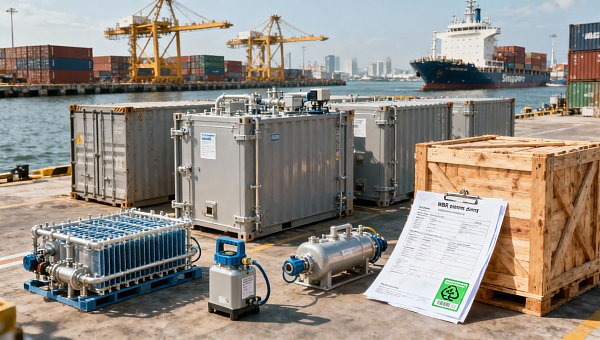
On June 16, 2026, PSA introduced an "ESG Monitor" real-time manifest dashboard on its TradeLens platform and tied it to a new documentation requirement for Wastewater & Filtration equipment arriving in Singapore. For exporters, manufacturers, logistics teams, and buyers handling products such as MBR membrane modules, smart dosing pumps, and integrated water purification units, the development is worth close attention because carbon-intensity data now becomes part of shipment documentation rather than a separate sustainability discussion.
What the new PSA requirement confirms
According to the information provided, the new requirement applies to all Wastewater & Filtration equipment shipped to Singapore under the relevant category. Certified carbon-intensity labels, expressed in kgCO₂e/unit, must be embedded in both bills of lading and packing lists.
The same information states that the reported data must connect with international carbon databases such as CarbonChain or CME Group ESG Registry. If cargo does not meet the requirement, release may be delayed and a carbon compliance service fee may be charged.
Where the impact is likely to be felt first
Export documentation moves closer to compliance control
From an industry perspective, direct trading companies and export teams may feel the impact first because the new requirement sits directly in the bill of lading and packing list workflow. The practical issue is no longer only product shipment, but whether shipment data and carbon data are aligned before cargo arrival in Singapore.
Manufacturers may face new pressure at product-unit level
Analysis shows that equipment manufacturers in the Wastewater & Filtration segment may need to pay closer attention to how carbon-intensity information is prepared at the unit level. This matters especially for product categories specifically mentioned in the event summary, including MBR membrane modules, smart dosing pumps, and integrated water purification units.
Logistics and service providers may need tighter data coordination
Observably, freight forwarders, shipping support teams, and other supply chain service providers may be affected in the document review and cargo release stages. The main point to watch is whether shipment files contain certified labels in the required format and whether the underlying data is connected to the referenced carbon registries.
Buyers and project-side procurement may need earlier verification
For procurement teams and downstream buyers, the issue may show up in delivery timing and supplier communication. If non-compliant cargo faces release delays or extra compliance charges, the effect may extend beyond customs documentation into delivery planning, contract coordination, and order acceptance.
What companies should watch in practice
Check whether current shipping documents can carry the label correctly
What deserves closer attention is whether current bill of lading and packing list processes can already accommodate certified carbon-intensity labels without manual rework or inconsistency between documents.
Verify the certification and database connection path
Companies involved in exports to Singapore should pay attention to the operational side of compliance: the label is not described only as a self-declared figure, but as a certified carbon-intensity label linked to international carbon databases such as CarbonChain or CME Group ESG Registry.
Review exposed product lines and shipment schedules
Businesses handling the product categories named in the event should identify which shipments, SKUs, or customer orders fall within the Wastewater & Filtration scope and whether upcoming deliveries to Singapore could be exposed to delay risk.
Prepare customer and supplier communication in advance
Because the consequence for non-compliance includes delayed release and a carbon compliance service fee, importers, exporters, and suppliers may need clearer advance communication on document readiness, responsibility allocation, and possible lead-time adjustments.
Why this looks like more than a paperwork update
Analysis shows that this development is better understood as a signal that carbon data is moving into frontline trade execution for a defined equipment category. The notable point is not only the existence of an ESG dashboard, but the fact that release timing and compliance cost are tied to whether carbon-intensity information is embedded in core shipping documents.
At the same time, it is more appropriate to understand this as an active compliance signal rather than a fully mapped market outcome. The information provided confirms the requirement and its immediate consequence, but the wider operational effects across suppliers, routes, and contract structures still need continued observation.
How to read the signal at this stage
For the industry, the immediate significance lies in the growing overlap between trade documentation, product-level carbon disclosure, and cargo release management. A neutral reading is that this is a concrete short-term operational change for shipments into Singapore under the specified category, and also a longer-term signal that sustainability data may increasingly be treated as shipment-critical information.
Current attention is best placed on compliance execution rather than broad market conclusions. Companies connected to Wastewater & Filtration exports should treat the update as actionable now, while continuing to monitor whether further clarification, scope refinement, or related implementation rules emerge.
About the basis of this article
This article is generated based on the user-provided news title, event date, and event summary. For this type of industry update, commonly relevant source types may include official port or platform announcements, company disclosures, industry association notices, authoritative media reports, and standard-setting documents.
No specific official source link was provided in the input, so further verification remains necessary. Continued attention should focus on any later official clarification regarding document format, certification expectations, covered product scope, and the practical application of delay or service-fee measures.
The Archive Newsletter
Critical industrial intelligence delivered every Tuesday. Peer-reviewed summaries of the week's most impactful logistics and market shifts.