Monday, May 22, 2024

PSA Carbon Label Rule Hits Water Equipment Transit
by
Published
Views:
On June 20, 2026, Singapore’s PSA introduced an ESG Monitor real-time manifest dashboard on its PSA Connect platform, paired with a new pre-shipment requirement for Wastewater & Filtration equipment moving through Singapore for re-export. For manufacturers, exporters, distributors, verification providers, and buyers across Southeast Asia and the Middle East, the development is worth close attention because it links transit handling with carbon-intensity disclosure, document preparation, and third-party verification before shipment.
What the new PSA requirement confirms
The confirmed information is limited but clear. PSA launched the ESG Monitor real-time manifest dashboard on June 20, 2026 through PSA Connect. Under this requirement, all Wastewater & Filtration equipment transshipped and exported via Singapore must have an embedded carbon-intensity label completed before shipment.
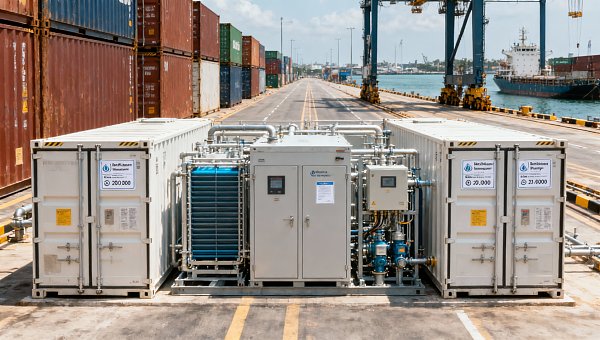
The requirement applies to equipment including MBR membrane modules, integrated water purification units, and smart pump stations. The carbon information must be shown either on the equipment nameplate or in an accompanying electronic data sheet (EDS).
The required disclosure is the Scope 1+2 carbon emission value, expressed in kgCO₂e, corresponding to unit treatment capacity in m³/day. The data must be verified by SGS or Bureau Veritas. According to the provided event summary, the requirement becomes mandatory on July 15, 2026 and affects distribution chains serving Southeast Asia and the Middle East.
Where the pressure is likely to appear in the chain
Transit-dependent exporters may face a new release condition
From an industry perspective, exporters that route Wastewater & Filtration equipment through Singapore are likely to feel the change first because the new rule moves carbon disclosure into the shipment preparation stage. The practical impact is not only on labeling itself, but also on whether nameplates, EDS files, and supporting verification are ready before cargo handover or manifest submission.
What deserves closer attention is that this is tied to transshipment rather than only end-market marketing claims. For export businesses, the immediate compliance question becomes whether product files and shipment files are aligned well enough to avoid delays, rework, or document mismatch during dispatch.
Manufacturers may need tighter coordination between product data and marking
Analysis shows that equipment makers covered by the listed categories may need to review how carbon-intensity information is generated and presented across physical and digital product materials. Because the rule refers specifically to unit treatment capacity and Scope 1+2 emissions, manufacturers may need to ensure that technical parameters, nameplate content, and EDS records are consistent before goods are released for shipment.
The effect is likely to be most visible in specification control, document version management, and factory handover timing. If labeling is handled late in the process, the compliance burden may shift directly into packing, inspection, and export scheduling.
Distributors and procurement teams may need earlier document checks
Observably, regional distributors and procurement-side teams may be affected because the new requirement can change what must be confirmed before accepting delivery schedules or arranging onward sales. If equipment is moving through Singapore into Southeast Asian or Middle Eastern channels, buyers and channel operators may need earlier confirmation that carbon labels and verification records are already embedded in the shipment package.
The operational impact may show up in purchase specifications, supplier onboarding, pre-shipment checklists, and handover documentation. This is particularly relevant where procurement teams rely on EDS files, product datasheets, or bid documents to confirm conformity before delivery.
Verification and compliance service providers may see a narrower execution window
Analysis shows that the reference to SGS or Bureau Veritas makes third-party verification a practical gate in the compliance workflow. For testing, inspection, and certification-related service providers, the key issue is not only verification itself, but also how quickly verified data can be matched to shipment documentation and product identification before the mandatory date takes effect.
For companies using external compliance support, the change means verification timing could become part of logistics planning rather than a standalone documentation step.
What companies should review before the mandate date
Check whether covered products are already mapped
It is more appropriate to understand the current stage as one requiring product-level screening. Companies handling MBR membrane modules, integrated water purification units, or smart pump stations should first determine which items in their export portfolio fall within the requirement when routed through Singapore for re-export.
Verify how carbon data will appear on shipment-linked records
What deserves closer attention is the form of disclosure. The summary states that the data must appear on the equipment nameplate or in an accompanying EDS, so companies should review whether their existing templates, technical files, and shipment records can present the required kgCO₂e value against m³/day in a consistent way.
Review verification timing with SGS or Bureau Veritas
Analysis shows that the verification step may become a scheduling risk if left too late. Businesses should pay attention to whether internal data preparation, external verification, and shipment booking are sequenced properly, especially for orders already planned near or after July 15, 2026.
Watch for follow-up wording and execution practice
The provided information confirms the requirement and its start date, but does not give full operational detail on enforcement practice, exception handling, or document review mechanics. For that reason, companies should continue monitoring later official wording, customer document requests, and any updates in tender, procurement, or logistics instructions connected to PSA Connect and transshipment processing.
Why this looks like an execution signal, not just a disclosure trend
Editorial observation: this update is more appropriately read as an execution signal tied to cargo handling and trade flow, rather than as a general sustainability statement. The notable shift is that carbon-intensity information is being positioned alongside shipment-readiness requirements for specific equipment categories moving through a major transit hub.
At the same time, it would be premature to overstate the broader outcome beyond the facts provided. The current information supports a clear reading that the rule is moving into mandatory use from July 15, 2026, but the market still needs to observe how verification timing, documentation review, and customer-side acceptance will work in day-to-day execution.
How the market may best read this development now
From an industry perspective, the immediate significance lies in the fact that a transit-linked logistics platform is being used to push carbon disclosure into pre-shipment compliance for defined Wastewater & Filtration equipment. That makes this less about abstract ESG signaling and more about practical readiness across labeling, EDS preparation, verification, and delivery coordination.
A cautious reading is therefore the most suitable one: this is already a landed rule change with a stated mandatory date, while its full operational consequences still require continued observation through implementation, market feedback, and any further clarification of execution standards.
Basis of this article and what still needs verification
This article is generated from the user-provided news title, event date, and event summary. For developments of this kind, relevant source types would normally include official operator notices, regulatory or trade authority releases, customs or trade administration information, industry association updates, standard-setting documents, and reporting by authoritative media.
No specific official source link was provided in the input, so the precise official publication path still needs to be verified on an ongoing basis. Observably, the areas that warrant further follow-up include detailed implementation language, verification practice, tender and procurement document changes, logistics execution standards, industry feedback, and how affected companies apply the requirement in actual shipments.
The Archive Newsletter
Critical industrial intelligence delivered every Tuesday. Peer-reviewed summaries of the week's most impactful logistics and market shifts.