Monday, May 22, 2024

Two Iranian Tankers Attacked Near Strait of Hormuz
by
Published
Views:
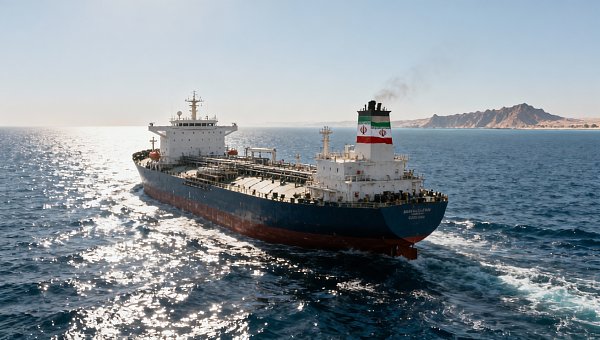
On May 8, 2026, two Iranian-flagged tankers — Sea Star III and Sevda — were attacked near the Strait of Hormuz, triggering renewed concerns over energy transport security. The incident directly impacts exporters of Wastewater & Filtration equipment, ESG Monitor modules, and Hardware Components to Middle Eastern and North African markets — particularly regarding emerging compliance expectations around supply chain security certification.
Event Overview
Radio transmissions confirmed on May 8, 2026, that the Iranian oil tankers Sea Star III and Sevda sustained damage and issued distress calls in proximity to the Strait of Hormuz. No further operational or casualty details have been publicly verified. The incident has prompted upward pressure on regional maritime insurance premiums and triggered additional due diligence requirements from importers for cargo transiting high-risk routes.
Industries Affected
Direct Exporters to Middle East & North Africa
Exporters of Wastewater & Filtration equipment, ESG Monitor modules, and Hardware Components face heightened scrutiny from overseas buyers. The attack has led importers in the region to require documented proof of supply chain security compliance — specifically ISO 28000 certification — as part of procurement vetting.
Supply Chain & Logistics Service Providers
Firms offering freight forwarding, customs brokerage, or trade compliance support for shipments to the Gulf and MENA region are encountering new documentation requests. Clients increasingly seek verification of certified security management systems (e.g., ISO 28000) not only for cargo but also as part of vendor qualification dossiers.
Manufacturers with Integrated Export Operations
Companies managing end-to-end export workflows — including production, packaging, labeling, and logistics coordination — must now anticipate ISO 28000-related queries earlier in the sales cycle. Certification status is becoming a pre-qualification factor rather than a post-contract requirement.
What Enterprises Should Monitor and Do Now
Track official advisories from maritime safety authorities and national export promotion agencies
Monitor updates from the International Maritime Organization (IMO), the UK Maritime Trade Operations (UKMTO), and national export credit or trade facilitation bodies — especially any guidance on revised risk assessments for Gulf transits or certification expectations tied to specific product categories.
Identify which customer contracts or tenders now reference ISO 28000 explicitly
Review recent RFPs, purchase orders, and distributor agreements targeting Middle Eastern and North African markets. Where ISO 28000 is cited, confirm whether internal documentation (e.g., scope of certification, validity date, audit reports) meets buyer-defined evidentiary thresholds — such as third-party verification or inclusion of subcontractor coverage.
Prepare ISO 28000 supporting materials proactively — even if certification is already held
Organize certification certificates, scope statements, and most recent surveillance audit reports into a standardized, export-ready package. Include English-language summaries of security control implementation relevant to physical logistics, information handling, and supplier oversight — aligning with how buyers interpret ‘supply chain security’ in procurement contexts.
Distinguish between policy signals and enforceable contractual terms
While some importers are requesting ISO 28000 documentation as a best-practice measure, others are incorporating it into binding clauses. Verify whether each request originates from internal compliance policy, government-mandated regulation, or commercial negotiation — as response timelines and evidentiary rigor differ significantly across these contexts.
Editorial Perspective / Industry Observation
Observably, this incident functions less as an isolated disruption and more as a stress test for existing supply chain resilience frameworks in high-geopolitical-risk corridors. Analysis shows that the immediate impact lies not in physical shipment delays, but in the acceleration of formalized security governance expectations — particularly for non-energy industrial goods entering volatile regions. From an industry perspective, the requirement for ISO 28000 evidence reflects a broader shift: buyers are treating supply chain security certifications not as optional credentials, but as baseline trust indicators. Current developments suggest this is a signal — not yet a universal mandate — but one gaining traction among major public-sector and infrastructure-focused importers in the Gulf and Maghreb.
In summary, the May 8 tanker incident underscores how geopolitical incidents near critical chokepoints can rapidly translate into tangible compliance expectations for industrial exporters — especially those serving infrastructure-sensitive markets. It does not indicate a systemic breakdown in shipping lanes, but rather highlights an evolving threshold for commercial trust: verifiable supply chain security practices are increasingly treated as material to transactional readiness. For affected firms, the event is better understood as a catalyst for documentation preparedness — not a trigger for operational overhaul.
Source: Verified radio communications dated May 8, 2026; public statements from maritime risk advisory services; documented buyer due diligence notices circulated to exporters in Q2 2026. Ongoing monitoring is recommended for updates on insurance premium adjustments, port authority advisories, and national-level import policy clarifications related to supply chain security certification.
The Archive Newsletter
Critical industrial intelligence delivered every Tuesday. Peer-reviewed summaries of the week's most impactful logistics and market shifts.