Monday, May 22, 2024

Ultraviolet Water Purification Systems: Common Sizing Mistakes
by
Published
Views:
Choosing the right capacity for ultraviolet water purification systems is not a minor specification exercise. It shapes microbial control, electrical efficiency, lamp life, and maintenance frequency across industrial and infrastructure settings.
When sizing is wrong, the system may fail at peak demand, overconsume energy during low flow, or struggle with unstable water quality. In cross-sector environments, that risk quickly becomes operational and financial.
This article explains the most common sizing mistakes, why they happen, and how to evaluate ultraviolet water purification systems against real flow patterns, UV transmittance, fouling potential, and compliance needs.
Sizing Fundamentals for Ultraviolet Water Purification Systems
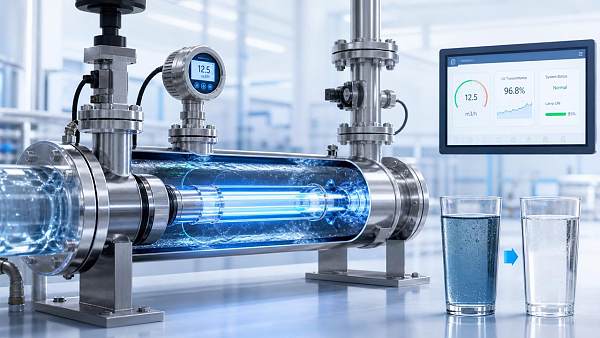
At the basic level, ultraviolet water purification systems disinfect water by delivering a defined UV dose. Dose depends on lamp intensity, exposure time, reactor design, and water quality.
Many sizing errors start with one false assumption: flow rate alone determines system capacity. In reality, flow is only one part of a much larger performance equation.
A practical sizing review should include these variables:
- Maximum, average, and minimum operating flow
- UV transmittance at the target wavelength
- Suspended solids, iron, manganese, and hardness
- Required log reduction or regulatory dose target
- Water temperature and seasonal variation
- Future demand growth and redundancy strategy
In industrial benchmarking, this wider view matters because a UV reactor often interacts with filtration, membranes, storage tanks, and control systems. Capacity selection should reflect the whole process chain.
Why the Market Still Gets UV Sizing Wrong
Across environmental infrastructure, sizing errors often appear when design teams rely on nominal catalog ratings. Those ratings may assume ideal water, clean sleeves, fresh lamps, and stable hydraulic conditions.
Actual operating conditions are rarely ideal. Water chemistry shifts by season. Flow surges during cleaning cycles. Pretreatment performance changes with cartridge age or membrane loading.
Common warning signals include:
For ultraviolet water purification systems, data transparency is critical. Verified operating inputs are far more useful than broad marketing capacity claims.
The Most Common Sizing Mistakes
Using average flow instead of peak flow
A system selected for average demand may lose disinfection performance during peak events. UV dose falls as exposure time drops, especially in compact reactors with limited hydraulic residence time.
Ignoring UV transmittance
Low UV transmittance reduces the amount of germicidal energy reaching microorganisms. Two water streams with the same flow can require very different reactor sizes.
Assuming pretreatment solves everything
Pretreatment helps, but it does not remove all sizing risk. Filter breakthrough, membrane upset, or chemical carryover can still affect sleeve fouling and UV dose delivery.
Overlooking lamp aging and fouling factors
New lamps perform better than aged lamps. Clean quartz sleeves transmit more UV than fouled ones. Sound sizing includes end-of-lamp-life and fouling allowances, not just startup conditions.
Oversizing without control flexibility
Some operators choose very large ultraviolet water purification systems for safety. Without dimming, staged operation, or variable control, oversized units can waste power and shorten component value.
Forgetting future process changes
A line expansion, new reuse loop, or seasonal production shift can invalidate the original design basis. Capacity planning should include realistic growth, not optimistic stability assumptions.
Operational and Business Impact of Incorrect Sizing
Poorly sized ultraviolet water purification systems create more than technical inconvenience. They affect uptime, compliance confidence, utility spending, and replacement planning across integrated facilities.
Undersized units may cause:
- Inadequate disinfection during peak flow periods
- Reduced safety margin when water quality degrades
- Higher intervention frequency and process disruption
- Difficulty meeting internal validation targets
Oversized units may cause:
- Unnecessary capital cost
- Excessive electrical use in variable demand systems
- Reduced efficiency if the reactor cannot modulate output
- More complex maintenance than the process truly needs
In broad industrial ecosystems, right-sizing supports resilience. It improves alignment between water treatment assets, ESG reporting expectations, and total lifecycle economics.
Typical Sizing Contexts Across Industrial Water Applications
The best sizing approach depends on the application. The same ultraviolet water purification systems logic applies, but risk priorities differ by process and water source.
These patterns show why specification should be application-led, not equipment-led. Reactor capacity must match hydraulic reality and source water behavior.
Practical Steps to Size UV Systems More Accurately
A disciplined sizing process can avoid most performance gaps in ultraviolet water purification systems. The goal is not the biggest unit. The goal is the most reliable fit.
- Document peak, average, and low flow conditions over time.
- Test UV transmittance using representative seasonal samples.
- Include iron, manganese, hardness, and suspended solids in the review.
- Apply end-of-lamp-life and fouling correction factors.
- Check whether controls support dimming or staged reactor operation.
- Allow for growth, redundancy, and maintenance bypass planning.
- Compare vendor claims against validated performance data.
This process is especially useful where water treatment assets connect with membranes, CIP loops, reuse programs, or sustainability targets. Better sizing reduces uncertainty across the wider system.
A More Reliable Decision Path
The best decisions on ultraviolet water purification systems start with measured conditions, not assumptions. Capacity should be based on delivered dose under real operating constraints.
A sound review combines hydraulic data, water quality history, pretreatment behavior, control flexibility, and maintenance strategy. That integrated approach helps prevent both under-treatment and unnecessary overspending.
For technically complex water programs, the next step is clear: verify actual operating inputs, benchmark system performance against validated standards, and recheck whether current sizing still fits future demand.
When ultraviolet water purification systems are sized with that level of discipline, they become more dependable, more efficient, and easier to integrate into resilient industrial infrastructure.

The Archive Newsletter
Critical industrial intelligence delivered every Tuesday. Peer-reviewed summaries of the week's most impactful logistics and market shifts.