Monday, May 22, 2024

Water Purification Using Reverse Osmosis: Key Design Trade-Offs
by
Published
Views:
For project managers and engineering leads, water purification using reverse osmosis is rarely a one-variable decision. System recovery, energy demand, membrane life, pretreatment complexity, and compliance targets all shape project risk and long-term operating value. This article examines the key design trade-offs behind reverse osmosis systems, helping industrial decision-makers balance technical performance, cost control, and operational resilience.
Why water purification using reverse osmosis becomes a project-level decision
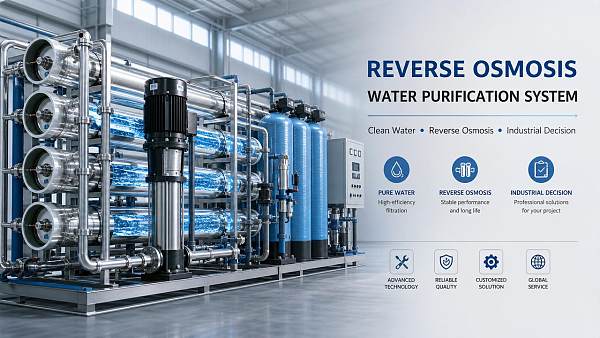
In cross-sector manufacturing, water quality is not only a utilities issue. It affects product consistency, equipment uptime, environmental discharge, and audit readiness. For electronics, agriculture, mobility, and infrastructure projects, water purification using reverse osmosis often sits at the intersection of process engineering, procurement, and ESG performance.
That is why project managers cannot evaluate an RO system by nominal capacity alone. A design that looks attractive on capital cost may create hidden burdens in chemical cleaning frequency, feedwater stabilization, spare membrane sourcing, or reject handling. The better question is not simply “Which RO unit is cheapest?” but “Which design creates the lowest total project risk?”
GIM’s value in this discussion comes from benchmarking water systems the same way industrial teams benchmark powertrains, HDI substrates, or filtration modules: by comparing technical parameters against actual application conditions, standards alignment, and supply chain resilience. That multidisciplinary view matters when the water system supports a broader factory or infrastructure investment.
- Process reliability: stable permeate quality is critical when downstream equipment has tight conductivity or scaling limits.
- Budget control: energy, antiscalants, cartridge replacement, and membrane cleaning often exceed initial assumptions.
- Schedule protection: pretreatment redesign or delayed commissioning can affect wider project milestones.
- Compliance confidence: feed and discharge conditions must align with site permits, local water rules, and customer expectations.
What should project teams compare first in reverse osmosis design?
Before reviewing vendors, teams should define the operating envelope. Feedwater source, seasonal variability, target permeate quality, operating hours, and maintenance capability will determine whether water purification using reverse osmosis is straightforward or highly engineered.
The table below summarizes the design variables that most directly influence lifecycle performance and procurement decisions.
The main takeaway is simple: RO design variables are interconnected. A higher recovery target may look efficient on paper, but if feedwater hardness and silica are poorly characterized, the result can be more cleaning events and lower net availability. Project teams should evaluate the whole operating model, not isolated nameplate values.
Key screening questions for engineering leads
- Is the feedwater profile based on one sample, or on seasonal and upset-condition data?
- What permeate quality is truly required by the downstream process, not just preferred?
- Can the site handle reject disposal, CIP chemicals, and cartridge waste within existing permits?
- Will the local maintenance team support membrane monitoring and pretreatment discipline?
The core trade-offs: recovery, energy, fouling, and membrane life
Most disagreements in water purification using reverse osmosis come down to trade-offs between efficiency and robustness. Each improvement target creates another operational consequence. Good project governance means making those consequences visible early.
Higher recovery is not always better
Raising recovery reduces feedwater intake and reject volume. That can support water conservation goals and lower discharge costs. However, it also concentrates sparingly soluble salts and increases scaling risk. If feedwater has elevated hardness, silica, iron, or organics, pushing recovery too high may reduce net performance rather than improve it.
Lower energy may require different compromises
Energy demand depends on feed salinity, pump efficiency, membrane condition, and operating pressure. Reducing energy consumption can involve lower pressure operation, optimized staging, or energy recovery in larger systems. Yet lower pressure targets must still preserve flux and permeate quality. If not, the system may need more membrane area or more frequent maintenance.
Pretreatment often decides membrane life
Many teams focus on the RO skid but underinvest in pretreatment. In practice, membrane longevity is heavily influenced by upstream solids control, dechlorination, iron removal, turbidity management, and SDI stability. When pretreatment is weak, even premium membranes struggle to deliver predictable service intervals.
The comparison below helps project managers visualize these trade-offs during budget and scope reviews.
For industrial decision-makers, the best RO design is usually not the most aggressive one. It is the one with enough performance margin to tolerate real feedwater variation, operator turnover, and procurement delays without constant intervention.
Which application scenarios change the RO design logic?
Water purification using reverse osmosis serves very different purposes across the sectors that GIM tracks. The same technology may support ultrapure rinsing in electronics, boiler feed in industrial plants, irrigation blending in agri-tech, or reuse loops in ESG infrastructure. Those use cases require different priorities.
Electronics and precision manufacturing
In electronics-related operations, RO is often a pretreatment step ahead of higher-purity polishing. The main concern is stability. Conductivity spikes, silica breakthrough, or poor pretreatment control can disrupt cleaning, plating, or rinse quality. Here, design conservatism and monitoring discipline usually outweigh maximum recovery.
Automotive and mobility facilities
For paint shops, battery-related processes, cooling systems, or component washing, teams need water quality that is fit for purpose rather than overengineered. The challenge is integrating RO into broader utility systems while keeping energy and maintenance predictable across multi-shift production schedules.
Smart agriculture and controlled environment systems
Agricultural and horticultural applications often face variable source water and cost sensitivity. RO can help manage salinity and nutrient consistency, but reject handling and pretreatment simplicity become critical, especially where technical staffing is limited.
Industrial ESG and water reuse projects
In reuse and discharge reduction programs, recovery and compliance targets become more aggressive. These projects require stronger front-end characterization, better integration with biological or tertiary treatment, and close attention to concentrate management. The RO skid is only one piece of the business case.
- If the downstream process is highly sensitive, prioritize stability and monitoring over headline recovery.
- If water cost or discharge cost is high, evaluate recovery carefully with scaling and concentrate implications.
- If the site has limited operators, simplify chemical regimes and cleaning procedures where possible.
How to evaluate procurement, lifecycle cost, and vendor fit
Procurement teams often compare RO quotations by installed flow and price per cubic meter per hour. That is not enough. The more reliable approach is to compare lifecycle cost, commissioning assumptions, and serviceability over the expected duty cycle.
For project managers, the procurement checklist below is more useful than a simple price comparison because it identifies where later variation orders or performance disputes usually begin.
A strong procurement decision balances technical depth with commercial realism. GIM’s benchmarking approach helps teams compare not just quoted equipment, but also supplier assumptions, documentation quality, standards references, and the operational burden transferred to the end user.
Common budget traps
- Ignoring reject management costs when targeting high recovery.
- Assuming standard pretreatment is enough for variable surface water or reclaimed sources.
- Comparing CAPEX without including membrane replacement frequency and CIP events.
- Overlooking instrumentation that would have prevented expensive troubleshooting later.
What standards and compliance points should be checked?
Water purification using reverse osmosis is usually part of a larger compliance framework. Requirements depend on jurisdiction, industry, and the role of treated water in the process. Project teams should map quality targets, materials compatibility, electrical safety, discharge obligations, and documentation expectations before finalizing scope.
In multi-industry environments, it is useful to align system evaluation with recognized standards and management practices rather than relying on informal specifications.
- ISO-aligned documentation practices help define acceptance criteria, records, and corrective action procedures.
- For automotive-related sites, IATF-driven discipline can influence supplier control, traceability, and change management expectations.
- For electronics-linked facilities, process cleanliness and utility stability may require tighter verification of water quality trends.
- For ESG and infrastructure projects, discharge permits and water reuse guidelines can drive concentrate handling requirements.
The practical lesson is that compliance should be designed into the system boundary, not added after procurement. That includes sampling points, alarm records, maintenance logs, and training materials that support audits and internal governance.
FAQ: practical questions about water purification using reverse osmosis
How do I know whether single-pass RO is enough?
Start with the downstream process requirement, not with the vendor’s standard package. If the process only needs softened, low-TDS utility water, a single-pass system may be sufficient. If conductivity, silica, or ionic control is tighter, a second pass or polishing stage may be necessary. The decision should be based on target quality, feed variability, and risk tolerance.
What is the most common mistake in RO procurement?
The most common mistake is treating water purification using reverse osmosis as a standard utility purchase without validating feedwater extremes. A design based only on average conditions can fail during seasonal variation, production surges, or upstream treatment upset. That leads to performance disputes, emergency chemical adjustments, and avoidable downtime.
Should we prioritize high recovery if our site has water scarcity concerns?
High recovery may support sustainability goals, but only when concentrate management, scaling control, and membrane cleaning are fully addressed. In some cases, a slightly lower recovery with better uptime delivers more usable water per month than an aggressive design with frequent fouling. Net plant performance matters more than theoretical recovery.
How long does implementation usually take?
Implementation time depends on pretreatment complexity, fabrication scope, control integration, and site readiness. The RO skid itself may not be the long pole. Utility tie-ins, civil readiness, water analysis confirmation, documentation review, and operator training often determine the real schedule. Early alignment on these items reduces commissioning drift.
Why choose us for reverse osmosis benchmarking and project support?
GIM supports industrial teams that need more than general product information. We help project managers and engineering leads evaluate water purification using reverse osmosis in the context of broader manufacturing performance, supply chain exposure, and standards-driven procurement.
Because our platform connects insights across Semiconductor & Electronics, Automotive & Mobility, Smart Agri-Tech, Industrial ESG & Infrastructure, and Precision Tooling, we can frame RO decisions against real cross-sector operating demands rather than isolated catalog claims.
- Parameter confirmation: review feedwater basis, recovery assumptions, permeate targets, and operating boundaries.
- Selection support: compare pretreatment routes, membrane configurations, monitoring scope, and lifecycle implications.
- Delivery planning: assess documentation readiness, spare strategy, commissioning dependencies, and supplier risk points.
- Compliance mapping: identify standards references, audit documentation needs, and discharge-related design considerations.
- Commercial alignment: support quotation review, scope normalization, and technical clarification before budget approval.
If your team is comparing RO options for a new plant, retrofit, reuse scheme, or process-quality upgrade, contact us with your water analysis, target output, project timeline, and certification constraints. We can help you refine the specification, identify design trade-offs early, and build a more defensible procurement decision.
The Archive Newsletter
Critical industrial intelligence delivered every Tuesday. Peer-reviewed summaries of the week's most impactful logistics and market shifts.