Monday, May 22, 2024

What Drives Wastewater Treatment Cost in New Projects?
by
Published
Views:
For new industrial developments, wastewater treatment cost now shapes project feasibility as much as land, utilities, and process equipment. It affects capex timing, financing assumptions, operating resilience, and compliance exposure.
The issue is becoming more complex across manufacturing, food processing, chemicals, mobility, and infrastructure projects. Wastewater quality is changing, regulations are tightening, and treatment systems must perform under greater uncertainty.
That is why early cost evaluation matters. A realistic view of wastewater treatment cost helps compare technical routes, avoid underdesigned assets, and support stronger lifecycle decisions.
Why wastewater treatment cost is rising in new project planning
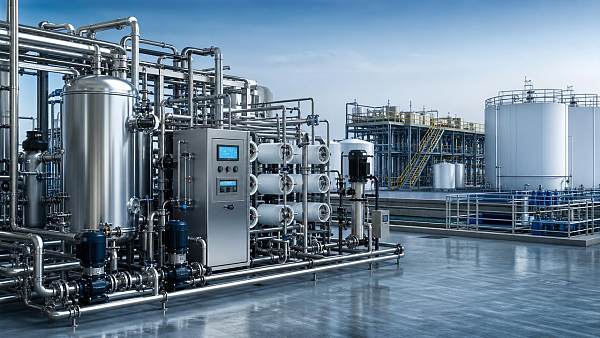
Several market signals explain the shift. New plants are expected to use less water, discharge cleaner effluent, and operate with lower energy intensity at the same time.
Industrial sites also face more variable influent. Pilot lines, mixed production, cleaning cycles, and product changes can create fluctuating loads that increase wastewater treatment cost.
Another trend is the move from end-of-pipe compliance toward water recovery. When reuse becomes part of the business case, treatment scope expands and design assumptions change.
This means total wastewater treatment cost is no longer just a utility estimate. It becomes a strategic infrastructure decision linked to production continuity and ESG performance.
The biggest drivers behind wastewater treatment cost in greenfield facilities
The most important cost drivers can be grouped into technical, operational, site, and regulatory categories. Each one changes both upfront spending and long-term running cost.
Influent complexity usually changes the cost curve first
Many budgets start with average flow alone. That approach misses the strongest wastewater treatment cost driver, which is contaminant profile and variability.
A site handling solvents, fats, colorants, nutrients, or heavy metals needs more than basic biological treatment. Pretreatment and polishing can quickly multiply equipment count.
Technology choice determines both capex and operating exposure
Low-footprint systems may reduce land use yet raise energy and membrane replacement needs. Simpler systems may save capex but struggle with tighter discharge standards.
As a result, wastewater treatment cost should be modeled across ten or more years, not only at equipment purchase stage.
How regulations and resource pressures are reshaping cost assumptions
In many regions, regulators are setting lower nutrient, solids, and trace contaminant thresholds. Monitoring expectations are also increasing, including digital reporting and alarm traceability.
At the same time, water scarcity is making reuse more attractive. Once recovery targets are added, wastewater treatment cost often rises because tertiary and advanced processes become necessary.
Discharge fees, sludge disposal charges, and power tariffs also matter. A design that looks affordable on day one may become expensive under future utility conditions.
- Stricter discharge limits raise process complexity.
- Water reuse goals increase polishing requirements.
- Energy volatility changes lifecycle economics.
- Waste disposal rules increase sludge management cost.
- Digital compliance systems add instrumentation spend.
Where wastewater treatment cost affects broader project performance
The effect goes beyond the treatment plant itself. Wastewater treatment cost influences project schedule, utility sizing, land planning, and future production flexibility.
If treatment is under-scoped, the result may be emergency retrofits, permit delays, or reduced output during commissioning. If it is over-scoped, capital efficiency suffers.
This is especially relevant in integrated industrial projects. Electronics, battery materials, food ingredients, coatings, and engineered components all generate different wastewater risk profiles.
What should be examined before setting a wastewater treatment budget
A more accurate budget begins with better front-end data. Many cost overruns happen because wastewater treatment cost was estimated before process chemistry was fully understood.
Key inputs worth validating early
- Minimum, average, and peak flow scenarios.
- Expected pollutant loads by production mode.
- Cleaning chemicals and batch discharge timing.
- Utility prices for electricity, steam, and water.
- Sludge hauling, disposal, and local treatment charges.
- Future production changes and expansion allowances.
- Applicable discharge permits and reuse standards.
These inputs help separate short-term affordability from durable value. The lowest bid does not always produce the lowest wastewater treatment cost over the asset life.
Practical ways to control wastewater treatment cost without underdesigning
Cost control is possible, but it works best through design discipline rather than aggressive reduction alone. The objective is to avoid unnecessary complexity while preserving compliance margin.
- Segment wastewater streams before combining them. Cleaner streams may need less treatment.
- Use pilot data where chemistry is uncertain. Testing reduces oversized safety factors.
- Model total cost of ownership, not only capex. Energy and sludge can dominate later.
- Evaluate modular systems for phased production ramp-up.
- Plan instrumentation around permit risk, not generic package defaults.
- Check footprint tradeoffs between compact equipment and maintenance access.
In many new projects, the strongest savings come from better upstream process control. Reducing pollutant shocks lowers chemical consumption, stabilizes biology, and improves treatment reliability.
How to make a better final decision on wastewater treatment cost
A useful decision framework compares more than one design basis. It should test baseline discharge, stricter future limits, and a reuse-oriented scenario.
It should also compare expected wastewater treatment cost under normal production, upset conditions, and expansion phases. This reveals hidden sensitivity in power, chemicals, and residuals management.
For cross-sector industrial projects, benchmarking is essential. Comparing similar plants, standards, and treatment architectures can expose unrealistic assumptions before they become budget problems.
A strong next step is to build a structured cost matrix covering influent quality, technology path, compliance target, footprint, energy demand, and disposal burden. That approach makes wastewater treatment cost visible as a strategic variable, not a late-stage surprise.
With disciplined benchmarking and early technical validation, new projects can control wastewater treatment cost while supporting compliance, resilience, and long-term operational efficiency.
The Archive Newsletter
Critical industrial intelligence delivered every Tuesday. Peer-reviewed summaries of the week's most impactful logistics and market shifts.