Monday, May 22, 2024

Why wastewater treatment performance drops in cold weather
by
Published
Views:
Cold weather can quietly undermine wastewater treatment by slowing microbial activity, increasing viscosity, and reducing overall process stability. For researchers, operators, procurement teams, and technical evaluators comparing water purification systems under ISO standards, understanding these seasonal impacts is essential. This article explains why performance drops, how infrastructure and control strategies should adapt, and what decision-makers can benchmark across environmental infrastructure, smart power grids, and sustainable industrial operations.
Why does wastewater treatment performance fall when temperatures drop?
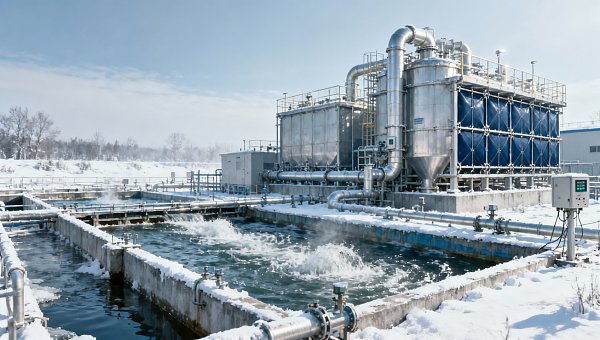
Cold weather affects wastewater treatment at several process layers at the same time. The most immediate issue is biology. In activated sludge, MBR, and other biological systems, microbial metabolism slows as water temperature moves from a typical moderate range of 15°C–25°C down toward 10°C or lower. The result is slower organic degradation, weaker nitrification, and longer required retention time.
Physical behavior also changes. Colder water becomes more viscous, which reduces settling efficiency, affects oxygen transfer, and can make membrane filtration more energy intensive. Pumps, blowers, diffusers, and sludge recirculation loops may still run, but the same equipment often delivers different treatment outcomes in winter than in summer. For operators and project managers, this is where seasonal underperformance often begins.
Chemical and hydraulic stability can weaken as well. Reaction rates in coagulation support systems may shift, foam and filament behavior can become less predictable, and inflow patterns can fluctuate because of rain, snowmelt, or infiltration. In many industrial parks, winter production schedules also change, creating variable load shocks over 24-hour cycles and making treatment balancing harder.
For procurement teams and technical evaluators, the key lesson is simple: a plant that meets discharge targets in warm conditions is not automatically robust in cold weather. Seasonal resilience depends on process selection, aeration reserve, hydraulic buffering, insulation detail, automation quality, and maintenance discipline. That is why winter benchmarking should be treated as a separate evaluation case, not just an annual average.
- Biological slowdown: lower substrate removal and reduced nitrification rates below roughly 12°C–15°C.
- Hydraulic impact: thicker water changes mixing, pumping response, and sludge settling behavior.
- Operational risk: more frequent need for dissolved oxygen adjustment, sludge age review, and anti-freeze measures.
- Commercial impact: underdesigned winter capacity can lead to energy spikes, permit risk, and retrofit cost.
Which process units are most vulnerable in winter operations?
Not every treatment step suffers equally in cold weather. Preliminary screening and grit removal remain relatively stable unless freezing affects mechanical equipment. The largest performance drop usually appears in biological treatment and downstream solids separation. Nitrification is especially temperature sensitive, which matters for municipal systems, food processing plants, livestock wastewater, and mixed industrial estates with nitrogen limits.
Membrane systems such as MBR can maintain high effluent quality, but they are not immune to winter pressure. Lower temperatures can increase transmembrane pressure, reduce flux efficiency, and require more careful cleaning intervals over 2–4 week operating windows. Conventional activated sludge may face settling instability, while SBR systems may need revised aeration and decant timing during colder months.
Typical winter sensitivity by treatment stage
The table below helps decision-makers compare where cold weather most often reduces wastewater treatment performance and what practical response is usually required.
This comparison shows why winter troubleshooting should not focus on a single device. Treatment stability depends on the interaction between influent variability, biological kinetics, solids management, and automation settings. At GIM, cross-sector benchmarking is valuable because wastewater systems increasingly share design logic with smart industrial utilities: sensors, controls, energy optimization, and reliability engineering must work together.
What operators should check first
A practical first-pass review usually covers 4 items within 7–15 days of temperature decline: basin temperature trend, dissolved oxygen stability, sludge age or biomass concentration, and any increase in effluent ammonia or turbidity. If these indicators begin moving together, the winter impact is already affecting process balance.
How should infrastructure and control strategy adapt to cold weather?
A reliable winter strategy starts before temperatures collapse. Mechanical and civil details matter more than many buyers expect. Exposed pipes, valve chambers, blower air lines, and instrumentation cabinets should be checked for insulation, heat tracing where appropriate, and condensate management. A system that is technically sound on paper can still lose wastewater treatment performance because one frozen sensor distorts aeration control.
Process control must also become more dynamic. Fixed summer setpoints often fail in winter. Plants may need revised dissolved oxygen bands, slower or staged loading, equalization over 6–12 hours, and closer review of return sludge rates. In facilities with intermittent production, the control system should respond to actual loading conditions instead of repeating a static daily profile.
Priority upgrades for winter resilience
The table below summarizes infrastructure and automation options commonly considered when a plant must protect treatment performance during cold seasons.
For engineering leaders and financial approvers, the choice is rarely between spending and not spending. It is usually between planned winterization and unplanned loss. Emergency tanker hauling, permit deviation, excess energy use, and repeated membrane cleaning can easily cost more than targeted upgrades implemented during normal maintenance windows.
A 4-step winter preparation workflow
- Audit process sensitivity by reviewing 12 months of temperature, ammonia, COD, sludge, and energy data.
- Identify weak nodes such as exposed assets, under-aerated zones, or overloaded equalization volume.
- Implement controls and mechanical upgrades before the coldest 8–12 week period.
- Track winter KPIs weekly and compare against baseline rather than relying on annual averages.
What should buyers, evaluators, and project teams benchmark before selecting a system?
Cold-weather procurement should go beyond nominal capacity. Buyers often compare wastewater treatment systems by daily flow and basic effluent targets, but that is not enough for winter reliability. The real procurement question is whether the system can maintain compliance across seasonal temperature ranges, variable hydraulic loads, and operator skill differences. This matters in industrial ESG planning, infrastructure investment review, and distributor-level product positioning.
GIM’s value in this process is cross-disciplinary benchmarking. Environmental infrastructure now intersects with digital controls, power efficiency, materials selection, and maintenance supply chains. A membrane skid, blower package, sensor loop, and insulated enclosure should be judged as one operating architecture. Procurement officers and technical evaluators need transparent criteria that connect performance, serviceability, and lifecycle risk.
Winter-focused procurement checklist
The checklist below converts cold-weather risk into practical selection criteria for project managers, quality teams, and enterprise decision-makers.
A strong procurement review usually includes 5 key checks: temperature envelope, process redundancy, automation resilience, maintenance access, and compliance documentation. If the supplier can only discuss nameplate flow but not winter operating logic, the evaluation is incomplete. This is especially important for public tenders, multi-site industrial groups, and distributors comparing multiple technology partners.
Standards and compliance points worth reviewing
Although exact requirements vary by geography and application, buyers commonly align evaluation with ISO-based management frameworks, equipment electrical safety expectations, documentation quality, traceable test procedures, and environmental permit conditions. Where wastewater systems interface with industrial plants, broader quality systems such as IATF- or IPC-influenced documentation discipline can also improve procurement clarity, even when they are not direct treatment standards.
Common misconceptions, operating risks, and practical winter FAQ
Many winter failures come from assumptions rather than equipment defects. One common misconception is that colder water always improves oxygen availability enough to offset biological slowdown. While oxygen solubility may rise, microbial reaction rates still fall, and the net treatment outcome can worsen. Another misconception is that only outdoor systems need winter planning. Indoor plants can also face temperature-sensitive influent, unstable loading, and control lag.
Another risk is treating winter underperformance as a temporary nuisance instead of a design signal. If operators repeatedly compensate with manual aeration increases, chemical overdosing, or emergency sludge disposal, the plant is revealing a structural issue. Over one winter season of 3–4 months, these workarounds can distort cost forecasts and hide the need for process redesign or better instrumentation.
How low does temperature need to be before performance drops?
The effect is gradual, not a single cliff edge. Many biological systems start showing measurable slowdown as mixed liquor temperatures move below about 15°C, with more visible nitrification stress below 12°C. The exact threshold depends on process type, biomass health, influent composition, and how much reserve retention time the system has.
Can winter issues be solved only by increasing aeration?
Usually no. More aeration may help in some cases, but it does not solve low temperature biology, poor equalization, frozen instrumentation, or inadequate sludge age. In fact, excessive aeration can increase energy cost and disturb process balance. Winter correction typically requires a combination of 3 elements: process adjustment, hardware protection, and better monitoring.
What should distributors and end users ask suppliers?
- What influent temperature range was assumed in the design basis, and how was cold-weather capacity derated?
- Which components require insulation, enclosure, or heat tracing in sub-zero conditions?
- How often must sensors be calibrated in winter, and what spare parts should be stocked on site?
- What lead time is typical for replacement membranes, blowers, valves, or control modules during peak season?
These questions are commercially useful because they connect technical reliability with budget approval, service planning, and risk management. They also help prevent a common buying error: selecting the lowest apparent capital cost without understanding winter operating expense, maintenance burden, or downtime exposure.
Why choose a benchmarking-driven partner for cold-weather wastewater decisions?
Wastewater treatment performance in cold weather is not just an environmental operations topic. It is a system-level industrial decision involving equipment selection, energy use, automation quality, compliance exposure, and procurement timing. That is why many organizations need more than isolated product data. They need a structured way to compare options across infrastructure, controls, supply chain resilience, and total operating logic.
Global Industrial Matrix supports that need by connecting environmental infrastructure analysis with the broader realities of modern manufacturing. Our platform helps procurement teams, engineers, quality managers, and project owners benchmark wastewater solutions the same way they review critical industrial hardware in electronics, mobility, agri-tech, and precision systems. This cross-sector view is especially useful when treatment assets must align with energy constraints, digital monitoring architecture, and international documentation expectations.
If you are reviewing a new installation, retrofit, distributor portfolio, or winter-risk audit, we can help you clarify 6 practical decision points: process suitability, parameter confirmation, seasonal capacity margin, instrumentation scope, likely delivery window, and lifecycle maintenance implications. We can also support comparisons between conventional biological treatment, MBR-based configurations, and hybrid infrastructure options depending on your operating climate and compliance target.
Contact us to discuss cold-weather wastewater treatment benchmarking, parameter review, product selection, expected lead times, customized solution pathways, documentation needs, sample or technical data support, and quotation planning. For teams under tight approval cycles, this makes it easier to turn winter performance risk into a clear, defensible procurement decision.

The Archive Newsletter
Critical industrial intelligence delivered every Tuesday. Peer-reviewed summaries of the week's most impactful logistics and market shifts.