Monday, May 22, 2024

ZLD System Energy Consumption: Where Operating Costs Rise Fast
by
Published
Views:
For financial decision-makers, zld system energy consumption can turn a technically sound project into a fast-rising cost center.
As zero liquid discharge systems scale, power demand from evaporation, crystallization, and supporting equipment often exceeds early assumptions.
That gap matters across chemicals, food processing, mining, electronics, textiles, and environmental infrastructure.
A reliable cost view requires more than nameplate ratings.
It requires benchmarking feedwater quality, recovery targets, thermal design, uptime patterns, and utility pricing together.
This article explains where zld system energy consumption rises fastest, which hidden drivers distort budgets, and how structured comparisons improve capital decisions.
Operational meaning of zld system energy consumption
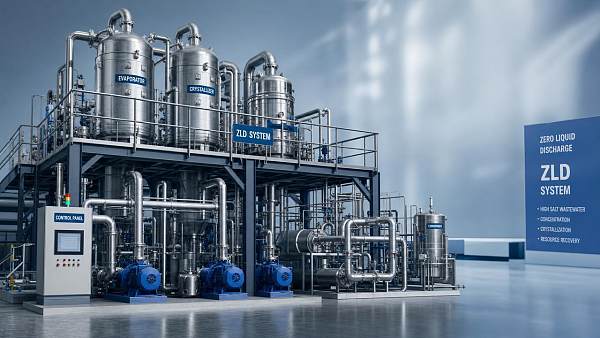
ZLD, or zero liquid discharge, aims to recover water and eliminate wastewater discharge through concentration and solids management.
In practice, zld system energy consumption includes thermal energy, electrical load, pumping, dewatering, controls, and auxiliary treatment.
The heaviest load usually sits in brine concentration and final crystallization.
Pretreatment can also become significant when feedwater contains silica, oil, hardness, or complex organics.
Energy intensity is often expressed per cubic meter treated or per cubic meter recovered.
However, those numbers are only comparable when salinity, recovery rate, and product quality targets are aligned.
A low headline figure may hide reduced recovery, unstable operation, or higher chemical use elsewhere in the process.
Core load centers
- Evaporators and vapor recompression systems
- Crystallizers and slurry circulation loops
- High-pressure pumps and recirculation pumps
- Feed pretreatment, filtration, and membrane polishing
- Solid-liquid separation and final solids handling
Where operating costs rise fastest
The sharpest increase in zld system energy consumption usually appears when concentration crosses the easy-to-treat range.
At that point, viscosity rises, heat transfer worsens, and scaling risk pushes more conservative operating settings.
Plants then consume more power to remove each additional unit of water.
The final percentage points of recovery are often the most expensive part of the entire system.
High-risk cost escalation points
Thermal technologies differ, yet none escape the physical penalty of deeper concentration.
Mechanical vapor recompression can reduce steam demand, but electrical demand may still become substantial.
If grid tariffs are volatile, the cost picture can deteriorate even with technically efficient equipment.
Hidden factors that distort total energy spend
Many approvals underestimate zld system energy consumption because they focus on best-case design conditions.
Real plants run through seasonal changes, fouling cycles, maintenance windows, and shifting production loads.
Those practical realities influence energy use more than many early models suggest.
Often-overlooked drivers
- Boiling point elevation from dissolved salts
- Non-condensable gases reducing heat transfer performance
- Pretreatment gaps causing membrane or exchanger fouling
- Cleaning frequency and associated restart losses
- Heat rejection limits in warm climates
- Compressed air, automation, and solids transport loads
Another hidden issue is boundary definition.
One supplier may report only evaporator power, while another includes pretreatment, dewatering, and brine transfer.
Without common system boundaries, zld system energy consumption comparisons become unreliable.
That weakens project screening, vendor evaluation, and long-term financial forecasting.
Industry signals shaping current attention
Cross-sector interest in zld system energy consumption is rising for both regulatory and economic reasons.
Water stress, discharge restrictions, carbon accounting, and electricity price volatility now interact in the same investment decision.
This makes energy benchmarking central, not secondary.
Business value of accurate energy benchmarking
Better benchmarking improves more than utility estimates.
It clarifies whether a ZLD project supports resilience, strains margins, or requires a phased design path.
In multi-site industrial groups, comparable data also improves internal capital ranking.
What strong benchmarking should include
- Feedwater chemistry ranges, not single-point averages
- Recovery targets at normal and stressed operating conditions
- Thermal and electrical energy separated clearly
- Defined system boundaries for all utilities
- Seasonal tariff and uptime sensitivity analysis
- Expected fouling, cleaning, and maintenance penalties
When zld system energy consumption is benchmarked consistently, capital approval becomes less dependent on optimistic assumptions.
It also reduces the risk of selecting a design that performs well on paper but struggles in mixed-duty operation.
Typical scenarios and system profiles
Not every site faces the same energy profile.
The most useful interpretation of zld system energy consumption depends on feed chemistry, recovery ambition, and utility structure.
Practical steps to control fast-rising operating costs
Cost control starts before equipment selection.
The design basis should reflect realistic feed variability and the true value of each extra recovery point.
A system chasing maximum recovery at any cost may damage overall project economics.
- Separate mandatory compliance requirements from optional recovery stretch targets.
- Test feedwater thoroughly across seasons and production modes.
- Request utility balances at design, average, and upset conditions.
- Evaluate waste heat integration where site conditions allow.
- Confirm fouling management strategy, not just clean-condition performance.
- Model electricity and steam tariffs with sensitivity bands.
- Compare total recovered water cost against alternative supply or discharge options.
These steps make zld system energy consumption visible as a controllable design variable, not an afterthought.
They also support stronger cross-sector benchmarking, a core need in complex industrial infrastructure planning.
Next-step framework for evaluation
A disciplined review should combine technical, financial, and operational evidence in one decision file.
Start with a common definition of zld system energy consumption and hold every option to that same boundary.
Then compare scenarios by feed quality range, utility source, recovery target, and expected annual operating profile.
For organizations managing broad industrial portfolios, benchmark data should be normalized across technologies and sites.
That approach reveals where ZLD supports resilience and where redesign, staging, or hybrid treatment may offer a better cost path.
Global Industrial Matrix promotes this systems-level view by aligning utility performance, compliance risk, and technical comparability across sectors.
The result is a clearer basis for investment, stronger operational forecasting, and fewer surprises after commissioning.
The Archive Newsletter
Critical industrial intelligence delivered every Tuesday. Peer-reviewed summaries of the week's most impactful logistics and market shifts.