Monday, May 22, 2024

How Sustainable Infrastructure Cuts Lifecycle Risk
by
Published
Views:
For enterprise decision-makers, sustainable infrastructure is no longer a branding exercise—it is a strategic lever for reducing lifecycle risk, controlling long-term costs, and strengthening operational resilience. From design and procurement to maintenance and compliance, data-driven infrastructure choices help organizations anticipate disruptions, improve asset performance, and align investment with evolving global standards.
In capital-intensive sectors, infrastructure decisions often remain on the balance sheet for 15 to 40 years. That long horizon turns early design assumptions, material choices, utility dependencies, and maintenance models into strategic risk variables.
For manufacturers, logistics operators, water treatment owners, agri-tech networks, and industrial campuses, sustainable infrastructure reduces exposure not only to energy volatility, but also to compliance drift, supply disruption, and unplanned downtime.
This matters especially in interconnected industrial ecosystems, where electrical systems, mobility assets, filtration modules, digital controls, and tooling environments now influence one another. A weak asset decision in one layer can raise cost and risk across three or four others.
For decision-makers evaluating long-term capital allocation, the question is no longer whether sustainable infrastructure costs more upfront. The more useful question is how it cuts lifecycle risk across procurement, operations, maintenance, and end-of-life transition.
Why Sustainable Infrastructure Changes the Risk Profile of Industrial Assets
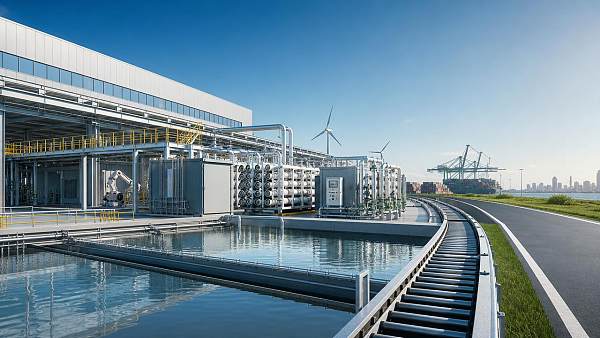
Sustainable infrastructure is best understood as an asset strategy rather than a green label. It combines durable design, resource efficiency, compliance readiness, serviceability, and data visibility to improve total lifecycle performance over 3, 5, 10, or even 25-year operating windows.
In practical terms, that means specifying systems that use less energy per unit of output, require fewer emergency interventions, tolerate variable operating conditions, and remain compatible with evolving technical and regulatory standards.
Lifecycle risk starts before installation
Many infrastructure failures are locked in during the first 10% to 20% of the project timeline. Poor specification discipline can create hidden liabilities in spare parts sourcing, power quality, water efficiency, corrosion resistance, software integration, and operator training.
For example, an industrial pumping or filtration system chosen on lowest purchase price may later require 2 to 3 times more maintenance interventions each year. The initial saving then disappears through labor, downtime, energy use, and inconsistent process output.
Core risk categories reduced by sustainable infrastructure
- Operational risk: lower breakdown frequency, better uptime planning, and improved redundancy design.
- Financial risk: more predictable total cost of ownership over 5 to 15 years.
- Compliance risk: easier alignment with ISO, IATF, IPC, environmental, and reporting requirements.
- Supply chain risk: stronger standardization, better interchangeability, and clearer sourcing benchmarks.
- Reputation risk: reduced exposure to waste, emissions, water misuse, or unsafe asset conditions.
Where the cost advantage really appears
The cost benefit rarely comes from one dramatic line item. It usually comes from a combined 5% to 15% reduction in energy intensity, 10% to 25% lower maintenance burden, longer replacement cycles, and fewer disruption events across the asset life.
For enterprise portfolios running multiple sites, these gains scale quickly. A modest reduction in annual downtime across four facilities can outweigh a higher initial capital spend within 24 to 48 months, depending on throughput and labor costs.
The table below shows how sustainable infrastructure influences risk across common lifecycle stages in industrial and cross-sector environments.
The key pattern is clear: sustainable infrastructure reduces lifecycle risk by removing uncertainty early, then preserving flexibility later. That is particularly valuable in industries where technology cycles now move faster than asset depreciation schedules.
How to Evaluate Sustainable Infrastructure for Procurement and Capital Planning
For enterprise buyers, the challenge is rarely a lack of options. The harder issue is separating measurable lifecycle value from generic sustainability claims. A disciplined evaluation model helps procurement, engineering, finance, and operations align around the same decision criteria.
Five decision lenses that matter most
- Technical fit: load, capacity, tolerance, environmental exposure, and integration requirements.
- Lifecycle economics: capex, opex, maintenance cycles, replacement intervals, and disposal costs.
- Supply resilience: lead times, regional sourcing diversity, spare part access, and vendor transparency.
- Compliance alignment: certification pathways, emissions impact, water use, waste handling, and audit readiness.
- Digital visibility: sensing, monitoring, reporting, and compatibility with plant or facility management systems.
What procurement teams should request
A robust request for quotation should go beyond unit price and nominal specifications. In most industrial categories, buyers should request at least 6 supporting inputs: duty cycle assumptions, maintenance intervals, energy or resource consumption ranges, service part availability, design life estimates, and standard compliance references.
Where infrastructure affects production continuity, it is also useful to ask for expected inspection frequency, recommended training hours, and operating tolerances such as temperature range, pressure band, or vibration limits.
The following comparison framework can help decision-makers score sustainable infrastructure options with greater consistency across departments and sites.
This approach helps teams avoid the common mistake of comparing infrastructure bids only on acquisition cost. In practice, the strongest option is often the one with the lowest risk-adjusted cost over 5 to 12 years, not the cheapest invoice in month one.
A note on cross-sector benchmarking
Cross-sector intelligence is increasingly valuable because many infrastructure components now share overlapping performance logic. Thermal management, filtration reliability, substrate durability, precision tolerance, and digital monitoring all affect modern industrial resilience in comparable ways.
That is why platforms such as Global Industrial Matrix are relevant to enterprise decision-makers. By connecting benchmarking insight across electronics, mobility, agri-tech, environmental systems, and tooling, organizations can evaluate asset choices with broader technical context instead of working in isolated categories.
Implementation: Turning Sustainable Infrastructure into Measurable Resilience
A sustainable infrastructure strategy succeeds when it moves from aspiration to operating discipline. That usually requires a phased implementation model with clear ownership across engineering, procurement, operations, finance, and compliance teams.
A practical 4-step rollout model
- Baseline the current asset portfolio, including age, energy intensity, maintenance history, and compliance exposure.
- Prioritize high-risk systems where downtime, utility cost, or environmental exposure is materially significant.
- Run specification and supplier benchmarking before replacement, retrofit, or new-site expansion.
- Track post-installation performance for 6 to 12 months using operational and financial KPIs.
KPIs that make lifecycle risk visible
Decision-makers should avoid vague sustainability scorecards. Better governance comes from specific indicators such as energy use per output unit, mean time between failures, planned versus unplanned maintenance ratio, water recovery rate, spare parts lead time, and compliance document completeness.
Even 5 or 6 consistent KPIs can reveal whether the new infrastructure is delivering what the business case promised. For example, a shift from 60:40 to 80:20 planned-to-unplanned maintenance may be more valuable than a small initial capex saving.
Common mistakes to avoid
- Treating sustainable infrastructure as a facilities issue instead of an enterprise risk issue.
- Replacing assets one by one without reviewing system-wide interactions.
- Ignoring spare part ecosystems and service response windows of 24, 48, or 72 hours.
- Using generic sustainability claims without verifiable technical or operating data.
- Failing to update maintenance procedures after installing more efficient or digitally enabled equipment.
Who benefits most from this approach
The strongest gains typically appear in organizations with multi-site operations, utility-intensive processes, aging infrastructure, or strict audit obligations. These include manufacturers, mobility suppliers, food and agri-processors, industrial water operators, and technically regulated production networks.
In these environments, sustainable infrastructure supports more than environmental positioning. It strengthens procurement discipline, improves cost forecasting, extends asset usefulness, and creates a clearer path for modernization without destabilizing ongoing operations.
Decision Support for Executives: What to Ask Before the Next Infrastructure Investment
Before approving the next facility upgrade, production expansion, water system retrofit, or mobility-linked infrastructure project, executive teams should ask a short but disciplined set of questions.
Executive checklist
- Will this asset still meet operational and compliance needs in 7 to 10 years?
- Can we benchmark this option against at least 3 technically comparable alternatives?
- What is the expected maintenance profile over the first 36 months?
- How vulnerable is the supply chain for critical components and consumables?
- What operating data will we receive monthly, quarterly, and annually?
- Does this investment reduce risk at the system level, not just at the component level?
These questions improve capital discipline because they connect sustainability, engineering, and commercial performance in one framework. That is where sustainable infrastructure becomes most valuable: not as a standalone initiative, but as a method for making long-life industrial decisions more resilient.
Sustainable infrastructure cuts lifecycle risk by improving durability, lowering operating variability, supporting compliance readiness, and strengthening the data quality behind procurement decisions. For enterprise leaders managing complex industrial systems, that translates into fewer surprises and better long-term returns on capital.
Global Industrial Matrix helps decision-makers compare cross-sector asset performance, evaluate technical trade-offs, and benchmark infrastructure choices against real operating requirements and recognized standards. If your organization is planning upgrades, sourcing critical systems, or refining capital strategy, now is the right time to get a more rigorous view of lifecycle risk.
Contact us to discuss your infrastructure priorities, request a tailored benchmarking perspective, or explore broader solutions for resilient industrial investment.
The Archive Newsletter
Critical industrial intelligence delivered every Tuesday. Peer-reviewed summaries of the week's most impactful logistics and market shifts.