Monday, May 22, 2024

New PRC Maritime Code Shifts Abandoned Cargo Liability to Shipper
by
Published
Views:
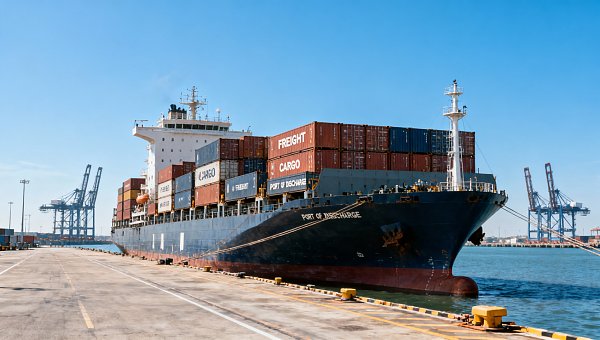
Effective May 1, 2026, the revised People’s Republic of China Maritime Code introduces a structural realignment of liability for abandoned cargo at discharge ports — marking one of the most consequential operational shifts in China’s maritime regulatory framework in over a decade. The change directly affects international freight logistics, trade finance risk allocation, and cross-border supply chain governance, particularly for enterprises engaged in China-origin exports or reliant on Chinese suppliers.
Event Overview
Article 93 of the newly amended Maritime Code of the People’s Republic of China, effective May 1, 2026, explicitly reassigns primary responsibility for unclaimed or abandoned cargo at the port of discharge from the consignee to the shipper. This replaces the prior principle of ‘consignee priority’ with a statutory ‘shipper-first liability’ standard. The provision applies irrespective of bill of lading terms, trade incoterms, or underlying sales contracts — unless expressly overridden by an enforceable agreement governed by non-Chinese law and jurisdiction.
Industries Impacted
Direct Trading Enterprises
Exporters and importers conducting spot or contract-based trade involving Chinese ports face immediate exposure to demurrage, detention, and disposal costs previously borne downstream. Under the new rule, even if the buyer defaults or becomes insolvent post-shipment, the shipper remains legally liable for container return, customs clearance completion, and cargo abandonment resolution at destination — potentially triggering unexpected cash outflows and credit line utilization.
Raw Material Procurement Enterprises
Firms sourcing commodities (e.g., ores, agricultural bulk, industrial chemicals) from China must now reassess counterparty risk beyond quality and delivery timing. A supplier’s financial stability and overseas representation capability — especially in key markets like Southeast Asia, Latin America, or Africa — gain new weight. If the Chinese seller lacks local agent capacity or fails to secure binding consignee commitments, procurement teams may inherit residual liability via upstream contractual linkage or letter-of-credit conditions.
Manufacturing Enterprises
Contract manufacturers and OEMs shipping finished goods under FOB or EXW terms are now exposed to post-discharge liabilities not previously contemplated in cost models. For example, delayed customer acceptance due to regulatory non-compliance (e.g., missing CE/UKCA markings) or sudden import bans may trigger abandonment — yet the manufacturer, as named shipper, bears first-response obligation. This increases pressure on pre-shipment compliance verification and real-time shipment visibility systems.
Supply Chain Service Providers
Freight forwarders, NVOCCs, and third-party logistics providers acting as contractual shippers (e.g., under house bills) assume direct statutory liability — not merely vicarious or agency-based exposure. Their insurance policies, service agreements, and master operating contracts require urgent review. Notably, standard ‘hold harmless’ clauses referencing foreign law may no longer shield them from enforcement actions initiated by Chinese courts or foreign port authorities citing the new Article 93.
Key Considerations and Recommended Actions
Revise Incoterm Selection and Contractual Allocation
Parties should move away from blanket use of FOB or CIF without explicit carve-outs. Where feasible, adopt DAP or DPU terms with clear handover protocols at destination port — coupled with written acknowledgment of consignee’s assumption of post-unloading obligations. Any deviation from statutory liability must be documented in bilingual, jurisdictionally enforceable addenda.
Strengthen Pre-Shipment Due Diligence on Consignees
Shippers must now verify consignee solvency, import licensing status, and physical receiving capacity *before* vessel departure — not just at order intake. Integration of credit reporting APIs (e.g., Dun & Bradstreet, Creditsafe) into order management systems is no longer optional but operationally necessary.
Update Insurance Coverage and Claims Protocols
Marine cargo policies rarely cover abandonment-related administrative penalties or port authority fines. Shippers should procure supplemental ‘cargo liability extension’ riders covering demurrage beyond standard laytime, storage surcharges, and forced disposal costs — with coverage triggered upon notification of non-takeover, not final court judgment.
Editorial Perspective / Industry Observation
Analysis shows this amendment reflects China’s broader regulatory pivot toward strengthening domestic legal leverage in global trade enforcement — less about protectionism, more about closing enforcement gaps where foreign jurisdictions decline cooperation. Observably, the timing coincides with increased port congestion incidents in emerging markets and rising disputes over ‘phantom consignees’ registered solely for documentary purposes. From an industry perspective, the shift is better understood not as a penalty on exporters, but as a calibration of accountability across the full cargo lifecycle — albeit one that places disproportionate operational burden on origin-side actors lacking control over destination execution.
Conclusion
This revision does not eliminate commercial flexibility — but it does recalibrate the baseline of legal expectation. For global supply chains anchored in China, the new liability regime underscores that compliance is no longer confined to export controls or product standards; it now extends to end-to-end cargo stewardship. A rational interpretation is that resilience will increasingly depend not on scale or speed, but on precision in contractual design, transparency in consignee vetting, and agility in cross-jurisdictional claims management.
Source Attribution
Official text published by the Standing Committee of the National People’s Congress (NPC), April 2026; Implementation guidelines pending release by the Ministry of Transport (MOT) and General Administration of Customs (GACC). Note: Judicial interpretations and enforcement precedents remain under observation — particularly regarding conflict-of-law applications and recognition of foreign arbitration awards under the new Article 93.
The Archive Newsletter
Critical industrial intelligence delivered every Tuesday. Peer-reviewed summaries of the week's most impactful logistics and market shifts.