Monday, May 22, 2024

Sustainability Tracking: Which Metrics Actually Matter First
by
Published
Views:
For finance decision-makers, sustainability tracking only creates value when it supports risk control, capital allocation, and measurable returns. The real challenge is not collecting more ESG data, but identifying which metrics matter first across supply chains, operations, and compliance. This article explains how to prioritize the indicators that drive financial clarity, operational resilience, and long-term industrial competitiveness.
Why scenario-based sustainability tracking matters more than broad ESG dashboards
In industrial and cross-sector businesses, sustainability tracking often fails not because teams lack data, but because they treat every metric as equally urgent. A finance approver does not need fifty disconnected indicators. They need a short list that explains exposure, operating efficiency, compliance pressure, and the likely effect on cost of capital. That is especially true in organizations managing complex manufacturing ecosystems, where electronics, mobility, agri-tech, water systems, and tooling may all sit inside one procurement and investment structure.
The most effective approach is scenario-based. A company facing customer decarbonization requests has different priorities from one dealing with energy volatility, waste treatment constraints, or supplier audit risk. In other words, sustainability tracking should begin with the business situation first, then the metric set. This prevents over-reporting, reduces data collection burden, and helps finance teams defend investment choices with stronger evidence.
For organizations such as Global Industrial Matrix, where technical benchmarking and supply chain visibility connect multiple industrial pillars, the value of sustainability tracking comes from translating environmental and operational signals into comparable decision inputs. The first metrics that matter are the ones that reveal whether a site, supplier, product line, or capital program is financially exposed now, not simply the ones that are easiest to publish.
The four business scenarios where metrics should be prioritized differently
Before choosing indicators, finance leaders should identify which of the following scenarios best describes the current pressure point. Most companies operate in more than one, but one scenario usually dominates budget timing and reporting urgency.
1. Supply chain risk and procurement screening
This scenario applies when the main concern is supplier reliability, audit readiness, geopolitical exposure, or customer scrutiny of upstream emissions and practices. Here, sustainability tracking should focus on supplier-level energy intensity, water stress exposure, waste handling compliance, emissions reporting quality, and corrective action closure rates. Finance teams care because unstable suppliers create margin leakage, stock disruption, and accelerated re-sourcing costs.
2. Operational efficiency and plant cost control
When a business is trying to improve plant economics, sustainability tracking becomes an operating model tool. The first metrics that matter are energy consumption per unit, water consumption per unit, yield loss, scrap rate, hazardous waste treatment cost, and equipment uptime linked to environmental systems. These indicators directly affect EBITDA through utility spend, throughput, and maintenance burden.
3. Compliance, disclosure, and financing readiness
If the trigger is investor due diligence, lender requirements, export market access, or incoming regulations, then sustainability tracking should start with data assurance and audit-grade consistency. The priority metrics include Scope 1 and Scope 2 emissions, material Scope 3 categories, regulatory incident frequency, environmental permit status, and percentage of verified supplier data. In this scenario, incomplete governance can be as expensive as poor performance.
4. Capital allocation for transition projects
When the business is evaluating energy retrofits, electrification, water reuse, filtration upgrades, or process redesign, sustainability tracking should support investment ranking. Metrics should include avoided energy cost, emissions reduction per dollar invested, payback period, downtime risk, water recovery rate, and sensitivity to future carbon or compliance costs. Here, the goal is not reporting volume; it is capital discipline.
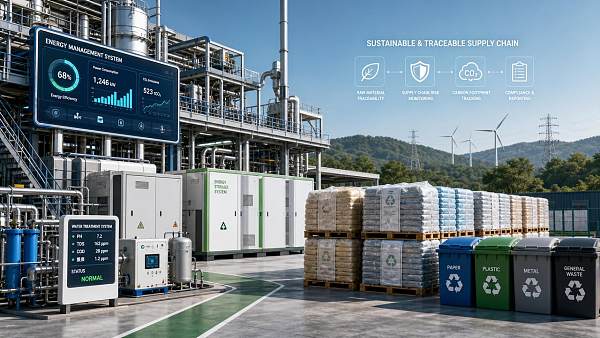
Which metrics actually matter first: a scenario comparison for finance teams
The table below helps narrow sustainability tracking priorities by business use case. It is designed for finance approvers who need a practical starting point rather than a full ESG inventory.
How metric priorities change across industrial applications
Not every industrial segment should start in the same place. Sustainability tracking must reflect process physics, supply chain structure, and customer requirements.
Electronics and semiconductor-linked operations
These environments often face high electricity demand, water dependency, chemical handling complexity, and strict traceability expectations. For this scenario, energy intensity, ultrapure water use, process yield loss, hazardous waste recovery, and supplier transparency are usually the first metrics that matter. Finance teams should watch where utility volatility intersects with process stability, because small efficiency gains can produce large savings at scale.
Automotive and mobility supply chains
Vehicle platforms increasingly link sustainability tracking to OEM sourcing requirements. Battery-related materials, powertrain components, coatings, metal processing, and logistics all carry different cost and compliance profiles. Start with product carbon exposure, energy per production hour, scrap metal recovery, supplier audit pass rate, and logistics emissions in high-volume lanes. These are more decision-useful than broad sustainability scores.
Smart agriculture and agri-industrial systems
In agri-tech, water efficiency, soil input optimization, fuel use, and equipment durability often drive the financial case. Sustainability tracking should prioritize water productivity, nutrient or chemical input intensity, energy use of irrigation or processing systems, and maintenance-linked downtime. The key question is whether the metric improves output predictability or reduces resource sensitivity in volatile conditions.
Environmental infrastructure and industrial utilities
For filtration, wastewater treatment, and infrastructure assets, the strongest metrics are usually recovery rate, energy use per treated volume, sludge or concentrate disposal cost, permit compliance, and asset reliability. Sustainability tracking in this scenario should be tightly linked to life-cycle cost and service continuity rather than generic reporting narratives.
What finance approvers should ask before funding a sustainability tracking program
A common mistake is approving software, consultants, or reporting systems before defining the business question. To avoid that, finance leaders should ask five practical questions.
- Which risk or cash-flow pressure is this sustainability tracking effort supposed to reduce first?
- Which metrics can be linked to plant economics, procurement exposure, or financing conditions within twelve months?
- What percentage of the data is auditable rather than estimated?
- Can the same metric support both internal decision-making and external reporting?
- What action will management take if the metric worsens?
If a metric does not influence sourcing, capex ranking, operating discipline, pricing posture, or compliance readiness, it may be useful later, but it should not come first. Strong sustainability tracking starts with actionability.
Common misjudgments when selecting the first sustainability tracking metrics
The first misjudgment is starting with what peers disclose rather than what your operation can control. Public reporting trends can be informative, but they do not replace site-level economics. The second is measuring totals without intensity. Total energy or total emissions may rise with growth, while unit economics improve. Finance needs both views.
The third is treating Scope 3 as either impossible or immediately comprehensive. In reality, sustainability tracking for supply chains should begin with the categories that drive commercial exposure, such as purchased materials, logistics, or supplier manufacturing hotspots. The fourth is ignoring data quality costs. Some metrics are expensive to collect and weak in decision value. Others, such as scrap, utility use, and permit incidents, are relatively accessible and financially meaningful.
Another frequent problem is separating sustainability teams from engineering and procurement teams. In industrial settings, the best metrics often sit inside production records, maintenance systems, quality databases, and supplier scorecards. Cross-functional alignment matters more than launching a larger dashboard.
A practical rollout model: what to track in the first 90 days, first year, and beyond
A phased model helps finance teams control cost and prove value.
First 90 days
Select one primary business scenario, define no more than six core metrics, confirm data ownership, and establish a baseline. For most industrial companies, this first set should include energy intensity, water intensity where relevant, scrap or waste cost, compliance incidents, and supplier data coverage for critical categories.
First year
Expand sustainability tracking into comparative analysis across plants, suppliers, or product families. At this stage, link metrics to budget variance, project pipeline, and customer requirements. This is where a benchmarking platform can add value by comparing performance against standards, sector norms, and technical design differences.
Beyond year one
Only after the core metrics are stable should the business broaden into deeper Scope 3 modeling, scenario planning, and strategic transition indicators. By then, sustainability tracking becomes less about data gathering and more about portfolio steering.
FAQ: sustainability tracking questions finance teams ask first
Should every company start with carbon metrics?
Not always. Carbon is often important, but if water constraints, hazardous waste cost, or supplier compliance risk are more immediate, those may deserve earlier attention. Sustainability tracking should follow financial materiality and operational exposure.
How many metrics are enough at the beginning?
Usually five to eight core metrics are enough to start. More than that can slow adoption and weaken accountability. The first sustainability tracking set should be small, auditable, and tied to decisions.
What makes a metric financially credible?
It should connect to cost, risk, revenue access, compliance exposure, or asset productivity. If the metric cannot influence a business choice, it is not a first-priority metric.
Turning sustainability tracking into a decision tool
The right starting point for sustainability tracking is not a universal ESG checklist. It is a clear view of which business scenario matters now: supplier resilience, plant efficiency, compliance readiness, or capital allocation. Once that scenario is defined, the first metrics become easier to choose and easier to defend.
For finance decision-makers in complex industrial environments, the best metrics are the ones that reduce uncertainty and sharpen investment logic. If your organization operates across sectors, geographies, and technical standards, a benchmark-driven approach can help compare what really matters first. Use sustainability tracking to focus management attention where operational data, supply chain intelligence, and financial outcomes meet. That is where reporting stops being a burden and starts becoming a competitive asset.

The Archive Newsletter
Critical industrial intelligence delivered every Tuesday. Peer-reviewed summaries of the week's most impactful logistics and market shifts.