Monday, May 22, 2024

Waste Management Costs: What Drives Fees and Savings?
by
Published
Views:
Why do waste management costs vary so much between facilities?
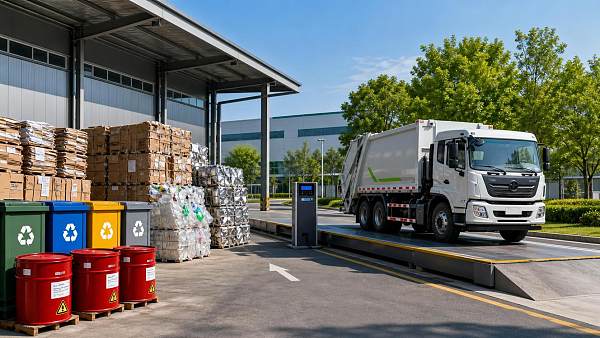
Waste management rarely follows a simple price list. Two sites with similar output can face very different fees.
The main reason is that waste management costs are shaped by operations, not only by volume. Material type, handling rules, transport distance, contamination, and reporting obligations all change the final bill.
In practice, mixed streams cost more than sorted streams. Hazardous residues cost more than recyclable paper, plastics, metals, or organics.
Collection frequency also matters. A site paying for half-empty pickups is often carrying hidden waste management costs without noticing it.
This is especially relevant across modern manufacturing networks. Electronics, automotive, agri-tech, and infrastructure operations generate very different waste profiles, even when they share one supplier region.
That cross-sector complexity is why benchmarking matters. Platforms such as Global Industrial Matrix help compare material flows, standards exposure, and operating conditions across industries that no longer sit in isolated silos.
A useful way to read waste management fees is to separate them into four layers: service, logistics, compliance, and recovery value.
- Service: bins, labor, collection schedules, on-site handling.
- Logistics: route density, fuel exposure, distance to transfer or treatment sites.
- Compliance: manifests, audits, storage rules, permits, traceability.
- Recovery: resale value of cardboard, metals, polymers, organics, and process by-products.
Once these layers are visible, cost discussions become more strategic. The goal is not only cheaper hauling, but better control of the whole waste management system.
Which cost drivers usually have the biggest impact on waste management?
The biggest drivers are usually not surprising, but their interactions are often underestimated.
Material composition is the first driver. Clean corrugated packaging has market value. Solvent-contaminated wipes, sludge, composite scrap, and regulated wastewater residues usually add disposal cost.
Segregation quality comes next. When recyclable streams are contaminated, they can be downgraded into general waste. That increases haulage and landfill or treatment charges.
Container sizing is another common issue. Oversized equipment looks safe operationally, but can lock in unnecessary service charges for months or years.
Regulation can also move costs sharply. Facilities dealing with battery materials, plating chemicals, agricultural runoff, filtration media, or electronic assemblies face different storage and documentation rules.
Transport economics matter more than many teams expect. Remote plants or sites with low pickup density may face higher waste management costs even when tonnage is modest.
Then there is volatility in commodity recovery. If fiber or metal markets weaken, rebates shrink and net service fees rise.
The table below helps separate cost drivers that deserve immediate review from those that need periodic monitoring.
Are higher waste management fees always a sign of poor purchasing?
Not always. Higher fees can reflect stronger compliance, safer handling, or better traceability.
That distinction matters in regulated industries. A low quoted rate may exclude sampling, emergency response support, contamination claims, or reporting needed for ESG and audit requirements.
A more useful question is whether the fee structure matches the waste profile and operational risk.
For example, semiconductor-related waste streams, EV battery by-products, filtration media, and industrial sludge may require specialist treatment. Here, a higher unit cost can reduce overall exposure.
The mistake is comparing service providers only on headline price. Waste management contracts should be tested against measurable operating outcomes.
- Does the provider improve segregation and recovery rates?
- Can invoices be traced to container activity and stream type?
- Are compliance records aligned with ISO, IATF, IPC, or site-specific standards?
- Is there resilience if regulation, waste composition, or routing changes?
When these answers are weak, low fees may simply hide deferred cost. That usually appears later as disruptions, non-conformance, or emergency service spending.
Where do real savings in waste management usually come from?
The largest savings usually come from process discipline, not from one-off price negotiation.
Segregation at source is often the fastest win. When materials are separated near the point of generation, contamination falls and recovery improves.
Collection optimization is another strong lever. Matching service frequency to actual fill levels can cut avoidable charges without changing the vendor.
Material substitution can also change waste management economics. Packaging redesign, reusable transit materials, and lower-toxicity consumables can shift a stream out of expensive treatment categories.
In facilities with diverse production lines, internal benchmarking is especially effective. Comparing scrap patterns across lines often reveals why one area carries higher waste management costs than another.
This is where cross-sector intelligence becomes practical. Methods proven in mobility, electronics, water infrastructure, or precision tooling can often be adapted to another operation with similar material behavior.
A grounded savings review usually includes these actions:
- Map each waste stream by source, volume, hazard class, and destination.
- Compare invoiced pickups with actual fill and weight data.
- Separate avoidable contamination from unavoidable process residues.
- Identify recyclable streams currently priced as mixed waste.
- Review contract clauses for fuel, contamination, and commodity adjustments.
These steps tend to produce durable savings because they improve system design, not just invoice timing.
What should be checked before selecting or renewing a waste management contract?
A contract review should test fit, flexibility, and visibility. Price matters, but structure matters more.
Start with scope clarity. Many waste management contracts look competitive until surcharges appear for contamination, overweight bins, emergency collections, or documentation support.
Then review service adaptability. Production mix can shift quickly in global manufacturing, especially when product launches, supplier changes, or quality events alter waste streams.
Data quality should also be a formal selection criterion. If monthly reports do not show stream-level tonnage, recovery rate, and destination data, cost control becomes guesswork.
The checklist below helps turn contract review into a practical decision tool.
- Stream coverage: Are all current and expected waste categories listed clearly?
- Pricing logic: Are haulage, rental, treatment, and fuel charges separated?
- Recovery terms: How are rebates calculated, indexed, and audited?
- Compliance support: Who owns manifests, exception reports, and incident handling?
- Operational resilience: What happens during route disruption or treatment capacity shortages?
- Continuous improvement: Is there a review cadence tied to measurable waste management outcomes?
A good agreement should make costs more predictable while leaving room to improve recovery and reduce risk over time.
How can waste management support both cost control and sustainability goals?
These goals are often aligned when measurement is strong. Lower waste intensity usually means lower handling cost, lower transport demand, and better material efficiency.
The connection becomes clearer when waste management is linked to production planning, procurement standards, packaging design, and supplier performance.
For example, better component packaging in electronics can reduce damaged goods and mixed waste. Smarter fluid management in mobility or infrastructure operations can lower hazardous disposal frequency.
More mature organizations treat waste management as a data problem as much as a service problem. They compare streams, suppliers, plants, and treatment paths using the same discipline applied to quality or logistics.
That is where technical benchmarking has practical value. A system-level view helps identify whether waste costs are caused by process design, supplier inputs, regional infrastructure, or weak recovery markets.
The most reliable next step is to build a simple baseline: current waste streams, current fees, current recovery rates, and known compliance exposures.
From there, compare sites and vendors on facts rather than assumptions. Waste management decisions improve quickly when hidden cost drivers become measurable.
In short, waste management costs are driven by material complexity, logistics, compliance, and operational discipline. Savings usually come from clearer data, better segregation, tighter contracts, and smarter recovery choices.
The most useful action now is to review one quarter of invoices against real waste streams and service activity. That exercise often reveals where fees are justified, where they are inflated, and where savings are already within reach.
The Archive Newsletter
Critical industrial intelligence delivered every Tuesday. Peer-reviewed summaries of the week's most impactful logistics and market shifts.