Monday, May 22, 2024

Which ISO standards matter most when suppliers scale fast
by
Published
Views:
As suppliers scale fast across electronic components, automotive technology, CNC milling machines, sustainable agriculture, smart power grids, water purification, wastewater treatment, plastic injection molds, and carbon capture, choosing the right ISO standards becomes critical. For most buyers, engineers, and quality leaders, the short answer is this: the most important ISO standards are usually the ones that protect consistent quality, process control, product safety, traceability, information integrity, and environmental risk as volume grows. In practice, that means ISO 9001 is the baseline, while standards such as ISO 14001, ISO 45001, ISO/IEC 27001, ISO 17025, and sector-relevant frameworks become increasingly important depending on what the supplier makes, how regulated the application is, and how complex the supply chain becomes.
When a supplier grows quickly, the real risk is not just production capacity. It is whether management systems, documentation, inspection discipline, corrective actions, cybersecurity, calibration, and supplier control can scale at the same speed. This is why procurement teams, technical evaluators, project managers, and decision-makers should not ask only, “Is the supplier certified?” They should also ask, “Which standards are most relevant to this supplier’s growth stage, product category, and operational risk?”
What matters most when suppliers scale fast: start with the standards that reduce operational and supplier risk
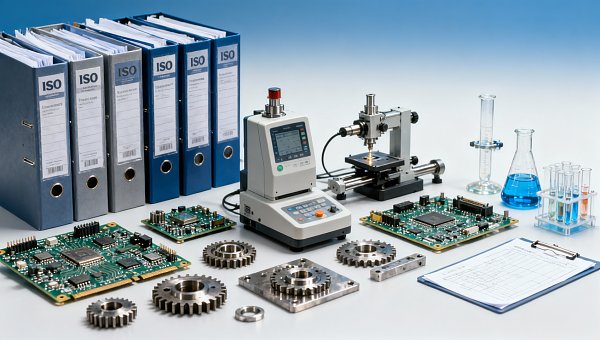
If your goal is to qualify or monitor fast-growing suppliers, the most valuable ISO standards are the ones that answer five practical questions:
- Can the supplier maintain consistent quality as orders increase?
- Can they prove traceability and process control when something goes wrong?
- Can they manage environmental, safety, and regulatory exposure?
- Can they protect sensitive technical and commercial data?
- Can their testing, inspection, and measurement results be trusted?
For cross-sector manufacturing, these are usually the standards that matter most:
- ISO 9001 — the core quality management standard and often the first filter for supplier credibility
- ISO 14001 — important where environmental compliance, waste control, emissions, or ESG expectations affect supplier selection
- ISO 45001 — relevant for occupational health and safety, especially in higher-risk production environments
- ISO/IEC 27001 — increasingly important for suppliers handling design files, customer data, software-linked systems, or connected manufacturing environments
- ISO/IEC 17025 — critical when product validation depends on laboratory competence and reliable test data
In many cases, these standards matter more than a long list of less relevant certificates. A fast-scaling supplier does not need every standard. It needs the right standards for its products, processes, customers, and expansion risks.
Why ISO 9001 usually matters first
For most industries, ISO 9001 is the foundation because scaling failures often begin with management system weaknesses rather than machine shortages. A supplier may add shifts, buy new CNC machines, expand molding lines, or onboard new sub-suppliers, but if process ownership, document control, training, nonconformance handling, and change management are weak, quality instability typically follows.
ISO 9001 matters most because it helps buyers evaluate whether the supplier has:
- Documented and repeatable processes
- Controlled change management
- Formal corrective and preventive action practices
- Internal audit discipline
- Management review and accountability
- Supplier qualification and incoming quality control
- Traceability and complaint handling
For procurement officers and technical evaluators, ISO 9001 is not simply a “certificate check.” It is a signal that the supplier has at least built a structure for scaling without losing control. That said, certification alone is not enough. The real question is whether the system is actively used on the factory floor and across the supply chain.
Which additional ISO standards become critical by risk area
Once basic quality control is in place, the next step is matching standards to actual business risk.
1. Environmental and ESG pressure: ISO 14001
Suppliers in electronics, automotive, water treatment, plastics, industrial infrastructure, and carbon-related technologies increasingly face pressure on waste, chemical handling, emissions, and resource efficiency. ISO 14001 becomes especially important when buyers need confidence that rapid expansion will not create environmental compliance failures or reputational risk.
For enterprise buyers and financial approvers, this standard often supports broader supplier resilience and ESG reporting objectives.
2. Workplace risk and operational continuity: ISO 45001
Fast growth often brings more workers, more shifts, and more complex operations. In facilities involving heavy machinery, automation cells, chemical processes, pressure systems, machining, or molding, health and safety performance is directly tied to business continuity. ISO 45001 helps indicate whether the supplier can scale labor and production safely.
3. Data security and digital manufacturing risk: ISO/IEC 27001
As more suppliers handle CAD files, firmware, EV subsystem data, connected equipment, smart agriculture platforms, or grid-related system information, information security becomes a supplier qualification issue. A fast-growing supplier with weak data controls can create IP leakage, ransomware exposure, customer trust issues, and project delays. ISO/IEC 27001 is therefore increasingly relevant in modern industrial supply chains.
4. Test credibility and technical validation: ISO/IEC 17025
For sectors where qualification depends on material analysis, electrical performance, dimensional verification, contamination testing, water quality metrics, or failure analysis, ISO/IEC 17025 matters because it addresses laboratory competence. This is especially valuable when buyers must trust a supplier’s internal lab or third-party testing results during rapid scale-up.
Sector-specific reality: not every supplier should be judged by the same ISO checklist
One of the biggest supplier assessment mistakes is applying a generic certification checklist across all categories. The ISO standards that matter most depend on what the supplier actually produces and where failure risk sits.
For example:
- Electronic components and semiconductor-linked suppliers may need stronger emphasis on ISO 9001, ISO/IEC 27001, ESD controls, traceability, and lab competence
- Automotive technology suppliers often require ISO 9001 as a minimum, but may also need industry-specific frameworks such as IATF 16949 depending on customer requirements
- CNC machining and precision tooling suppliers are often judged heavily on ISO 9001, calibration discipline, inspection systems, and process capability evidence
- Water purification and wastewater treatment suppliers may need stronger environmental, safety, and testing controls, making ISO 14001, ISO 45001, and ISO/IEC 17025 more influential
- Smart power grid and infrastructure suppliers may face higher scrutiny around cybersecurity, reliability, and controlled engineering changes
- Plastic injection molders and high-volume mold manufacturers need robust process validation, maintenance, tooling traceability, and quality system maturity to avoid scale-driven defects
This is why cross-sector benchmarking matters. A certificate only becomes meaningful when interpreted in the context of product risk, customer expectations, and growth complexity.
How buyers and quality teams should evaluate ISO certifications during supplier growth
When suppliers scale quickly, a certificate should be treated as a starting point, not final proof. To make better decisions, ask questions such as:
- Is the certification current, accredited, and relevant to the site actually producing the parts?
- Does the scope of certification cover the actual process or product category being sourced?
- Has the supplier expanded recently through new sites, subcontractors, or new lines that may sit outside the certified scope?
- Can the supplier show evidence of internal audits, CAPA closure, training records, calibration control, and process change approval?
- Are KPIs such as scrap, yield, customer complaints, on-time delivery, and supplier PPM stable during growth?
- Do environmental, safety, or data governance incidents suggest the system is weaker than the certificate implies?
This approach is particularly useful for procurement teams trying to balance price, speed, and supply assurance. It also helps project managers and decision-makers avoid selecting suppliers that look compliant on paper but are fragile in execution.
Common warning signs that the “right” ISO standard is missing or not working
Even if a supplier has formal certifications, rapid scale can expose weaknesses. Watch for these warning signs:
- Frequent engineering changes with poor revision control
- Rising defect rates after volume increases
- Weak lot traceability or incomplete batch records
- Delayed corrective actions and repeated root-cause failures
- Inconsistent test results between lots or sites
- Subcontractor expansion without corresponding supplier controls
- Cybersecurity concerns around file transfer, connected equipment, or customer data access
- Environmental or safety incidents during facility expansion
These issues often indicate that the supplier may have certification, but the system has not matured enough to support growth. For buyers, this is the difference between formal compliance and operational reliability.
A practical prioritization model for fast-scaling suppliers
If you need a practical way to prioritize ISO standards, use this simple sequence:
- Start with ISO 9001 for baseline quality management and process control
- Add ISO 14001 where environmental exposure, waste, emissions, or ESG scrutiny are significant
- Add ISO 45001 where worker safety and operational risk are material
- Add ISO/IEC 27001 where digital systems, IP, customer data, or connected operations create cyber risk
- Add ISO/IEC 17025 where laboratory data underpins qualification, compliance, or performance claims
- Overlay sector-specific requirements such as automotive, electronics, or other industry frameworks when customer mandates apply
This prioritization helps organizations avoid two extremes: demanding too many irrelevant standards or overlooking the few that truly protect quality, continuity, and credibility.
Conclusion: the ISO standards that matter most are the ones that protect scaling discipline
When suppliers grow fast, the most important ISO standards are not simply the most famous ones. They are the standards that reduce the specific risks created by expansion: unstable quality, weak traceability, unsafe operations, unreliable test data, environmental exposure, and poor information security.
For most suppliers, ISO 9001 remains the essential baseline. Beyond that, ISO 14001, ISO 45001, ISO/IEC 27001, and ISO/IEC 17025 often become the most valuable standards depending on sector, product criticality, and supply chain complexity. The smartest evaluation approach is not to ask whether a supplier has “more certificates,” but whether the right standards are in place, active, and aligned with real operational risk.
For procurement, engineering, quality, and business leadership teams, that perspective leads to better supplier decisions, lower scaling risk, and stronger long-term resilience across modern global manufacturing.

The Archive Newsletter
Critical industrial intelligence delivered every Tuesday. Peer-reviewed summaries of the week's most impactful logistics and market shifts.