Monday, May 22, 2024

ADAS Lane Departure Warning Common Failures
by
Published
Views:
ADAS lane departure warning failures can quickly turn a critical safety feature into a source of false alerts, driver complaints, and costly diagnostic delays. For aftermarket maintenance teams, understanding the most common causes—from camera misalignment and sensor contamination to wiring faults and calibration errors—is essential for faster troubleshooting and reliable repairs. This guide outlines the failure patterns technicians are most likely to encounter in real-world service environments.
In modern service bays, ADAS lane departure warning issues are no longer limited to premium passenger vehicles. They now appear across light commercial fleets, buses, construction support vehicles, and mixed industrial mobility platforms where camera-based driver assistance must remain stable despite vibration, glass replacement, harsh weather, and uneven maintenance quality.
For aftermarket teams, the challenge is not only identifying the failed part. It is separating root cause from symptoms, reducing repeat repairs, and deciding when recalibration, wiring repair, cleaning, software validation, or component replacement is the correct next step. A disciplined diagnostic process can cut unnecessary parts swapping and reduce downtime from 2 days to a few service hours in many routine cases.
Why ADAS Lane Departure Warning Fails in Real Service Conditions
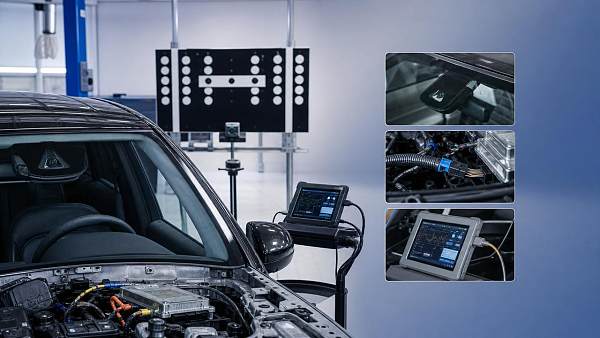
ADAS lane departure warning relies on a tightly linked chain of hardware, software, mounting geometry, and environmental visibility. If one link drifts outside operating tolerance, the system may issue false warnings, fail to detect lane markings, or become unavailable altogether. In aftermarket environments, 4 failure groups appear most often: optical obstruction, alignment drift, electrical faults, and calibration errors.
Unlike conventional sensors that can tolerate broader installation variation, a forward-facing ADAS camera often depends on precise angle control measured in small fractions of a degree. A windshield replacement, front-end collision repair, ride height change, or even bracket deformation after repeated vibration can be enough to affect lane detection consistency.
Common operating symptoms technicians should recognize
- Frequent false lane departure alerts on straight roads
- No warning activation despite visible lane markings at 50–90 km/h
- Intermittent system unavailable messages during rain, glare, or early morning low-angle sunlight
- DTCs related to camera communication, aiming, image quality, or ECU configuration mismatch
- Customer complaints after windshield replacement or suspension service completed within the previous 7–30 days
Environmental and vehicle-side triggers
Field failures often start with environmental stress rather than complete component breakdown. Dust film, road salt, wax residue, cracked windshield frit areas, and interior fogging near the camera zone can degrade image contrast. On fleet vehicles running 8–12 hours per day, this contamination builds quickly and may be misread as a hardware defect.
Vehicle modifications also matter. Tire size changes, uneven ride height, steering angle sensor offset, front suspension replacement, and subframe movement after impact can alter the camera’s effective reference. Even if the camera itself is functional, the lane departure warning logic may work with incorrect dynamic inputs.
Failure pattern overview
The table below helps maintenance teams map symptom patterns to likely root causes and first inspection actions. This is especially useful when several fault mechanisms overlap during real workshop intake.
The key takeaway is that ADAS lane departure warning faults rarely begin with the camera module alone. In many aftermarket cases, the actual issue sits in the installation context: glass quality, mounting accuracy, power and data integrity, or missing recalibration after related service work.
The Most Common Failure Points Aftermarket Technicians See
To improve first-time fix rates, workshops should prioritize the failure points that appear most frequently in field repairs. A practical approach is to inspect from the outside in: optical path first, mount and geometry second, wiring third, software and calibration fourth. This 4-step order often shortens diagnosis time by 20–40% compared with random parts replacement.
1. Camera misalignment after repair or impact
Camera misalignment is one of the highest-frequency causes of ADAS lane departure warning complaints. The trigger may be a minor bumper strike, windshield replacement, mirror-area trim removal, or hidden bracket deformation. Even a small angular shift can distort lane boundary interpretation, especially at highway speeds above 60 km/h.
Technicians should verify whether the mounting bracket is original, secure, and dimensionally stable. If adhesive curing, fastener torque, or bracket seating is inconsistent, static calibration may complete successfully while real-world detection remains poor. That mismatch is a common reason for repeat comebacks.
2. Sensor contamination and poor optical clarity
A contaminated camera window can reduce contrast, blur lane edges, and create intermittent warnings in rain or low light. This includes external dirt, internal film, moisture, dashboard reflections, and residue from cleaning agents. On vehicles used in agriculture, mining support, or industrial transport, contamination rates are typically higher than in standard urban passenger use.
Inspection should include both sides of the windshield, the lens cover, and the frit area near the camera. If a replacement windshield uses a non-matching optical zone, the ADAS lane departure warning system may suffer reduced performance even when no DTC is stored.
3. Wiring, connectors, and power supply instability
Electrical faults are often intermittent and therefore expensive in labor time. Common issues include connector pin spread, harness chafing near A-pillars, poor ground quality, moisture intrusion, and supply voltage fluctuation during engine start. A voltage drop below expected operating range for even a short period can trigger loss of function or communication faults.
For mixed fleets, technicians should inspect previous repair splices, aftermarket accessory taps, and body repair zones. Many lane warning complaints emerge 2–6 weeks after unrelated electrical work, which makes service history review essential.
4. Calibration errors and incomplete setup
Static and dynamic calibration errors remain a major cause of unresolved ADAS lane departure warning problems. The process can fail due to uneven floor conditions, incorrect target placement, poor tire pressure matching, steering offset, insufficient lighting, or software procedures skipped under time pressure.
Where manufacturers require target distances measured in millimeters, minor setup errors can invalidate the result. A workshop should treat calibration as a controlled procedure, not a quick scan-tool step. In many service environments, 15–30 minutes spent on preparation prevents hours of misdiagnosis later.
Failure priority matrix for workshop use
The following matrix supports quick triage by combining occurrence frequency, service time impact, and recommended first action for each major failure point.
For service managers, this matrix also supports labor planning. Quick visual checks should not be skipped, because they often eliminate the need for unnecessary camera replacement and help standardize diagnostic quality across technicians with different ADAS experience levels.
A Practical Diagnostic Workflow for Faster ADAS Lane Departure Warning Repair
A repeatable workflow is the most effective way to reduce technician variation. In high-mix workshops handling several brands, platforms, and camera architectures, standardized intake and test steps improve both repair speed and documentation quality. A 5-stage process works well for most ADAS lane departure warning complaints.
Stage 1: Confirm complaint and operating conditions
Record when the failure occurs: speed range, weather, road marking type, load condition, and recent repair history. A warning that appears only at 80–100 km/h on bright concrete roads points to a different issue than a total system shutdown at ignition. This intake step often narrows the diagnosis before tools are connected.
Stage 2: Visual and physical inspection
- Inspect windshield condition in the camera viewing zone.
- Check camera housing, bracket seating, and signs of trim pressure or distortion.
- Look for contamination, tint film, sealant residue, or internal haze.
- Confirm tire pressures, vehicle stance, and obvious suspension asymmetry.
This step should take about 10–20 minutes and can rule out several low-cost failure modes before advanced calibration work begins.
Stage 3: Electronic diagnosis and power integrity check
Read all relevant DTCs, not only those stored in the camera module. Steering angle, yaw rate, ABS, body control, and gateway communication issues can influence ADAS lane departure warning performance. Then verify power, ground, and communication circuit condition under load rather than relying only on static continuity checks.
Stage 4: Calibration validation
Before calibrating, confirm workshop floor level, target geometry, steering center, fuel load assumptions if required, and correct ride height condition. On some platforms, a successful scan-tool confirmation does not guarantee valid real-world operation if the setup was inaccurate by only a small margin.
Stage 5: Road test and repair documentation
A post-repair road test should include at least 2 lane-marking conditions and a suitable speed range based on platform design. Documenting environmental conditions, calibration completion, and replaced parts protects the workshop from future disputes and supports quality benchmarking across fleet or multi-site maintenance operations.
Service Risks, Parts Decisions, and Maintenance Best Practices
ADAS lane departure warning repair becomes more costly when teams replace components before validating fit, optical quality, or calibration prerequisites. For procurement and workshop decision-makers, the technical question is not simply whether a part fits physically, but whether the full sensing path remains compatible with system performance expectations.
When replacement is necessary
Component replacement is justified when the camera has image corruption, internal moisture, broken mounting points, persistent internal DTCs, or confirmed communication failure after circuit verification. However, replacing the module without correcting the original alignment or glass issue usually creates a repeat failure cycle within the next service interval.
Workshop controls that reduce repeat ADAS faults
- Use a documented pre-calibration checklist with at least 6 inspection items.
- Separate glass replacement completion from ADAS release until calibration is verified.
- Train technicians to inspect brackets and optical zones, not only electronic codes.
- Track comeback patterns by cause category over 30-day and 90-day periods.
- Review parts compatibility carefully for camera covers, windshields, and mount hardware.
Common misconceptions
One common mistake is assuming a clean DTC scan means the system is healthy. Another is treating all windshield replacements as equivalent. In practice, optical consistency, mount geometry, and calibration setup quality determine whether ADAS lane departure warning performs reliably after service. For industrial and mixed-fleet operators, these controls are especially important because vehicle duty cycles are more severe.
For organizations managing diverse mobility assets, a benchmarking mindset is valuable. Comparing repair procedures, calibration discipline, and component quality across suppliers helps identify where recurring failures originate. This system-level approach aligns with how technical intelligence platforms such as Global Industrial Matrix support cross-sector maintenance decisions using verifiable data, standards awareness, and operational risk visibility.
What Aftermarket Teams Should Prioritize Next
The most effective response to recurring ADAS lane departure warning failures is a structured service model: inspect the optical path first, verify mounting geometry, test wiring under load, and calibrate only after prerequisites are controlled. This approach improves repair confidence, limits unnecessary component spend, and supports safer vehicle return-to-service decisions.
For aftermarket maintenance personnel, fleet managers, and industrial mobility service teams, the value lies in faster root-cause isolation and fewer repeat visits. If you need support comparing diagnostic workflows, calibration requirements, component considerations, or broader cross-industry mobility benchmarks, contact us to get a tailored solution, discuss technical details, and explore more ADAS-focused maintenance insights.
The Archive Newsletter
Critical industrial intelligence delivered every Tuesday. Peer-reviewed summaries of the week's most impactful logistics and market shifts.