Monday, May 22, 2024

Bundesbank Cuts 2026 GDP Outlook to 0.5%
by
Published
Views:
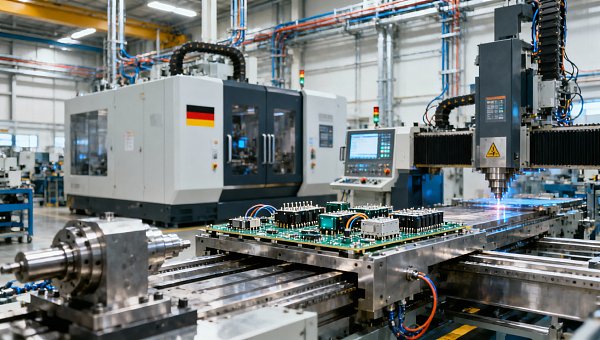
On June 12, 2026, Germany’s central bank lowered its growth outlook for this year and next year, citing rising energy supply uncertainty linked to the ongoing Middle East conflict. With industrial energy costs under pressure and investment confidence weakening, the update matters beyond macro data: it is particularly relevant for companies tied to Germany’s procurement cycle in high-precision industrial goods, including ADAS & Sensors, SMT Precision Metrics, and CNC Machining Tools.
What the latest revision confirms
The confirmed update is that the Bundesbank reduced its forecast for German economic growth and now expects the economy to expand by 0.5% in 2026. This is lower than its December estimate of 0.6%. At the same time, it raised its inflation forecast. The stated reason is that the intensifying conflict in the Middle East has increased uncertainty around energy supply, pushing up industrial energy costs and weighing on investment confidence.
The input information also makes clear that Germany is a core European buyer of high-end equipment. Against that backdrop, softer demand in Germany may affect the import pace of high-precision industrial products such as ADAS & Sensors, SMT Precision Metrics, and CNC Machining Tools.
Where the pressure may show up first
Procurement cycles for high-precision equipment
From an industry perspective, buyers connected to high-end equipment spending may be affected first because weaker growth expectations and higher inflation can make procurement decisions more cautious. The most direct area to watch is the timing of imports and order placement for ADAS & Sensors, SMT Precision Metrics, and CNC Machining Tools.
Manufacturing operations exposed to energy costs
Analysis shows that manufacturers with meaningful industrial energy usage may feel pressure through operating costs and investment planning. The issue is not only whether demand slows, but whether higher energy uncertainty causes delays in equipment upgrades, capacity decisions, or technical purchasing schedules.
Suppliers and trade intermediaries serving Germany
For exporters, distributors, and supply chain service providers linked to the German market, the immediate concern is rhythm rather than a confirmed collapse in demand. What deserves closer attention is whether customer inquiries, quotation conversions, delivery planning, and replenishment cycles begin to move more slowly as buyers reassess budgets and project timing.
What companies should monitor now
Watch for further official guidance
Companies should track whether future official communication continues to emphasize energy supply uncertainty, inflation pressure, and weaker investment sentiment. That distinction matters because a forecast revision is a policy signal, while actual procurement behavior may adjust at a different speed.
Review exposure by product category
Businesses with sales tied to ADAS & Sensors, SMT Precision Metrics, and CNC Machining Tools should review which product lines depend most on German demand. The practical focus should be on order timing, customer prioritization, and whether current shipment expectations still match market conditions.
Recheck delivery and fulfillment assumptions
Observably, a slower import pace can affect planning across lead times, inventory positioning, and contract execution. Companies should pay close attention to delivery windows, documentation readiness, and whether customer communication needs to be updated if decision cycles become longer.
Separate macro signals from confirmed order changes
Analysis shows that the current development should not be treated as proof of uniform demand contraction across all industrial categories. A central task for commercial and supply chain teams is to distinguish between a macroeconomic warning sign and verified changes in customer purchase orders or project schedules.
Why this matters as a market signal
It is more appropriate to understand this as a meaningful short-term warning signal with possible spillover into industrial trade flows, rather than as a fully settled long-term outcome. The confirmed facts point to tighter growth expectations, higher inflation, and sustained energy uncertainty. The broader industry implication, however, still depends on how quickly these pressures translate into slower equipment procurement in Germany.
From an industry perspective, the reason to keep watching this development is Germany’s role in European high-end equipment demand. If procurement caution becomes more visible, the effect may be felt not only by direct exporters but also by component suppliers, service providers, and planning teams that rely on predictable import timing.
How the development is best understood today
At this stage, the update is significant because it links macroeconomic downgrades directly to energy uncertainty and industrial cost pressure, while also pointing to possible slower imports of precision industrial products. A balanced reading is that the development deserves close monitoring, especially for businesses exposed to German capital goods demand, but it should still be assessed through actual order behavior and procurement signals rather than headline interpretation alone.
About the information used here
This article is based on the user-provided news title, event date, and event summary concerning the Bundesbank’s June 12, 2026 downgrade of Germany’s growth outlook, the inflation revision, and the potential impact on high-precision industrial imports. For this type of development, relevant source categories typically include official statements, company disclosures, industry association updates, authoritative media coverage, and standards or institutional documents. A specific official source link was not provided in the input, so further verification remains necessary. Follow-up attention should focus on subsequent official statements and whether procurement activity in the affected product categories shows measurable changes.

The Archive Newsletter
Critical industrial intelligence delivered every Tuesday. Peer-reviewed summaries of the week's most impactful logistics and market shifts.