Monday, May 22, 2024
CAICT Launches DeepSeek V4 Domestic AI Hardware Compatibility Testing
by
Published
Views:
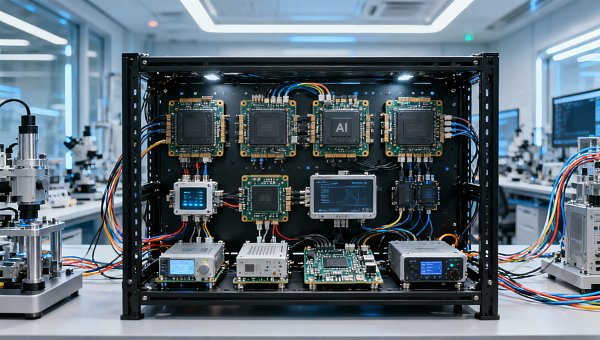
On April 27, 2026, the China Academy of Information and Communications Technology (CAICT) initiated formal compatibility testing of DeepSeek V4 — a large language model — with domestically developed CPUs, GPUs, and operating systems. This effort targets the establishment of a full-stack AI hardware ecosystem spanning training, inference, and edge deployment. The move is expected to accelerate international certification for Chinese AI hardware products — particularly AI accelerators, intelligent sensor modules, and automotive domain controllers — under key standards including IEC 62443 (industrial cybersecurity) and ISO/IEC 23053 (AI system evaluation), thereby shortening compliance pathways for ADAS & Sensors and Mobility Vision solutions exported to the EU, Middle East, and Southeast Asia.
Event Overview
On April 27, 2026, CAICT officially launched compatibility testing between DeepSeek V4 and domestic CPU/GPU/OS platforms. The objective is to build an end-to-end AI hardware ecosystem covering AI model training, inference, and edge deployment. Publicly confirmed information includes the scope (training, inference, edge), target hardware categories (domestic AI accelerators, smart sensor modules, vehicle domain controllers), and intended certification frameworks (IEC 62443, ISO/IEC 23053). No further technical specifications, timelines, or vendor participation details have been disclosed.
Industries Affected
AI Hardware Exporters
Exporters of AI accelerators, intelligent sensor modules, and automotive domain controllers are directly affected because the CAICT-led testing serves as a foundational step toward internationally recognized conformity assessments. Impact manifests in two ways: first, earlier alignment with IEC 62443 and ISO/IEC 23053 requirements may reduce time-to-certification; second, CAICT’s involvement may strengthen technical credibility during third-party audits in target markets such as the EU and ASEAN.
Automotive Electronics Suppliers
Suppliers providing ADAS components or vision-based mobility systems face downstream implications. As OEMs and Tier-1 integrators increasingly require evidence of AI model–hardware co-validation, this initiative signals growing demand for documented interoperability between models like DeepSeek V4 and underlying silicon/OS stacks. Impact centers on product validation documentation, integration test planning, and potential shifts in qualification timelines.
Industrial IoT Equipment Manufacturers
Manufacturers embedding AI inference at the edge — especially in industrial automation or critical infrastructure applications — may experience indirect pressure to align with the same security and evaluation benchmarks. Since IEC 62443 is widely referenced in industrial control system certifications, early participation in CAICT’s ecosystem may help preempt future compliance bottlenecks when deploying AI-enhanced devices in regulated sectors.
What Enterprises and Practitioners Should Focus On Now
Monitor official updates from CAICT and DeepSeek on test scope and eligibility criteria
CAICT has not yet published detailed test protocols, participant onboarding procedures, or version-specific requirements for DeepSeek V4. Enterprises should track announcements via CAICT’s official website and verified industry channels — not third-party summaries — to avoid acting on incomplete or outdated guidance.
Identify which product lines intersect with IEC 62443 or ISO/IEC 23053 applicability domains
Not all AI hardware requires both standards. For example, automotive domain controllers typically fall under functional safety and cybersecurity frameworks (e.g., ISO/SAE 21434), while industrial sensors may prioritize IEC 62443. Companies should map current or planned export destinations against applicable clauses in these standards — rather than assuming blanket relevance — to prioritize internal resource allocation.
Distinguish between technical readiness signals and actual certification outcomes
The launch of compatibility testing does not equate to automatic certification or market access. Observably, CAICT’s role here is primarily technical validation, not accreditation. Enterprises must continue engaging notified bodies (e.g., TÜV Rheinland, BSI) for formal conformity assessment — treating CAICT’s work as preparatory, not substitutive.
Review supply chain documentation for hardware-software traceability
Successful compatibility testing relies on verifiable hardware firmware versions, OS kernel configurations, and driver compatibility logs. Companies preparing for participation should audit existing build records and vendor datasheets to ensure reproducibility — especially where domestic chipsets or real-time OS variants are involved.
Editorial Perspective / Industry Observation
This initiative is best understood as a signal — not yet an outcome — indicating institutional prioritization of AI hardware interoperability and export-readiness. Analysis shows that CAICT’s involvement lowers coordination friction among domestic chipset vendors, OS developers, and model providers, but does not bypass international standardization processes. From an industry perspective, the significance lies less in immediate certification gains and more in the consolidation of reference architectures and test methodologies that may eventually feed into national implementation guidelines or bilateral technical agreements. Continued observation is warranted for how deeply DeepSeek V4’s architecture influences domestic hardware design choices — especially regarding memory bandwidth, quantization support, and real-time scheduling capabilities.
Conclusion
CAICT’s launch of DeepSeek V4 compatibility testing reflects a coordinated step toward strengthening the technical foundation for exporting AI-enabled hardware. Its primary value is procedural: it introduces a shared validation framework that may streamline future conformity efforts, but it does not replace independent international certification. Currently, it is more accurate to interpret this development as an infrastructure-building milestone — one that supports, rather than substitutes for, established global compliance pathways.
Information Source:
— Official announcement by China Academy of Information and Communications Technology (CAICT), dated April 27, 2026.
— Confirmed scope and standards references (IEC 62443, ISO/IEC 23053) as stated in the original release.
Note: Further details on test methodology, participating vendors, and timeline milestones remain pending official disclosure and are subject to ongoing monitoring.
The Archive Newsletter
Critical industrial intelligence delivered every Tuesday. Peer-reviewed summaries of the week's most impactful logistics and market shifts.