Monday, May 22, 2024

Smart Sensors for Industrial Fault Detection
by
Published
Views:
In modern production environments, smart sensors for industrial applications are transforming fault detection from reactive troubleshooting into real-time prevention. They help identify abnormal heat, vibration, pressure, flow, and electrical behavior before failures escalate. Across mixed industrial systems, this creates safer operations, less downtime, and clearer maintenance decisions.
For complex facilities, fault detection is no longer a single-device issue. Equipment health now depends on connected sensing, reliable data interpretation, and cross-system visibility. That is why smart sensors for industrial applications matter across electronics, mobility, agriculture, infrastructure, and precision manufacturing.
Global Industrial Matrix (GIM) supports this shift through cross-sector benchmarking and verifiable technical intelligence. By aligning hardware performance with standards such as ISO, IATF, and IPC, GIM helps industrial teams evaluate sensing strategies with stronger technical confidence.
Why a structured approach improves industrial fault detection
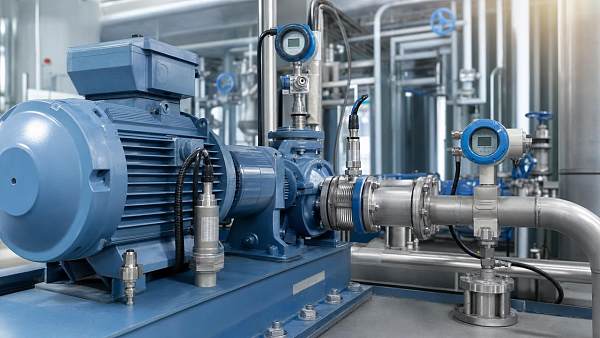
Industrial faults rarely begin as dramatic breakdowns. They often start as weak signals, including rising vibration, unstable current, delayed response, or inconsistent thermal behavior. Without a structured review, these signs may appear unrelated.
A practical checklist turns sensor selection and deployment into a repeatable process. It reduces guesswork, improves installation quality, and helps validate whether smart sensors for industrial applications truly fit operating conditions.
This matters even more in multi-disciplinary operations. A motor line, filtration unit, autonomous vehicle cell, and agricultural pumping station may all require different sensing logic, yet they share the same goal: early fault detection with trustworthy data.
Core points to review before using smart sensors for industrial applications
- Confirm the target fault mode first, such as bearing wear, overheating, pressure loss, leakage, electrical imbalance, or alignment drift, before choosing any sensor type.
- Match the sensor to the physical variable that changes earliest, including vibration, temperature, acoustic emission, humidity, torque, current, voltage, or fluid quality.
- Check the operating environment carefully, especially dust, washdown exposure, corrosive chemicals, outdoor weather, electromagnetic noise, and mechanical shock.
- Review sampling rate and response time to ensure fast-moving faults are captured before alarms become late or trend data becomes misleading.
- Validate measurement range and sensitivity so minor anomalies are visible while normal operating peaks do not cause clipping or false warnings.
- Assess connectivity options, including IO-Link, Modbus, Ethernet, wireless nodes, or edge gateways, to fit existing control and monitoring architecture.
- Make sure alarm thresholds combine fixed limits with trend-based logic, because many early faults emerge as gradual drift rather than sudden excursions.
- Verify sensor placement on the actual machine path, since location strongly affects the signal quality for vibration, heat transfer, flow, and acoustic behavior.
- Include calibration and maintenance planning from the start, especially for harsh environments where contamination, drift, or mechanical loosening can reduce accuracy.
- Compare data outputs against recognized standards and benchmark references to support reliable interpretation across sites, suppliers, and equipment generations.
How smart sensors detect faults across different industrial scenarios
Rotating equipment and drive systems
Motors, pumps, compressors, and fans are ideal candidates for smart sensors for industrial applications. Vibration, temperature, and current sensors reveal imbalance, misalignment, lubrication loss, and bearing fatigue early.
Useful checks include sensor mounting rigidity, shaft-speed correlation, and trend windows long enough to separate true mechanical degradation from temporary load changes.
Automated production lines and robotics
In automated cells, smart sensing supports positional accuracy, thermal stability, pneumatic consistency, and motor health. Faults often appear as cycle-time drift, repeatability errors, or intermittent actuator response.
Key review points include latency, controller integration, cable durability, and synchronized timestamps between sensors and machine events.
Process systems and environmental infrastructure
Water treatment, filtration, and utility infrastructure rely on pressure, flow, conductivity, turbidity, and level monitoring. Smart sensors for industrial applications help detect fouling, leakage, pump inefficiency, and unstable process conditions.
Focus on chemical compatibility, long-term drift, and whether sensor readings can be linked to maintenance records and process quality outcomes.
Electronics and precision manufacturing
Sensitive production environments need precise thermal, humidity, pressure, and particulate control. Minor deviations can create yield loss before obvious machine failure occurs.
In these settings, fault detection should include environmental stability, equipment micro-vibration, and correlation between sensor signals and quality defects.
Smart agriculture and mobile equipment
Autonomous tractors, irrigation systems, and field processing equipment face dust, weather, vibration, and variable loads. Smart sensors for industrial applications improve reliability in engines, hydraulics, batteries, and fluid systems.
Checks should include ingress protection, wireless coverage, power stability, and threshold logic that accounts for changing terrain and duty cycles.
Commonly overlooked issues that weaken fault detection
Too much data, not enough context
A sensor network can produce large volumes of data without improving decisions. If trends are not tied to machine states, load conditions, or maintenance history, fault interpretation becomes unreliable.
Poor installation quality
Even advanced smart sensors for industrial applications perform badly when mounted loosely, placed too far from the fault source, or exposed to avoidable electrical interference.
Static alarm settings only
Fixed alarm limits can miss slow degradation. Combining baseline limits with trend analysis and rate-of-change logic usually gives earlier and more useful warnings.
Ignoring cross-system dependencies
A detected fault may not begin at the monitored asset. A pressure issue may stem from upstream fouling, power instability, or software timing errors elsewhere in the system.
No benchmark for signal quality
Without standardized reference points, two sites can interpret the same sensor behavior differently. Benchmark-driven validation improves consistency and supports scalable deployment.
Practical steps for stronger implementation
- Start with one critical asset group where downtime costs are visible and fault history is already documented.
- Map each known failure mode to one measurable signal and one expected operational response.
- Pilot smart sensors for industrial applications under real load, not only during controlled acceptance tests.
- Review false positives and missed events monthly to refine placement, thresholds, and filtering logic.
- Use benchmark data to compare sensor output quality, environmental durability, and cross-platform compatibility.
- Expand gradually to related systems after proving value in uptime, safety, maintenance efficiency, or process stability.
A strong implementation also benefits from cross-sector comparison. GIM’s technical benchmarking approach is valuable because lessons from automotive drivetrains, filtration modules, electronics production, and agricultural machinery often transfer in practical ways.
That broader view supports smarter decisions on component durability, signal interpretation, and standards alignment. It helps organizations move beyond isolated monitoring toward resilient, system-level fault detection.
FAQ about smart sensors for industrial applications
Which sensor types are most useful for early fault detection?
The best choice depends on the failure mode. Common options include vibration, temperature, pressure, current, flow, acoustic, and humidity sensors.
Can smart sensors reduce unplanned downtime?
Yes. Smart sensors for industrial applications detect abnormal trends earlier, allowing maintenance actions before faults develop into line-stopping failures.
Are smart sensors only useful in highly automated factories?
No. They are also effective in utilities, mobile equipment, agriculture, environmental systems, and mixed-technology plants with legacy assets.
How should sensor performance be evaluated?
Review accuracy, repeatability, durability, integration fit, and correlation with real fault events. Benchmarking against standards adds further confidence.
Conclusion and next actions
Smart sensors for industrial applications are changing fault detection from delayed reaction to predictive control. Their value grows when selection, placement, thresholds, and validation follow a disciplined process.
The most effective next step is to audit one critical process using the checkpoints above. Identify the earliest measurable fault signal, confirm environmental demands, and compare sensor data against benchmark references.
With structured deployment and cross-sector technical insight, industrial operations can detect faults earlier, reduce operational risk, and build more resilient performance over time.
The Archive Newsletter
Critical industrial intelligence delivered every Tuesday. Peer-reviewed summaries of the week's most impactful logistics and market shifts.