Monday, May 22, 2024

What automotive safety upgrades matter most today
by
Published
Views:
Automotive safety upgrades that matter most today are the ones that prevent crashes before impact, protect occupants when a collision still happens, and reduce failure risk in increasingly electrified vehicles. For most buyers, engineers, procurement teams, and business decision-makers, the highest-value upgrades are advanced driver assistance systems, improved braking and tire monitoring, battery and thermal safety protections in EVs, better visibility systems, and robust electronic control architecture. The right priority is not simply “more features,” but the upgrades that measurably improve real-world safety, reliability, compliance, and lifecycle value.
As vehicles become more software-defined, electrified, and sensor-dependent, safety is no longer limited to airbags and structural crash performance. It now includes the quality of radar and camera integration, the resilience of PCB-based control systems, the reliability of electric motor and power electronics performance, and the ability of the vehicle to detect, avoid, and manage hazards under real operating conditions. For organizations evaluating mobility platforms or sourcing from an electric motor manufacturer, safety upgrades should be assessed not only by marketing claims, but by application fit, standards alignment, maintenance implications, and total operational risk.
What safety upgrades deliver the biggest real-world impact today?
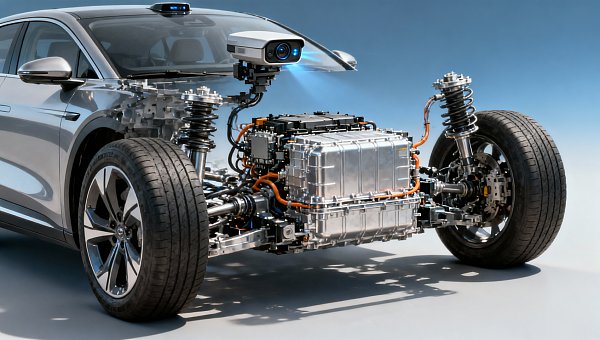
The most important automotive safety upgrades today generally fall into five categories: crash avoidance, braking and stability, occupant protection, EV-specific safety, and electronic system reliability. Among these, crash avoidance technologies usually provide the most immediate real-world benefit because they reduce the chance of an accident happening at all.
1. Automatic Emergency Braking (AEB) and Forward Collision Warning
AEB is now one of the most valuable safety upgrades in modern vehicles. It uses sensors such as cameras, radar, or both to detect an imminent collision and apply braking if the driver does not react in time. For fleet operators, end users, and procurement teams, AEB is often a priority because it can reduce rear-end collisions, lower damage exposure, and improve driver confidence.
2. Lane Keeping Assistance and Blind Spot Detection
These features address common everyday risks rather than rare edge cases. Lane departure warning, lane keeping assistance, and blind spot monitoring are especially useful for highway driving, commercial mobility applications, and drivers operating in dense traffic. They are now considered highly relevant upgrades because they help compensate for fatigue, distraction, and visibility limits.
3. Electronic Stability Control, ABS, and brake system upgrades
These are foundational safety systems, but they still matter enormously. In many evaluations, organizations focus on newer ADAS functions while overlooking the importance of braking consistency, wheel-speed sensing accuracy, and vehicle stability calibration. Upgraded brake control systems, better traction management, and properly integrated ABS and ESC remain among the strongest contributors to accident prevention.
4. Tire Pressure Monitoring and tire-condition intelligence
Tire issues continue to cause avoidable safety incidents. Tire pressure monitoring systems are not glamorous, but they are one of the most practical upgrades available. In commercial fleets and long-duty-cycle applications, advanced tire monitoring can improve both safety and operational efficiency.
5. Airbag logic, occupant sensing, and stronger cabin protection
Passive safety still matters. Multi-stage airbags, better side-impact protection, improved seat belt pretensioning, and occupant classification systems provide critical protection when crash avoidance fails. These upgrades remain important for passenger vehicles, shared mobility fleets, and duty vehicles operating in mixed-use environments.
Why EV and electrified vehicle safety upgrades now deserve special attention
As electrification expands, EV safety has become a top evaluation area. The safety profile of an electric vehicle depends not only on crash structure, but also on battery protection, thermal management, isolation integrity, software controls, and power electronics durability. This is one of the biggest shifts in automotive safety priorities today.
Battery pack protection and thermal management
In EVs, battery safety is central. The most important upgrades include advanced battery management systems, thermal runaway detection, cell balancing, cooling system reliability, and impact-resistant pack enclosure design. These factors influence both safety and long-term reliability.
High-voltage isolation and fault detection
Electrified platforms require robust insulation monitoring, fast disconnect systems, and dependable fault response logic. For technical evaluators and quality managers, these are not secondary engineering details; they are core safety requirements tied to vehicle uptime, service safety, and regulatory confidence.
Electric motor and inverter control reliability
A vehicle can only be as safe as the control stability of its propulsion system. When selecting an electric motor manufacturer or broader e-mobility platform, teams should assess thermal performance, torque control precision, EMC behavior, failure mode management, and the quality of the supporting electronics. Reliable electric motor systems contribute to predictable acceleration, regenerative braking consistency, and safer overall vehicle behavior.
PCB quality in safety-critical electronics
Many critical safety functions now depend on advanced printed circuit boards and electronic assemblies. Radar modules, camera controllers, battery management systems, motor drives, and braking electronics all rely on PCB fabrication quality and assembly integrity. Weaknesses in soldering, substrate design, thermal dissipation, or signal integrity can directly affect safety performance. This is especially relevant for organizations benchmarking suppliers across electronics and automotive engineering domains.
Which upgrades matter most for buyers, fleets, and enterprise decision-makers?
Not every safety upgrade delivers equal value in every scenario. The best choice depends on vehicle type, operating environment, driver profile, and business risk exposure. For enterprise buyers and financial approvers, the right question is not “Which features are newest?” but “Which upgrades reduce incident probability, liability, downtime, and total cost of ownership?”
For passenger vehicle buyers and end consumers
The strongest priorities are usually AEB, blind spot monitoring, lane keeping assistance, rear cross-traffic alert, adaptive headlights, and strong crash-test performance. These upgrades improve daily driving safety in the most common use cases.
For fleets and commercial operators
Priority should go to driver assistance systems that reduce frequent incident types, along with braking performance, 360-degree visibility aids, fatigue-related support systems, telematics-linked safety monitoring, and durable tire and thermal management systems. For EV fleets, battery safety and charging-system protection become especially important.
For procurement and technical assessment teams
Evaluation should include standards compliance, component traceability, electronics reliability, environmental durability, software update governance, and serviceability. It is also essential to review supplier capability in areas such as ISO and IATF-aligned processes, failure analysis, and validation under realistic operating conditions.
For distributors and channel partners
Safety upgrades that are easiest to explain, verify, and differentiate in the market often create stronger commercial value. Buyers increasingly want evidence-based safety performance, not vague feature lists. Products with clear safety application relevance and measurable operational benefits are easier to position and defend.
How should you evaluate whether a safety upgrade is actually worth the investment?
A useful evaluation framework combines technical relevance, safety impact, operational reliability, and lifecycle economics. This helps decision-makers avoid overpaying for features that look advanced but add limited practical value.
Start with the actual risk profile
Review the most common hazards in the intended use case. Highway fleets, urban passenger vehicles, industrial transport, and mixed-terrain mobility platforms face different risk patterns. The best upgrade is the one that addresses the highest-probability and highest-cost incidents.
Check system integration, not just feature presence
A feature can exist on paper yet perform poorly in practice. Sensor placement, control calibration, software maturity, electronic architecture, and response timing all affect real safety value. Strong integration matters more than a long options list.
Assess reliability under real operating conditions
Heat, vibration, moisture, dust, electromagnetic interference, and repeated load cycles can all degrade safety performance. This is why technical benchmarking and supplier validation are critical, especially in electronics-heavy and electrified platforms.
Compare lifecycle cost against failure reduction
A worthwhile safety upgrade should reduce collision risk, service disruption, warranty exposure, insurance burden, or regulatory risk. This is especially important for fleet operators and capital approvers evaluating return on investment.
Look for data transparency from suppliers
Suppliers should be able to demonstrate test methods, performance benchmarks, standards alignment, and failure-response planning. In modern mobility systems, verifiable technical integrity is often a better indicator of safety than broad marketing language.
What safety trends will shape the next generation of automotive upgrades?
The next phase of automotive safety will be defined by deeper integration between sensors, software, electrified propulsion, and cross-domain electronics. The industry is moving from isolated safety components toward coordinated safety ecosystems.
Several trends are especially important:
- Sensor fusion that combines camera, radar, ultrasonic, and vehicle-state data for more reliable hazard detection
- Software-defined safety updates that improve performance over time but require stronger validation and cybersecurity governance
- Battery and thermal safety innovation as EV adoption expands into higher-performance and commercial applications
- Safer human-machine interfaces that reduce distraction rather than adding unnecessary complexity
- Higher expectations for electronics robustness including PCB reliability, power module durability, and fault-tolerant architecture
For industrial researchers, engineers, and strategic decision-makers, this means future safety leadership will depend on cross-sector understanding. Automotive safety is now closely linked with electronics manufacturing quality, thermal engineering, software validation, and supply chain transparency.
Conclusion: the most important automotive safety upgrades are the ones that prevent incidents, protect against new technology risks, and prove their value in real use
If the goal is to identify what automotive safety upgrades matter most today, the answer is clear: prioritize systems that prevent crashes first, support stable braking and vehicle control, strengthen occupant protection, and address EV-specific risks such as battery safety and high-voltage reliability. For modern vehicles, the quality of the electronic backbone matters almost as much as the mechanical platform itself.
For buyers, engineers, procurement leaders, and enterprise stakeholders, the smartest approach is to focus on measurable safety outcomes, standards-backed validation, and supplier transparency. In a market shaped by electrification, advanced electronics, and connected mobility, the best safety upgrade is not the one with the most hype. It is the one that delivers dependable protection, lower operating risk, and long-term confidence across real-world applications.
The Archive Newsletter
Critical industrial intelligence delivered every Tuesday. Peer-reviewed summaries of the week's most impactful logistics and market shifts.