Monday, May 22, 2024

Chassis Fatigue Limit Test: Common Fail Points and Validation Methods
by
Published
Views:
A chassis fatigue limit test is essential for identifying structural weak points before they trigger expensive field failures. In cross-industry benchmarking, the test improves durability judgment, supports compliance reviews, and sharpens comparison across automotive, mobility, and heavy-duty industrial platforms.
Why a Chassis Fatigue Limit Test Needs a Checklist Approach
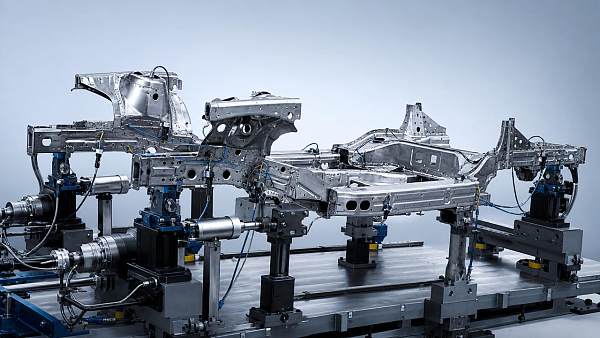
A chassis fatigue limit test rarely fails because of one obvious defect. Most issues result from load interaction, local geometry, weld quality, restraint conditions, and test profile mismatch.
A checklist approach reduces blind spots. It standardizes how fail points are screened, how validation methods are selected, and how durability evidence is compared between platforms and suppliers.
For an intelligence platform like GIM, this matters because chassis durability affects sourcing risk, warranty exposure, safety confidence, and lifecycle cost across multiple manufacturing sectors.
Core Checklist for Chassis Fatigue Limit Test Planning
Use the following checklist before running or reviewing a chassis fatigue limit test. Each item helps isolate common fail points and strengthen validation credibility.
- Define load cases from real duty cycles, not only nominal design assumptions, so the chassis fatigue limit test reflects braking, cornering, torsion, payload variation, and road-induced vibration.
- Map stress hot spots around weld toes, suspension mounts, cross-member joints, battery tray interfaces, steering brackets, and cutout edges before fixture design is finalized.
- Verify material data with batch-level certificates and coupon testing, because fatigue performance can shift with heat treatment, thickness change, residual stress, and forming history.
- Align boundary conditions with real assembly constraints, since unrealistic clamping often suppresses local deformation and hides chassis fatigue limit test failure initiation zones.
- Instrument critical regions using strain gauges, displacement channels, and crack monitoring methods so correlation between simulation and physical behavior remains defensible.
- Screen weld quality early with visual checks, NDT, and bead geometry review, because undercut, porosity, and inconsistent penetration strongly affect fatigue life scatter.
- Separate high-cycle and low-cycle damage mechanisms when selecting frequency and amplitude, especially where overload events combine with long-term vibration exposure.
- Correlate test rig input with multiaxial field loads, since a simplified one-axis setup may miss combined bending and torsion that drive real chassis fatigue limit test failures.
- Inspect post-test crack paths metallurgically to confirm whether the root cause comes from design stress concentration, process variation, corrosion initiation, or fixture influence.
- Document pass-fail criteria in advance, including crack length, stiffness loss, permanent deformation, and acoustic indicators, to avoid subjective durability interpretation.
Common Fail Points Found in a Chassis Fatigue Limit Test
Welded Junctions and Heat-Affected Zones
Welded intersections remain the most common source of chassis fatigue limit test failure. Crack initiation often starts at weld toes where geometry transition, residual stress, and local hardness variation combine.
Cross-members, bracket attachments, and suspension towers are especially sensitive. Even a robust nominal section can fail early if weld sequencing or bead shape is inconsistent.
Mounting Holes, Cutouts, and Local Stiffness Changes
Holes for fasteners, drainage, routing, or weight reduction can create significant notch effects. In a chassis fatigue limit test, these features often produce crack starters under repeated bending.
Problems increase when cutouts are placed near load paths or when reinforcement plates end abruptly. Sharp stiffness transitions create local strain peaks that FEA may underestimate.
Suspension and Powertrain Interface Areas
Interface points transfer dynamic loads from wheels, brakes, and driveline components into the structure. These zones frequently show early damage during a chassis fatigue limit test.
Bracket flexibility, bolt preload loss, and bushing behavior can change the stress path. A stable test result therefore depends on realistic joint representation.
Corrosion-Assisted Crack Initiation
Where coatings are damaged or drainage is poor, corrosion can accelerate fatigue crack initiation. This matters in road vehicles, off-highway machines, and environmental infrastructure carriers.
A chassis fatigue limit test without surface-condition control may overstate life. Corrosion-fatigue interaction should be considered when platforms operate in humid, salted, or chemical environments.
Validation Methods That Improve Test Reliability
Finite Element Correlation
Start with a validated FEA model, but do not treat simulation as proof by itself. Mesh density, weld modeling strategy, and contact assumptions can distort chassis fatigue limit test predictions.
Correlation is stronger when strain gauge results match predicted principal strain direction and amplitude at known hot spots.
Accelerated Rig Testing
Accelerated testing helps compress development time, but profile editing must preserve damage equivalence. Excessive acceleration may shift failure mode and invalidate the chassis fatigue limit test outcome.
Frequency selection should also avoid resonance artifacts unless resonance is part of the real operating environment.
Road Load Data Acquisition
Field data remains one of the best anchors for validation. Road load data acquisition captures actual duty cycles and reveals whether laboratory inputs represent real use severity.
For mixed fleets or industrial variants, this method supports better benchmarking and prevents overgeneralizing from one operating profile.
Fractography and Root Cause Review
After failure, examine the fracture surface. Beach marks, inclusion origins, weld defects, and corrosion pits often reveal whether the chassis fatigue limit test exposed a design issue or a process issue.
Application Notes Across Different Industrial Scenarios
Passenger and Commercial Vehicles
In road vehicles, the chassis fatigue limit test usually focuses on ride loads, curb impacts, potholes, and brake-induced longitudinal transfer. Lightweighting increases sensitivity to local detail design.
Electrified platforms add battery enclosure interfaces and altered mass distribution, which can shift traditional fail points.
Off-Highway and Agricultural Equipment
Tractors, harvesters, and heavy implements experience severe torsion, uneven terrain loading, and attachment-driven stress concentration. A chassis fatigue limit test must include representative implement loads and frame twist.
Industrial Utility and Environmental Platforms
Carrier structures used for treatment units, service bodies, or infrastructure modules often combine static mass with vibration and corrosion exposure. Here, the chassis fatigue limit test should integrate environmental durability factors.
Commonly Overlooked Risks
Ignore fixture compliance, and the measured stress field may look safer than the installed condition. This is a frequent cause of false confidence.
Assume one prototype represents production, and scatter from welding, forming, or supplier variation may remain hidden until field returns appear.
Treat nominal load as sufficient, and overload sequences such as curb strikes or implement shock may never be captured in the chassis fatigue limit test.
Overlook stiffness degradation, and small cracks may progress long before complete fracture. Monitoring only final breakage is not enough.
Practical Execution Recommendations
- Build a failure map before testing, ranking each location by stress level, manufacturing sensitivity, and service consequence.
- Use at least one correlation loop between simulation, rig data, and teardown evidence before freezing conclusions.
- Review geometry transitions, weld access, and drainage paths together, because fatigue and corrosion often interact.
- Apply the same chassis fatigue limit test logic when benchmarking suppliers, so durability claims remain comparable.
Conclusion and Next Action
A strong chassis fatigue limit test does more than confirm survival. It identifies common fail points, validates structural assumptions, and reveals where design, process, or usage conditions diverge from expectations.
The next step is to convert durability review into a repeatable checklist: define real loads, inspect hot spots, validate boundary conditions, and confirm failure origins with evidence. That approach improves benchmarking quality and supports more reliable engineering decisions across global industrial platforms.

The Archive Newsletter
Critical industrial intelligence delivered every Tuesday. Peer-reviewed summaries of the week's most impactful logistics and market shifts.