Monday, May 22, 2024

Electric Vehicle Suspension Systems: Comfort or Control?
by
Published
Views:
As EV performance expectations rise, suspension systems for electric vehicles have become a critical factor in balancing ride comfort, handling precision, and long-term operational stability.
Battery weight, instant torque, and software-managed dynamics change how a vehicle responds to bumps, braking, and cornering. That makes suspension design a strategic engineering decision, not a minor comfort feature.
For cross-industry benchmarking, this topic also links automotive design with sensors, materials, thermal loads, tire wear, and lifecycle efficiency. The right system supports safety, energy use, and durable platform performance.
What makes suspension systems for electric vehicles different from conventional setups?
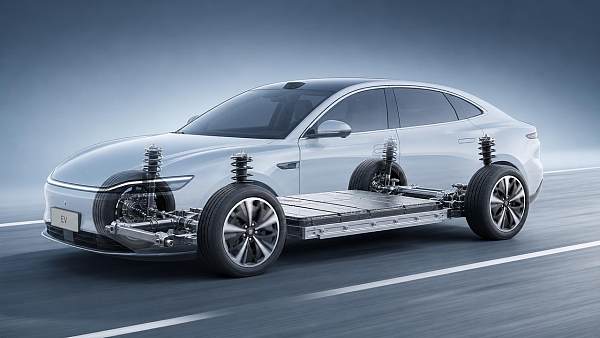
The basic mission stays the same: keep tires in contact with the road while isolating the cabin from shocks. Yet EV packaging changes nearly every design constraint around that mission.
A large battery pack usually sits low in the floor. This lowers the center of gravity, but it also increases curb weight and shifts how forces travel through the chassis.
Electric motors deliver immediate torque. During acceleration, weight transfer happens quickly, and suspension systems for electric vehicles must control squat, roll, and wheel hop more precisely.
Regenerative braking adds another difference. It changes front-to-rear load transfer behavior, especially when blended with friction brakes. Damping and bushing tuning must account for that transition.
Noise expectations are higher in EVs. Without engine masking, road harshness, tire slap, and suspension knocks become more noticeable. Refinement therefore matters as much as mechanical strength.
In practical terms, EV suspension tuning often prioritizes these areas:
- higher load capacity for battery mass
- better body control under instant torque
- reduced NVH in a quieter cabin
- durable geometry retention under repetitive stress
- compatibility with sensors and active control software
Do suspension systems for electric vehicles favor comfort or control?
This is the central question, but the answer is not either-or. Strong EV platforms aim for controlled comfort, where ride softness does not weaken steering confidence or braking stability.
Soft springs can improve low-speed comfort on broken pavement. However, if damping is too light, the extra mass of an EV can cause float, pitch, or delayed recovery after bumps.
Very firm setups improve lane-change response and reduce roll. Yet excessive stiffness may increase cabin harshness, tire noise, and fatigue on rough urban routes.
The best suspension systems for electric vehicles usually combine several tuning layers. Springs carry the load, dampers manage motion, bushings filter vibration, and software refines transient behavior.
Application strongly shapes the balance. A city EV, delivery van, premium sedan, and high-performance crossover should not share the same ride-control priorities.
A useful way to judge comfort versus control is to test these scenarios:
- Speed bump recovery at low speed
- Emergency lane change at medium speed
- Braking stability on uneven surfaces
- Rear-seat comfort over expansion joints
- Tire contact consistency in wet corners
If a vehicle scores well only in one scenario, the tuning is incomplete. Mature systems deliver predictable behavior across varied loads, temperatures, and road textures.
Which suspension architectures work best for different EV applications?
There is no universal winner. Architecture depends on cost, packaging, target range, payload, and software integration goals. Still, some patterns appear across modern EV development.
MacPherson strut
This layout remains common on front axles. It is compact, cost-effective, and easier to package around e-drive units. For mainstream EVs, it offers a practical efficiency-to-performance ratio.
Multi-link suspension
Multi-link systems support better wheel control and tuning flexibility. They often appear on rear axles or premium segments where handling refinement and ride isolation justify greater complexity.
Air suspension
Air systems can adjust ride height and compensate for load variation. This suits heavier EVs, luxury platforms, and vehicles needing aero optimization at highway speed.
Adaptive damping
Electronically controlled dampers help resolve the comfort-control tradeoff. They react faster to changing road input, making them valuable for vehicles expected to perform well in mixed environments.
When comparing suspension systems for electric vehicles, consider not just hardware type, but the calibration ecosystem around it. Software can elevate a modest architecture or expose a weak one.
How should performance, durability, and efficiency be evaluated?
A suspension should never be judged by ride feel alone. Technical evaluation needs a wider lens that includes tire wear, structural fatigue, energy impact, and consistency over time.
Heavy battery platforms place sustained loads on control arms, subframes, mounts, and bushings. If these components degrade early, alignment drift and efficiency losses often follow.
Unsprung mass also matters. Larger wheels, heavier brakes, and reinforced hubs can reduce ride quality if not offset through damper tuning or lightweight materials.
Efficiency enters the discussion in indirect ways. Poor wheel control can increase rolling resistance, accelerate tire wear, and force stability systems to intervene more often.
A practical evaluation framework includes:
- body motion under acceleration and regenerative braking
- NVH behavior across rough and smooth surfaces
- alignment retention after durability cycles
- tire temperature and wear pattern consistency
- response stability with partial and full payloads
- sensor and chassis control integration quality
For benchmarking platforms such as GIM, the value lies in comparing these metrics across suppliers, architectures, and standards-driven validation methods.
What common mistakes affect suspension systems for electric vehicles?
One common mistake is assuming that a lower center of gravity automatically guarantees excellent handling. It helps, but mass distribution and damping strategy still determine real-world composure.
Another mistake is over-firm tuning to hide weight. This can create a sporty first impression while reducing compliance, traction on poor roads, and long-term comfort.
Some designs also underestimate bushing performance. In EVs, bushing stiffness affects isolation, geometry control, and perceived quality more than many users expect.
Ignoring service conditions is risky. Delivery fleets, hot climates, poor roads, and repeated fast charging cycles can change component loads and vibration behavior over time.
A final misconception is treating suspension as separate from braking, steering, and software. Modern suspension systems for electric vehicles operate as part of a wider dynamic control network.
How can a suspension selection decision be made more reliably?
Start with the operating profile. Urban mobility, highway use, performance driving, and utility transport demand different compromises between cost, comfort, and control.
Next, match the hardware to the expected software maturity. Adaptive systems show their value only when calibration quality, sensing accuracy, and update logic are equally strong.
Then review durability evidence. Look for test data tied to load variation, thermal conditions, corrosion resistance, and geometry stability after repeated stress cycles.
Finally, compare the total system effect. The most suitable suspension systems for electric vehicles support range stability, tire life, passenger comfort, and confidence during critical maneuvers.
Quick comparison table
FAQ snapshot
In the end, suspension systems for electric vehicles should not be framed as comfort versus control alone. The better question is how effectively the system delivers both under real operating conditions.
A disciplined review of architecture, calibration, durability, and efficiency creates a clearer decision path. That is especially important when comparing platforms across supply chains and international technical standards.
For deeper benchmarking, use verifiable test criteria, cross-sector engineering data, and system-level comparison. This approach turns suspension selection into a measurable performance decision, not a marketing claim.

The Archive Newsletter
Critical industrial intelligence delivered every Tuesday. Peer-reviewed summaries of the week's most impactful logistics and market shifts.