Monday, May 22, 2024

Choosing Drivetrain Solutions That Balance Efficiency, Cost, and Service Life
by
Published
Views:
Choosing the right drivetrain solutions is no longer just an engineering decision—it is a strategic move that affects efficiency, lifecycle cost, and long-term service reliability. For business decision-makers navigating complex manufacturing and supply chain environments, understanding how to balance performance, maintainability, and total value is essential to building resilient, competitive operations.
Across manufacturing, mobility, smart agriculture, and infrastructure equipment, drivetrain choices influence far more than torque delivery. They affect energy consumption, spare-parts exposure, maintenance intervals, operator uptime, and even sourcing flexibility across regions. For procurement leaders and technical managers, the challenge is not choosing the most advanced option on paper, but selecting drivetrain solutions that match operating duty cycles, service capabilities, and total cost expectations over 5 to 10 years.
This is especially relevant in cross-sector environments where electric drives, hybrid systems, mechanical transmissions, and electronically controlled powertrains coexist. A drivetrain that performs well in a controlled production line may underperform in dusty agricultural settings or in infrastructure assets running 16 to 20 hours per day. The most effective decision framework therefore combines efficiency, acquisition cost, reliability, repairability, and standards alignment rather than focusing on a single headline metric.
Why drivetrain selection has become a board-level operational issue
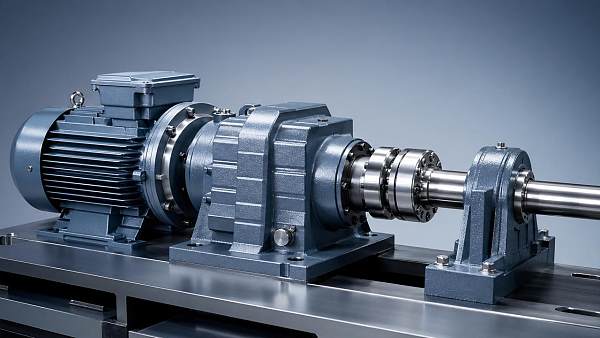
In many industrial assets, the drivetrain accounts for a significant share of energy use, mechanical wear, and unplanned downtime. Even a modest efficiency gain of 3% to 7% can materially affect annual operating expense when equipment runs in 2-shift or 24/7 environments. At the same time, selecting a lower-cost system with poor field serviceability can erase upfront savings within 12 to 24 months through labor-intensive repairs and production interruptions.
For enterprise decision-makers, drivetrain solutions now sit at the intersection of engineering, procurement, sustainability, and risk management. This is particularly true for organizations managing mixed fleets or production systems spanning EV-related manufacturing, automated handling, irrigation equipment, processing lines, or environmental infrastructure. The drivetrain becomes a strategic asset because it influences both technical output and business continuity.
The hidden cost drivers behind drivetrain performance
Many teams still evaluate drivetrain solutions through purchase price and rated output alone. That approach misses several high-impact variables:
- Energy conversion losses over 4,000 to 8,000 annual operating hours
- Lubrication, seal, and bearing replacement frequency every 6 to 18 months
- Downtime caused by long lead-time components, often 6 to 14 weeks
- Software and controls compatibility with plant or fleet management systems
- Service skill requirements at local or regional maintenance hubs
When these variables are included, the lowest-capex option is frequently not the lowest-cost option over the asset lifecycle. In sectors with thin margins or strict output targets, avoidable downtime of even 4 to 6 hours per month can become more damaging than a higher initial drivetrain investment.
Where different drivetrain architectures fit best
The right drivetrain depends on load profile, duty cycle, environment, and control requirements. The table below provides a practical comparison for common industrial decision scenarios.
The key takeaway is that drivetrain solutions should be matched to real operating conditions rather than generic performance claims. For example, direct-drive architectures can reduce mechanical service points, but only if thermal control, power electronics, and field diagnostics are well supported. Conversely, gearbox-driven systems may remain the better commercial choice where service teams already stock seals, couplings, and bearings locally.
How to balance efficiency, cost, and service life in procurement decisions
A balanced evaluation model usually starts with 4 procurement pillars: technical fit, lifecycle cost, supply resilience, and maintainability. This approach helps decision-makers avoid overvaluing a single KPI such as peak efficiency or purchase price. In practice, teams should score drivetrain solutions across these dimensions before issuing final sourcing recommendations.
A practical 5-step evaluation framework
- Define duty cycle: torque peaks, start-stop frequency, daily run hours, ambient temperature range.
- Map lifecycle costs: energy use, consumables, expected service events, training needs, and spare stock.
- Assess supply chain risk: lead times, source concentration, substitution options, and localization potential.
- Verify standards alignment: ISO, IATF, IPC-related integration needs where relevant to the full system.
- Run field-service review: tool requirements, diagnostic access, maintenance interval, and technician skill match.
This framework is especially valuable in organizations that procure across multiple business units. A drivetrain optimized for one platform may create service fragmentation if it requires unique software tools, specialized oils, or region-specific electronic modules not shared with other assets.
Key thresholds that deserve early review
Before comparing vendors, establish acceptable thresholds. For example, many industrial buyers set planned maintenance windows at every 2,000 to 4,000 hours, maximum spare-part lead times below 8 weeks for critical items, and acceptable energy loss ranges tied to asset category. In dusty or corrosive environments, ingress protection, sealing design, and operating temperature margins often matter more than peak nameplate efficiency.
Decision factors that influence total value most
The table below can be used by procurement, engineering, and operations teams to weigh drivetrain solutions consistently across departments.
Teams that quantify these factors early can avoid expensive change orders later. A drivetrain with slightly higher acquisition cost may deliver stronger value if it cuts maintenance events from 4 per year to 2, or if it shares 60% to 80% of service parts with existing equipment families.
Implementation, service strategy, and risk reduction across sectors
Selecting drivetrain solutions is only half the decision. The other half is ensuring that the chosen architecture can be commissioned, monitored, and maintained without creating operational fragility. This is where many organizations lose expected value: a technically sound drivetrain underperforms because installation quality, lubrication discipline, software integration, or technician readiness was not planned with equal rigor.
Common implementation mistakes to avoid
- Specifying torque and speed correctly but ignoring real shock-load events or overload peaks
- Underestimating contamination risks in wet, dusty, or chemically exposed environments
- Choosing proprietary control components without confirming regional support coverage
- Failing to define spare-part kits for the first 12 months of operation
- Using inconsistent maintenance procedures across sites, causing uneven service life
These issues are common in mixed industrial portfolios where one drivetrain platform may be deployed in clean electronics manufacturing, heavy mobility equipment, and environmental systems with very different thermal and contamination profiles. A cross-sector benchmarking approach helps teams separate platform-level assumptions from field reality.
What business leaders should ask suppliers and internal teams
A strong sourcing decision often depends on the quality of questions asked before contract award. Decision-makers should request clear answers on maintenance intervals, expected wear components, software dependencies, and recommended commissioning checks. They should also ask how drivetrain solutions perform after 1,000, 5,000, and 10,000 hours under representative duty cycles, not only in laboratory conditions.
Operational questions worth standardizing
- Which components are considered critical spares and what is the standard replenishment cycle?
- Can the drivetrain be serviced with common tools, or are proprietary diagnostics required?
- What failure modes are most likely in high-load, high-dust, or variable-temperature conditions?
- How much commissioning time is typically needed: 1 day, 3 days, or longer for controls integration?
- Which maintenance tasks can site technicians perform, and which require specialist support?
These questions support better alignment between procurement, operations, and reliability teams. They also reduce the risk of buying drivetrain solutions that look efficient in specification sheets but create hidden support burdens in the field.
The role of benchmarking in long-term drivetrain decisions
In complex industrial ecosystems, benchmarking is essential because drivetrain performance cannot be judged in isolation. Motor design, transmission behavior, control software, cooling capacity, mounting tolerances, and material quality all influence results. Comparing drivetrain solutions against recognized standards and cross-sector operating data helps organizations identify where a design is robust, where it is over-specified, and where service life assumptions may be too optimistic.
This is where a technical intelligence platform such as Global Industrial Matrix brings value. By connecting insights across automotive and mobility systems, semiconductor-linked automation, smart agri-tech platforms, industrial ESG infrastructure, and precision tooling, business leaders can make more informed decisions using verifiable, system-level comparisons rather than siloed vendor claims. For multinational buyers, that broader view is increasingly important when supplier concentration, regional compliance, and replacement lead times all affect risk exposure.
Building a durable decision model for future-ready drivetrain solutions
The best drivetrain solutions are rarely the cheapest, the most efficient, or the most advanced in absolute terms. They are the ones that fit the asset, the environment, the support model, and the financial horizon of the business. In most industrial settings, the winning choice is the drivetrain that delivers stable output, manageable maintenance, acceptable lead times, and predictable cost over a 3-year, 5-year, or 10-year planning cycle.
For enterprise decision-makers, that means moving from component purchasing to system-level evaluation. Efficiency matters, but so do parts commonality, field diagnostics, contamination tolerance, technician readiness, and standards-based comparability. Organizations that evaluate drivetrain solutions through these combined lenses are better positioned to reduce lifecycle cost, protect uptime, and maintain supply resilience across changing market conditions.
If your team is assessing drivetrain options across mobility, industrial automation, smart agriculture, or infrastructure equipment, a structured benchmarking process can shorten decision cycles and improve confidence before capital is committed. Contact GIM to get a tailored evaluation framework, compare solution pathways, and explore drivetrain strategies that support efficiency, cost control, and long-term service life.

The Archive Newsletter
Critical industrial intelligence delivered every Tuesday. Peer-reviewed summaries of the week's most impactful logistics and market shifts.