Monday, May 22, 2024

Diesel Engine Fuel Efficiency Benchmarks by Duty Cycle and Load
by
Published
Views:
Diesel engine fuel efficiency benchmarks by duty cycle and load matter because fuel burn is rarely constant in real work. Consumption changes with torque demand, idle time, transient loading, ambient conditions, and maintenance quality.
That makes a single fuel number misleading. More useful diesel engine fuel efficiency benchmarks compare engines under defined operating patterns, then relate those patterns to actual industrial tasks and runtime decisions.
Across transport, agriculture, construction, distributed power, and environmental infrastructure, benchmark data helps separate normal variation from avoidable waste. It also supports clearer planning when fuel cost, uptime, and emissions exposure move together.
Why Benchmarks Need Duty Cycle Context
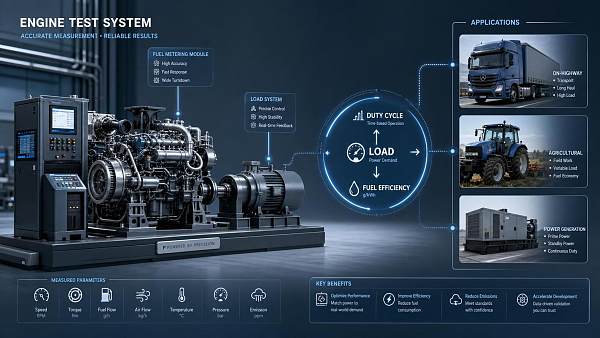
A diesel engine tested at steady mid-load can look efficient on paper. The same engine may perform very differently in stop-start haulage, field work, pumping duty, or long idle periods.
Duty cycle describes how the engine spends its time. It captures speed bands, load bands, acceleration events, cold starts, idle fractions, and the duration of each operating state.
Load describes how much of the engine’s available output is being used. In practice, light-load and overloaded operation can both reduce efficiency, though for different reasons.
This is why diesel engine fuel efficiency benchmarks are most useful when tied to a known cycle. Without that context, comparisons between platforms, fleets, or sites become distorted.
The metrics that actually matter
Fuel efficiency can be expressed several ways. Each tells a slightly different operational story.
- Liters per hour: useful for runtime planning and idle analysis.
- Liters per ton-kilometer or acre: useful for output-based comparison.
- Brake specific fuel consumption: useful for technical benchmarking across engines.
- Fuel per completed cycle: useful in repetitive industrial tasks.
A benchmark becomes stronger when at least two of these views are used together. One shows raw burn. The other shows whether that fuel created productive work.
What Efficient Performance Usually Looks Like
In many diesel applications, the best fuel efficiency zone sits around moderate to high load, not extreme load and not prolonged light load. Engines often waste fuel when they spend too much time idling or cycling below their designed sweet spot.
For mobile equipment, repeated acceleration, poor shift strategy, soft ground resistance, and unnecessary auxiliary demand can pull performance away from benchmark levels. For stationary engines, underloading, fouled filters, and cooling imbalance often show up first in fuel data.
The table below shows how benchmark interpretation changes by operating pattern rather than by engine size alone.
These patterns explain why diesel engine fuel efficiency benchmarks should be treated as operating envelopes, not absolute promises.
Where Industry Attention Is Shifting
Fuel efficiency is no longer an isolated engine-room issue. It now affects cost control, maintenance scheduling, emissions reporting, equipment replacement timing, and cross-border sourcing decisions.
That broader view matters in mixed industrial portfolios. A fleet may include heavy vehicles, autonomous agricultural platforms, backup generators, pumps, and material handling assets, all competing for fuel and service resources.
This is where a benchmarking framework like Global Industrial Matrix becomes relevant. GIM connects mechanical performance with standards-based comparison across automotive, agri-tech, infrastructure, electronics-linked controls, and precision tooling ecosystems.
In practical terms, that means benchmark interpretation does not stop at the engine. It also considers sensor quality, control calibration, filtration, maintenance traceability, and supply chain consistency.
For diesel engine fuel efficiency benchmarks, this cross-sector lens is useful because modern engines rely on integrated systems. Fuel burn can be affected by software logic, aftertreatment condition, electrical load, and component variance between sources.
Why benchmark quality matters now
- Fuel price volatility magnifies small efficiency losses.
- Mixed fleets make simple averages less reliable.
- Emissions compliance increasingly depends on real operating behavior.
- Replacement decisions require verifiable, comparable data.
Reading Benchmarks in Real Operating Scenarios
A benchmark only becomes valuable when matched to the task. The same liters-per-hour figure can indicate either efficiency or waste, depending on the work completed during that hour.
Transport and mobility equipment
Look for route-normalized data. Grade, payload, stop frequency, and driver or control behavior should be separated before judging engine condition.
Agricultural and off-road cycles
Compare fuel use against area covered, soil resistance, implement width, and PTO demand. Light-load transport phases should not be mixed with heavy field passes without weighting.
Pumps, generators, and environmental systems
Focus on sustained load ratio and fuel per delivered output. Low utilization can hide poor efficiency because the engine seems stable while producing too little useful work.
Construction and material handling
Separate travel, lifting, waiting, and hydraulic demand. A machine may meet average fuel targets while losing efficiency during repetitive idle-heavy cycles.
In all four cases, diesel engine fuel efficiency benchmarks should be aligned with duty-weighted hours. That is usually more revealing than a monthly fuel total.
What to Check Before Declaring an Engine Inefficient
Poor benchmark results do not always point to engine failure. Often the first issue is measurement quality or an operating mismatch.
- Confirm that fuel data comes from a reliable meter or calibrated telematics source.
- Check whether the comparison includes similar duty cycle duration and similar payload or process load.
- Review idle percentage before reviewing component health.
- Inspect air intake, fuel filtration, injectors, turbo response, and cooling performance.
- Verify that aftertreatment events are not distorting short reporting windows.
- Look at operator habits, gear selection, and unnecessary high-rpm operation.
These checks keep diesel engine fuel efficiency benchmarks tied to causes that can actually be corrected.
How to Put Benchmark Data to Work
The most effective approach is to build a baseline by asset group, then refine it by load band and task type. A single site-wide benchmark is usually too broad to guide action.
Start with the recurring cycles that consume the most fuel. That may be loaded transport runs, irrigation pumping hours, field preparation passes, or standby generation windows.
Then compare three layers at once: expected benchmark, current measured result, and recent change trend. The trend often reveals deterioration sooner than a one-time variance.
In GIM-style benchmarking, this layered view is especially useful because it supports comparison across platforms that share similar energy and reliability pressures, even when the equipment class differs.
From there, the next step is straightforward: define acceptable fuel bands by duty cycle, flag exceptions early, and connect those exceptions to maintenance, routing, calibration, or utilization choices.
That turns diesel engine fuel efficiency benchmarks from reference numbers into an operating discipline. The result is usually better runtime predictability, lower avoidable fuel burn, and a cleaner basis for deciding when adjustment, overhaul, or replacement is justified.

The Archive Newsletter
Critical industrial intelligence delivered every Tuesday. Peer-reviewed summaries of the week's most impactful logistics and market shifts.