Monday, May 22, 2024

Double Platinum Spark Plugs: Cost vs Service Life in 2026
by
Published
Views:
Double platinum spark plugs in 2026: are they really worth the extra cost?
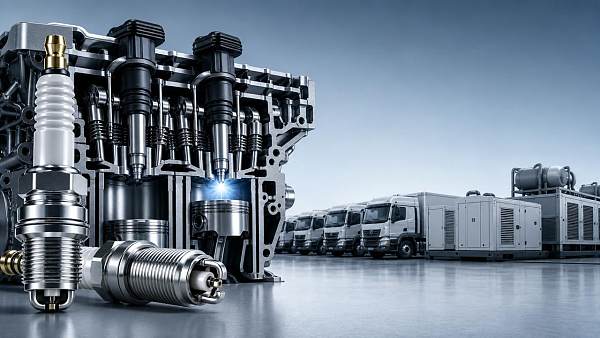
The short answer is often yes, but not in every engine, duty cycle, or maintenance model.
That is why double platinum spark plugs keep coming up in cost reviews for 2026.
Their unit price is higher than copper plugs and commonly above single platinum options.
Still, service life changes the math.
Fewer replacements can mean less planned labor, less unplanned downtime, and steadier ignition performance over time.
In mixed fleets and industrial support equipment, those factors matter more than shelf price alone.
A broader manufacturing view also helps.
GIM regularly frames hardware choices through lifecycle value, benchmark consistency, and supply risk rather than simple component cost.
That approach fits spark plug decisions well.
What exactly makes double platinum spark plugs different from standard plugs?
The name points to the electrode design.
A double platinum spark plug uses platinum on both the center electrode and the ground electrode.
That matters because both surfaces see wear during ignition cycles.
Compared with copper plugs, double platinum spark plugs resist erosion much better.
Compared with single platinum designs, they usually hold gap stability longer in engines using waste spark systems.
In practical terms, stable gap means more consistent spark energy.
That supports smoother starts, steadier combustion, and reduced misfire risk as mileage climbs.
It does not turn a weak engine into a strong one.
It simply slows normal wear at a very important ignition point.
This is why double platinum spark plugs are usually evaluated as a lifecycle component, not a bargain item.
Where do double platinum spark plugs make the most financial sense?
They make the most sense where replacement access is difficult or downtime is costly.
That includes service vehicles, light industrial fleets, backup power units, and mobile equipment with moderate annual usage.
The same logic can apply in agriculture support machines and utility engines.
If labor costs exceed component costs by a wide margin, premium plugs become easier to justify.
Engines designed around platinum-grade plugs also benefit more.
Using a lower-grade substitute may shorten intervals and weaken total value.
A useful way to judge fit is to ask three questions.
- Is plug access time-consuming or disruptive?
- Does the engine run enough hours for service life to matter?
- Would a misfire or delayed replacement create bigger operational costs?
If two of those answers are yes, double platinum spark plugs deserve serious consideration.
How should cost versus service life be compared instead of just price per plug?
Price per plug is the easiest metric, but rarely the most useful one.
A better comparison combines purchase price, labor interval, downtime exposure, and expected operating hours.
That is where double platinum spark plugs often outperform cheaper alternatives.
The table below gives a simple decision view.
In 2026, this wider costing method matters even more.
Inflation in labor, transport, and maintenance scheduling has narrowed the appeal of cheap short-life parts.
Component strategy is becoming a risk management issue, not only a purchasing issue.
Are double platinum spark plugs always better than iridium or copper options?
Not always, and this is where many comparisons go wrong.
Copper plugs are inexpensive and can work well in older engines or short service intervals.
Iridium plugs often deliver even longer life than double platinum spark plugs.
But the best option depends on engine design, ignition system, and service economics.
A simple ranking by material can mislead.
What matters more is fit for use.
- Copper: lower upfront cost, shorter service life, more frequent changes.
- Single platinum: moderate upgrade, but not ideal for all waste spark applications.
- Double platinum: balanced durability and cost for many gasoline engines.
- Iridium: premium option where very long intervals justify the extra spend.
More common than material mismatch is application mismatch.
A premium plug in the wrong heat range or incorrect gap setting can still perform poorly.
That is why technical benchmarking matters.
Across sectors, GIM emphasizes standards-based comparison because hardware value depends on the full system around it.
What mistakes reduce the value of double platinum spark plugs?
The biggest mistake is assuming long-life means maintenance-free.
Double platinum spark plugs last longer, but they still depend on healthy coils, correct fuel mixture, and clean installation practices.
Another mistake is buying by brand name alone.
Counterfeit risk, inconsistent sourcing, and unclear lot traceability remain real concerns in global supply chains.
In cross-border maintenance programs, technical consistency matters as much as price.
Watch for these issues before ordering:
- Incorrect heat range for the engine.
- Substituting single platinum for double platinum without checking ignition design.
- Ignoring recommended torque during installation.
- Overextending replacement intervals beyond actual operating conditions.
- Buying from channels with weak traceability or poor packaging controls.
In real-world maintenance data, one wrong specification can erase the savings from a whole batch of cheaper parts.
So how should a 2026 buying decision be made?
Start with the engine requirement, then move to operating context.
If the engine was designed for platinum-grade plugs, treat that as the baseline.
Then compare service interval length, labor burden, and downtime cost.
For many mixed-use applications, double platinum spark plugs land in the practical middle ground.
They are not the cheapest part on day one.
They are often the cheaper decision across the maintenance cycle.
A sound review for 2026 should include:
- OEM specification and approved substitutions.
- Expected operating hours or mileage.
- Labor minutes per replacement event.
- Cost of unscheduled service interruption.
- Supplier traceability and quality consistency.
If those inputs are documented, the answer becomes much clearer.
Double platinum spark plugs are most compelling when reliability, replacement frequency, and service disruption all have measurable costs.
The next step is not chasing the lowest price.
It is building a simple comparison standard that reflects actual lifecycle value, supply risk, and system performance.
The Archive Newsletter
Critical industrial intelligence delivered every Tuesday. Peer-reviewed summaries of the week's most impactful logistics and market shifts.