Monday, May 22, 2024

Drivetrain Solutions Compared: Efficiency, Reliability, and Service Life
by
Published
Views:
Choosing the right drivetrain solutions can directly affect efficiency, reliability, lifecycle cost, and long-term operational resilience. For enterprise decision-makers navigating complex industrial environments, a clear comparison of system performance, maintenance demands, and service life is essential to reducing risk and improving returns. This article examines the key technical and strategic factors that shape drivetrain selection across modern manufacturing and mobility applications.
Why drivetrain solutions have become a board-level decision
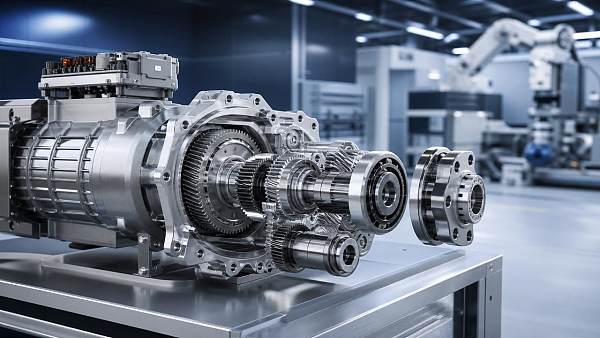
In many sectors, drivetrain solutions are no longer a narrow engineering purchase. They influence production uptime, energy consumption, maintenance staffing, spare-parts strategy, and even ESG performance. For companies managing fleets, factory automation, mobile equipment, or electrically assisted machinery, drivetrain architecture affects both direct operating cost and strategic flexibility.
The challenge is that modern industrial systems rarely operate in isolation. A drivetrain used in an EV assembly line, an autonomous agricultural vehicle, a water treatment handling unit, or a precision tooling platform may face very different torque profiles, contamination risks, duty cycles, and compliance expectations. Comparing options requires more than catalog specifications.
This is where cross-sector benchmarking becomes valuable. Global Industrial Matrix (GIM) helps procurement leaders, Tier-1 engineers, and industrial strategists evaluate drivetrain solutions through a broader systems lens. By aligning component decisions with ISO, IATF, IPC-related manufacturing expectations and multi-industry performance logic, GIM supports more resilient sourcing and more defensible capital decisions.
- Energy cost pressure is rising, making drivetrain efficiency a measurable financial variable rather than a secondary technical preference.
- Supply chain volatility can turn a technically sound drivetrain into an operational risk if service parts or replacement modules are difficult to source globally.
- Asset life expectations are increasing, so decision-makers must judge not only initial performance, but degradation behavior over years of operation.
How to compare drivetrain solutions across efficiency, reliability, and service life
Enterprise buyers often receive fragmented data: one supplier stresses peak torque, another highlights compact packaging, and another offers a lower unit price. A practical comparison framework should connect technical indicators to operational outcomes. The table below summarizes the metrics that matter most when assessing drivetrain solutions in industrial and mobility contexts.
A balanced selection process should treat these metrics as interconnected. For example, a compact high-density drivetrain may improve equipment design, yet raise thermal stress and shorten bearing life under heavy cyclic duty. Likewise, a low-cost option may appear attractive at purchase, but create hidden losses through lower efficiency or difficult field maintenance.
Efficiency is not one number
Many evaluations focus on rated efficiency at a single operating point. That is often insufficient. Real-world drivetrain solutions perform across variable loads, starts and stops, environmental temperature shifts, and changing torque demand. Decision-makers should ask for efficiency mapping over realistic duty cycles, not just peak values.
Reliability depends on environment as much as design
A drivetrain that performs well in clean, climate-controlled production space may degrade faster in outdoor agriculture, high-humidity filtration infrastructure, or dust-intensive tooling environments. Reliability claims should be reviewed against contamination exposure, shock loading, washdown conditions, and maintenance intervals actually achievable on site.
Which drivetrain solutions fit which industrial scenarios?
Cross-industry comparison is especially useful when organizations operate across multiple business units. The same procurement team may evaluate drivetrain solutions for mobile equipment, static industrial machinery, and electronically integrated mechatronic systems. The table below helps map drivetrain priorities by application environment.
The main lesson is that no drivetrain category is universally superior. The right drivetrain solutions are context-dependent. GIM’s value lies in translating these operational contexts into comparable decision criteria so that procurement, engineering, and strategy teams work from the same evidence base.
Scenario signals that should change your shortlist
- If the asset runs continuously, thermal management and lubrication retention should be weighted more heavily than peak torque claims.
- If the machine operates remotely, service access and field-replaceable components may matter more than compact packaging.
- If the system is digitally integrated, drivetrain compatibility with sensors, controls, and predictive maintenance architecture becomes a sourcing requirement.
What technical factors most often separate strong and weak drivetrain solutions?
When comparing drivetrain solutions, decision-makers should look beyond headline power ratings. Service life and operating stability are often shaped by less visible technical details. Sealing architecture, alignment tolerance, lubrication method, gear mesh quality, bearing selection, and thermal dissipation can all determine whether a drivetrain remains stable after years of operation.
Key performance variables worth checking
- Torque profile across the working range. Some drivetrain solutions perform well at nominal load but lose efficiency or create stress spikes during frequent acceleration.
- Thermal behavior under real duty cycles. Excess heat accelerates lubricant degradation, seal hardening, and bearing wear.
- Backlash, stiffness, and vibration characteristics. These affect precision, noise, and fatigue life, especially in automated production and mobility systems.
- Ingress protection and contamination resilience. Dust, moisture, and chemical exposure often explain field failure better than design load alone.
- Maintainability and modularity. Fast replacement of wear components can significantly improve plant recovery time.
GIM’s multi-disciplinary benchmarking approach is useful here because drivetrain performance should be evaluated as part of a broader system. In electronically dense platforms, power conversion and control strategy influence drivetrain heating. In agricultural or infrastructure platforms, environmental exposure may outweigh purely mechanical optimization. In precision tooling, component-level variation can cascade into quality drift.
How should enterprise buyers evaluate cost, risk, and replacement timing?
Cost comparison becomes misleading when it stops at purchase price. Better drivetrain solutions may have a higher upfront cost but a lower total lifecycle burden through reduced energy loss, fewer maintenance interventions, longer overhaul intervals, or improved compatibility with standard service procedures. A useful procurement model should capture both visible and hidden cost drivers.
The table below provides a structured way to compare drivetrain solutions from a lifecycle and sourcing perspective rather than a purely transactional one.
This lifecycle view is especially important for companies managing mixed asset portfolios. One business unit may prioritize uptime; another may prioritize energy savings; another may need compliance-ready documentation. Strong drivetrain solutions are the ones that fit the business objective, not simply the engineering specification sheet.
What standards, validation, and documentation should you request?
In complex procurement environments, documentation quality often signals execution quality. While the exact requirements depend on the application, buyers should ask how drivetrain solutions are validated, what manufacturing controls are used, and whether traceability supports regulated or high-consequence applications.
- Ask for performance validation under representative load conditions, not just bench-top nominal tests.
- Review whether production and quality systems align with relevant frameworks such as ISO-based quality management or IATF expectations in automotive-linked supply chains.
- For electronically integrated systems, confirm interface consistency, documentation completeness, and any process discipline comparable to IPC-informed manufacturing controls where relevant.
- Request clear change-notification procedures so that material, geometry, or sub-supplier shifts do not silently affect field performance.
GIM supports this step by connecting technical benchmarking with cross-sector compliance logic. That matters when a drivetrain procurement decision is linked to larger plant qualification, export requirements, or customer audit expectations.
Common procurement mistakes when selecting drivetrain solutions
Mistake 1: Buying for peak output instead of duty cycle reality
A drivetrain that handles brief high output may still underperform in continuous or intermittent heavy cycling. Always match the solution to the real load spectrum, start-stop frequency, and environmental conditions.
Mistake 2: Treating service life as a fixed number
Service life is an interaction between design, application, maintenance discipline, and environmental stress. The same drivetrain solutions can show very different outcomes in clean indoor automation versus remote off-road operation.
Mistake 3: Ignoring integration cost
Mechanical fit, controls compatibility, thermal management, and service access can all increase project cost after the purchase order. Early cross-functional review reduces expensive redesign later.
Mistake 4: Underestimating spare-parts strategy
If a critical gearbox, coupling, bearing assembly, or control-linked component has a long replenishment cycle, a low-cost purchase can become a high-cost operational bottleneck.
FAQ: what enterprise buyers ask about drivetrain solutions
How do we choose drivetrain solutions for mixed industrial applications?
Start with segmentation. Group assets by duty cycle, environment, service accessibility, and tolerance for downtime. Then compare drivetrain solutions by efficiency map, environmental robustness, parts commonality, and maintenance burden. A cross-sector platform such as GIM helps normalize these variables when internal teams are evaluating very different machine classes.
Which matters more: efficiency or reliability?
That depends on the operating model. In high-utilization assets, a small efficiency gain can create meaningful annual savings. In critical infrastructure or remote equipment, reliability and serviceability may deliver greater financial value because unplanned downtime costs more than incremental energy loss. The best drivetrain solutions balance both factors against the real cost of failure.
What should procurement request before approving a supplier?
Request duty-cycle-based performance data, documentation of validation methods, maintenance interval guidance, spare-parts availability assumptions, and any relevant quality-system alignment. Also ask how engineering changes are controlled. These details are often more predictive of lifecycle success than a headline specification sheet.
How long is a typical evaluation and deployment cycle?
It varies by complexity. A straightforward replacement in an existing platform may move quickly if interfaces and service procedures are already known. A new integrated drivetrain solution for mobility, automation, or smart agri-tech can require extended validation because thermal behavior, controls integration, and reliability assumptions must be confirmed before scale deployment.
Why work with GIM when comparing drivetrain solutions?
GIM is built for decision-makers who need more than isolated product claims. Our platform connects drivetrain evaluation to broader manufacturing realities across semiconductor and electronics systems, automotive and mobility platforms, smart agri-tech equipment, industrial ESG infrastructure, and precision tooling environments.
That means your team can compare drivetrain solutions with stronger context around supply risk, standard alignment, maintainability, and cross-application fit. Instead of relying on siloed inputs, you gain structured technical benchmarking that supports procurement discipline and operational resilience.
- Parameter confirmation for torque, duty cycle, thermal load, environmental exposure, and service interval assumptions.
- Selection guidance that compares drivetrain solutions against application priorities such as efficiency, reliability, precision, or field maintainability.
- Support for delivery-cycle review, sourcing risk screening, documentation requirements, and multi-region supply planning.
- Consultation on customized benchmarking, certification-related concerns, sample evaluation pathways, and quotation discussions for targeted industrial programs.
If your organization is reassessing drivetrain solutions for new equipment, replacement programs, or cross-site standardization, contact GIM to review technical parameters, shortlist suitable options, clarify compliance expectations, and build a decision framework that reduces lifecycle risk before purchase commitments are made.

The Archive Newsletter
Critical industrial intelligence delivered every Tuesday. Peer-reviewed summaries of the week's most impactful logistics and market shifts.