Monday, May 22, 2024

ECU Tuning: Power Gains vs Engine Risk
by
Published
Views:
ECU tuning promises measurable gains in torque, throttle response, and overall power output.
Every calibration change also shifts the balance between performance, durability, emissions compliance, warranty exposure, and operational risk.
The real question is not only how much power ECU tuning can unlock.
The critical question is whether the engine, drivetrain, cooling system, and control logic can sustain those gains.
Why ECU Tuning Needs a Checklist-Based Risk Review
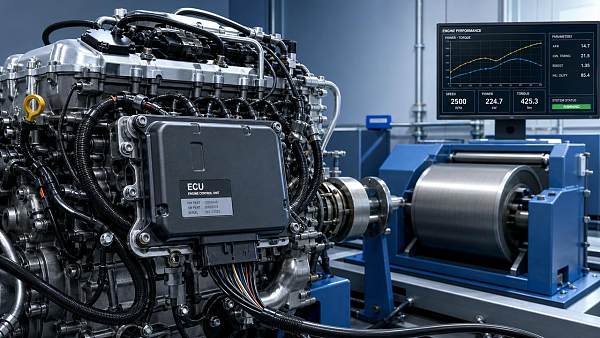
Modern engines operate as integrated control systems, not isolated mechanical units.
ECU tuning changes fuel delivery, ignition timing, boost pressure, torque limits, throttle mapping, and protection thresholds.
A small calibration shift can improve drivability, but it can also raise cylinder pressure and thermal load.
That is why ECU tuning should be reviewed like an engineering modification, not a cosmetic upgrade.
A checklist approach connects performance claims with evidence, operating conditions, and component limits.
It also supports cross-sector benchmarking, where electronics, mobility, emissions control, and industrial reliability overlap.
Core ECU Tuning Checklist for Power Gains and Engine Risk
Use this checklist before approving any ECU tuning file, dyno session, or road calibration plan.
- Verify the stock baseline using dyno data, diagnostic logs, compression results, and service history before ECU tuning begins.
- Confirm fuel quality assumptions, including octane rating, ethanol content, injector capacity, and fuel pump duty cycle under peak load.
- Measure intake air temperature, coolant temperature, oil temperature, and exhaust gas temperature during repeated high-load operation.
- Review boost targets against turbocharger efficiency maps, compressor surge margins, wastegate control, and intercooler heat rejection capacity.
- Check ignition timing advance, knock correction behavior, lambda targets, and cylinder pressure risk under worst-case ambient conditions.
- Assess transmission torque limits, clutch holding capacity, differential stress, axle load, and thermal management during sustained acceleration.
- Preserve factory safety logic, including limp modes, knock control, overboost protection, misfire detection, and coolant overtemperature strategies.
- Compare emissions impact against local regulations, inspection routines, onboard diagnostics readiness, catalyst temperature, and particulate control systems.
- Document every ECU tuning revision with calibration version, test conditions, logged parameters, fault codes, and rollback procedures.
- Validate the final tune through cold starts, hot restarts, traffic driving, highway pulls, and extended part-load operation.
Performance Gains: Where ECU Tuning Delivers Real Value
ECU tuning often provides the strongest gains on turbocharged engines.
Boost pressure, torque modeling, and throttle response can be optimized without physical hardware changes.
A conservative calibration may improve midrange torque, reduce downshifts, and create smoother acceleration.
For naturally aspirated engines, gains are usually smaller unless intake, exhaust, or camshaft changes are present.
In these cases, ECU tuning mainly refines air-fuel ratio, ignition timing, and throttle mapping.
The best performance result is not always the highest peak horsepower number.
A broad torque curve, stable temperatures, and consistent repeatability usually matter more than one aggressive dyno pull.
Daily Driving and Fleet Use
For daily vehicles, ECU tuning should prioritize drivability, fuel tolerance, and long-term thermal stability.
Aggressive launch control, high torque spikes, and reduced protection margins may shorten drivetrain life.
A practical daily calibration should remain smooth during cold starts, low-speed traffic, and partial throttle operation.
If the tune feels strong only at full throttle, the calibration is incomplete.
Track, Towing, and High-Load Conditions
Track use exposes ECU tuning weaknesses quickly because heat accumulates faster than on public roads.
Coolant, oil, intercooler, brake, and transmission temperatures must be evaluated together.
Towing creates another risk profile, especially when high torque is sustained at lower engine speeds.
A towing-oriented ECU tuning strategy should control exhaust temperature, gear hunting, and torque converter heat.
Engine Risk Areas Often Hidden Behind Power Claims
Power gains are easy to market, while fatigue risk develops quietly over time.
The following areas deserve special attention during ECU tuning evaluation.
Combustion Pressure and Knock Margin
Higher boost and timing can raise cylinder pressure beyond the original design envelope.
Knock sensors may intervene, but repeated knock correction is not a healthy operating strategy.
Safe ECU tuning leaves knock margin for poor fuel, heat soak, altitude change, and sensor variation.
Thermal Load and Cooling Capacity
Heat is one of the most common failure accelerators after ECU tuning.
Turbochargers, pistons, valves, catalysts, and engine oil all face increased thermal stress.
A tune that performs once on a cool dyno may fade quickly during repeated road pulls.
Transmission and Driveline Stress
ECU tuning can exceed drivetrain limits before the engine itself shows symptoms.
Automatic gearboxes rely on torque modeling for shift pressure, clutch control, and thermal protection.
If engine torque is misreported, shift quality and clutch life may deteriorate.
Emissions Hardware and OBD Readiness
Catalysts, oxygen sensors, particulate filters, and EGR systems are part of the engine control ecosystem.
Disabling monitors may hide faults, but it does not remove mechanical or regulatory risk.
Responsible ECU tuning keeps diagnostics functional and avoids masking emissions-related failures.
Scenario-Based ECU Tuning Decisions
Stock Hardware Optimization
Stock hardware tuning should remain within the weakest component limit.
That limit may be the turbocharger, clutch, fuel system, intercooler, or catalytic converter.
A modest ECU tuning file can be reliable when fuel, cooling, and torque limits are respected.
Hardware-Modified Engines
Modified engines require calibration that matches airflow and fuel system changes.
Injectors, fuel pumps, turbo upgrades, intake sensors, and exhaust changes must be scaled correctly.
Generic ECU tuning files are risky when hardware combinations differ from the tested development vehicle.
Industrial and Off-Road Applications
Off-road machines, agricultural vehicles, and industrial engines often operate under sustained load.
For these systems, ECU tuning must focus on duty cycle, cooling reserve, and fuel variability.
Downtime cost may outweigh any short-term power benefit if calibration reliability is not proven.
Commonly Ignored Items Before ECU Tuning Approval
Ignoring maintenance condition: Worn spark plugs, weak coils, dirty injectors, and old fuel filters can turn ECU tuning into a fault amplifier.
Trusting peak dyno numbers only: Peak output does not show heat soak, knock recovery, torque stability, or repeated-load durability.
Overlooking regional fuel variation: A calibration developed on premium fuel may become risky where octane quality or ethanol content changes.
Removing factory safeguards: Raising limits without understanding protection logic can expose pistons, turbos, catalysts, and transmissions to preventable damage.
Skipping rollback planning: ECU tuning should include original file backup, version records, diagnostic logs, and a recovery path.
Practical Execution Plan for Safer ECU Tuning
- Start with a health inspection, including fault scan, fluid condition, ignition components, intake leaks, and compression consistency.
- Create a baseline log covering boost, timing, lambda, knock correction, temperatures, fuel trims, and torque request.
- Select ECU tuning targets based on measured component limits, not only advertised horsepower potential.
- Test in stages, then compare each revision against the baseline under similar ambient and load conditions.
- Review long-term indicators, including oil analysis, spark plug condition, fuel trims, misfire counts, and thermal stability.
- Lock the final file only after confirming drivability, diagnostics readiness, cold behavior, and repeated-load consistency.
This process turns ECU tuning from a guess into a controlled technical change.
It also supports better comparisons between calibration providers, hardware packages, and operating environments.
How to Judge an ECU Tuning Provider or Calibration File
A credible calibration should include more than marketing claims.
Look for data quality, traceable revisions, and clear operating limits.
- Request before-and-after logs, not only dyno graphs, to verify temperatures, knock behavior, and fuel delivery.
- Ask which safeguards remain active, including overboost limits, misfire monitoring, and catalyst protection strategies.
- Confirm the tune matches exact engine code, ECU version, gearbox type, emissions hardware, and fuel grade.
- Avoid ECU tuning files that disable diagnostics, hide readiness failures, or promise unrealistic gains on stock components.
Conclusion: Balance Power Gains With Verified Reliability
ECU tuning can improve torque, response, and usable performance when calibration changes are supported by data.
It can also increase engine risk when heat, knock, fuel quality, emissions systems, and drivetrain limits are ignored.
The safest path is a staged review: inspect, log, tune, validate, and monitor.
Before approving ECU tuning, define acceptable risk, required evidence, and rollback procedures.
Power that cannot be repeated safely under real operating conditions is not optimization.
It is an unmanaged reliability trade-off.
The Archive Newsletter
Critical industrial intelligence delivered every Tuesday. Peer-reviewed summaries of the week's most impactful logistics and market shifts.