Monday, May 22, 2024

EV Powertrain Efficiency Benchmarks That Matter
by
Published
Views:
For enterprise leaders navigating electrification, ev powertrain efficiency benchmarks are more than technical metrics. They signal cost structure, thermal stability, sourcing resilience, compliance readiness, and future competitiveness.
As automotive, electronics, energy, and industrial infrastructure converge, benchmark quality now influences capital allocation and platform strategy. Better comparisons reduce engineering ambiguity and support more reliable long-range decisions.
This article reviews the ev powertrain efficiency benchmarks that matter most. It focuses on trend shifts, benchmark logic, operational impact, and practical judgment criteria for global manufacturing environments.
Why ev powertrain efficiency benchmarks are gaining strategic weight
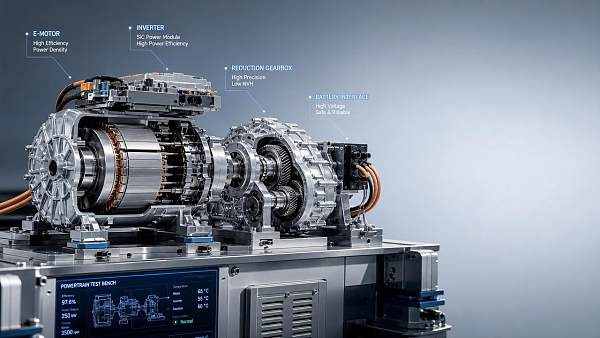
The benchmark conversation has changed. Earlier comparisons centered on peak motor power, acceleration, or nominal battery range. Today, deeper efficiency evidence matters more than headline specifications.
That shift reflects tighter margin pressure, volatile raw material costs, stricter lifecycle expectations, and broader platform electrification across passenger, commercial, off-highway, and industrial mobility segments.
In this context, ev powertrain efficiency benchmarks help connect engineering performance with system-level outcomes. They reveal where losses occur, how design choices scale, and whether savings remain durable in real operation.
Another signal is cross-sector standardization. Electronics packaging, thermal materials, software calibration, and drivetrain manufacturing quality now affect the same efficiency equation.
The market is moving from single metrics to system-level efficiency evidence
A major trend is the move from isolated component claims to end-to-end powertrain evaluation. Motor efficiency alone no longer explains field performance.
Decision quality improves when benchmarking spans inverter, motor, gearbox, software logic, thermal loop, and battery interaction. This systems view is increasingly essential across global manufacturing programs.
Key trend signals now shaping benchmark expectations
- Greater focus on real-world drive-cycle efficiency rather than laboratory peak values.
- Rising scrutiny of thermal derating under sustained load conditions.
- More attention to silicon carbide inverter performance and switching losses.
- Higher importance of software control maps in partial-load efficiency zones.
- Broader use of benchmark datasets aligned with ISO, IATF, and power electronics validation practices.
These signals show why ev powertrain efficiency benchmarks increasingly function as strategic filters. They help distinguish sustainable design advantages from narrow test-condition gains.
The benchmarks that actually matter are tied to loss pathways
Useful benchmarking starts with loss decomposition. Without understanding where energy disappears, comparisons become superficial and sometimes misleading.
Priority benchmark categories
The strongest ev powertrain efficiency benchmarks combine these categories. They measure both conversion quality and operational durability, which is where enterprise value actually appears.
Several forces are driving tighter benchmark discipline across industries
Benchmark rigor is increasing because electrification is no longer limited to one sector. It now affects fleets, industrial mobility, agriculture, infrastructure equipment, and distributed energy ecosystems.
Main drivers behind the shift
- Battery cost pressure makes every efficiency gain economically visible.
- Range expectations require better use of fixed energy capacity.
- Thermal events and warranty exposure increase the value of validated performance margins.
- Supply chain disruption encourages interchangeable, benchmarked subsystem evaluation.
- ESG and lifecycle reporting elevate energy efficiency from engineering detail to governance issue.
This is where platforms like Global Industrial Matrix create value. Cross-sector benchmarking clarifies links between semiconductors, cooling architecture, drivetrain packaging, and manufacturability.
In practice, ev powertrain efficiency benchmarks now support sourcing confidence as much as technical comparison. Data transparency helps reduce dependency on isolated vendor narratives.
The impact reaches engineering, sourcing, cost models, and sustainability planning
A weak benchmark framework often creates downstream distortion. Program teams may overestimate range, underestimate cooling needs, or misjudge total system cost.
By contrast, reliable ev powertrain efficiency benchmarks improve alignment between simulation, validation, manufacturing capability, and field performance. That reduces expensive late-stage redesign.
Operational effects across business functions
- Engineering gains clearer targets for calibration, thermal management, and component integration.
- Procurement gains stronger criteria for supplier comparison and dual-source risk reduction.
- Finance gains better visibility into energy cost, warranty exposure, and lifecycle return.
- Sustainability teams gain more credible data for reporting operational efficiency outcomes.
The broadest benefit is comparability. A benchmark framework allows teams to evaluate different architectures using consistent assumptions, not fragmented test language.
What deserves the closest attention when comparing benchmark claims
Not all benchmark statements are equally useful. Some metrics look impressive but hide narrow conditions, favorable calibration settings, or incomplete reporting boundaries.
Priority watchpoints for serious evaluation
- Check whether efficiency data reflects the full powertrain, not only one component.
- Confirm continuous performance, not only short-duration peak operation.
- Review ambient temperature, altitude, payload, and duty-cycle assumptions.
- Ask whether software updates materially change benchmark outcomes.
- Verify test repeatability and reference standards used during validation.
- Assess material and semiconductor dependencies that may affect scale production consistency.
These checks strengthen the interpretation of ev powertrain efficiency benchmarks. They also help identify whether performance advantages can survive volume manufacturing realities.
A practical judgment model can separate promising systems from risky ones
A useful response is to score benchmark evidence through a structured decision lens. This keeps teams from overweighting isolated claims or underweighting reliability risks.
This model turns ev powertrain efficiency benchmarks into actionable intelligence. It supports better tradeoff decisions across performance, sourcing resilience, and compliance exposure.
The next step is to benchmark with cross-sector context, not isolated claims
The most valuable benchmark programs now integrate automotive engineering, power electronics, thermal systems, quality standards, and industrial supply chain analysis.
That broader method reflects reality. Modern electrification performance is shaped by semiconductors, substrates, sealing, software, filtration, cooling, and manufacturing discipline together.
For organizations comparing next-generation systems, the priority is clear. Use ev powertrain efficiency benchmarks that are traceable, system-level, thermally realistic, and production-relevant.
Global Industrial Matrix supports this direction through verifiable, cross-disciplinary benchmarking. The goal is not more data alone, but better industrial judgment grounded in technical integrity.
A disciplined benchmark review can reveal hidden loss pathways, expose supplier risk, and sharpen electrification strategy. In a competitive global market, that is an operational advantage worth building now.

The Archive Newsletter
Critical industrial intelligence delivered every Tuesday. Peer-reviewed summaries of the week's most impactful logistics and market shifts.