Monday, May 22, 2024

Electric motor manufacturer checklist for buyer approval
by
Published
Views:
Choosing an electric motor manufacturer for buyer approval is not a price-comparison exercise. For most procurement teams, engineers, and quality managers, the real question is simple: can this supplier consistently deliver safe, compliant, traceable, and application-fit motors at the quality and scale your project requires? The right answer depends on more than nameplate performance. It requires checking manufacturing discipline, test capability, regulatory compliance, supply chain stability, documentation quality, and long-term service support.
This checklist is designed for buyers who need to approve or shortlist an electric motor manufacturer with confidence. It focuses on the issues that matter most in real sourcing decisions: production capability, certification validity, quality systems, engineering support, risk control, cost predictability, and fit for applications ranging from industrial equipment and HVAC systems to automotive subassemblies, smart grid technology, and future mobility programs.
What buyers should verify first before approving an electric motor manufacturer
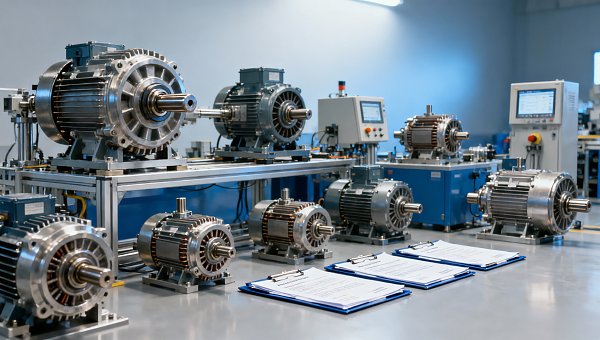
Before going deep into technical details, buyers should establish whether the manufacturer is basically approval-ready. This first screen prevents wasted audit time and helps eliminate unsuitable suppliers early.
Start with five essential approval questions:
- Does the manufacturer operate a documented and auditable quality management system?
- Can it produce motors that match your required voltage, torque, efficiency, duty cycle, enclosure, and environmental conditions?
- Does it have proven test capability for performance, reliability, insulation, thermal behavior, and safety?
- Can it provide complete traceability for materials, components, and production lots?
- Is the supplier financially and operationally stable enough for long-term supply?
If the answer to any of these is weak, unclear, or overly dependent on future promises, the supplier may not be ready for buyer approval. A capable electric motor manufacturer should be able to present evidence, not just claims.
A practical buyer approval checklist for electric motor manufacturers
The most useful approval process combines procurement, engineering, quality, and business review criteria. Below is a practical checklist that supports cross-functional evaluation.
1. Company profile and manufacturing scope
- Years in operation and ownership structure
- Main product categories: AC motors, DC motors, BLDC motors, servo motors, gear motors, traction motors, custom motors
- Core industries served: industrial automation, automotive, HVAC, pumps, agricultural machinery, robotics, consumer appliances, energy systems
- Production locations and export markets
- In-house manufacturing versus outsourced processes
This step helps buyers understand whether the manufacturer is a real producer, an assembler, or primarily a trading organization. It also reveals whether the supplier’s experience matches the intended application.
2. Quality systems and certification status
- ISO 9001 certification validity and issuing body
- IATF 16949 if motors are used in automotive or mobility applications
- ISO 14001 and ISO 45001 where environmental and safety governance matter
- UL, CE, CSA, CCC, or other market-access certifications as required
- Documented incoming inspection, in-process quality control, and final release procedures
Do not stop at certificates. Buyers should verify scope, expiration date, plant coverage, and whether the actual production site matches the certified location. A valid certificate with the wrong scope has limited approval value.
3. Technical capability and engineering fit
- Rated power, speed range, torque curve, and overload capability
- Efficiency class and energy consumption profile
- Thermal class, insulation system, and winding design
- Ingress protection rating and environmental durability
- Noise, vibration, and balancing control
- Bearing selection, shaft tolerance, housing materials, and sealing design
- Compatibility with controllers, inverters, and active components integration
This is especially important when motors are used in powertrain systems, driver assistance subsystems, automated production equipment, or smart grid technology environments. The manufacturer must show it can engineer for the actual system, not just produce a catalog item.
4. Validation and test capability
- Routine electrical and mechanical testing on every lot
- Performance validation under load
- Insulation resistance and high-potential testing
- Temperature rise and endurance testing
- Vibration, noise, and life-cycle testing
- Failure analysis and root-cause reporting capability
Test capability is often the dividing line between a low-risk manufacturer and a future quality problem. If a supplier cannot clearly explain how it validates motor performance and reliability, buyers should treat that as a major risk signal.
5. Supply chain control and component traceability
- Approved vendor list for copper wire, laminations, magnets, bearings, shafts, resins, connectors, and electronics
- Traceability by batch, lot, and date code
- Controls for counterfeit or non-conforming components
- Change management procedures for material substitution
- Business continuity plans for supply disruption
For high-performance motors, even small component variations can affect torque consistency, efficiency, thermal behavior, and service life. Traceability is not just a quality issue; it is also a warranty and liability issue.
6. Production process control
- Winding process consistency
- Rotor and stator assembly controls
- Impregnation, curing, and insulation process verification
- Dynamic balancing procedures
- Final assembly torque control and visual inspection standards
- Use of statistical process control or digital manufacturing records
Buyers should ask which critical parameters are measured and recorded during production. Strong manufacturers can identify key process variables and explain how they prevent drift before it becomes a defect.
7. Documentation and approval readiness
- Product drawings and revision control
- Specifications, datasheets, and installation instructions
- PPAP, FMEA, control plans, and process flowcharts where applicable
- Material declarations and compliance documents such as RoHS or REACH
- Inspection reports, test reports, and certificate packages
Poor documentation usually causes delays in qualification, incoming inspection, and finance approval. A manufacturer that is easy to audit is usually easier to manage after award.
8. Commercial reliability and total cost of ownership
- Quoted unit price versus tested performance and expected lifespan
- Tooling cost, NRE charges, and MOQ requirements
- Lead times, capacity commitments, and expediting options
- Warranty terms and field failure support
- Packaging, shipping protection, and logistics resilience
The lowest quoted price can create the highest operational cost if the manufacturer has unstable yields, weak field support, or inconsistent delivery performance. Buyer approval should consider total cost of ownership, not just purchase price.
How to evaluate quality, compliance, and risk beyond the sales presentation
Many manufacturers present polished capability decks, but buyer approval should rely on verifiable evidence. The most effective approach is to compare what the supplier says with what the factory can prove.
Use these practical evaluation methods:
- Request a recent audit package: quality manual, certification records, process map, and sample inspection reports.
- Review actual production evidence: lot records, calibration logs, non-conformance reports, and corrective action history.
- Inspect sample consistency: dimensional variation, electrical performance, labeling, packaging, and workmanship.
- Conduct a trial order: use it to evaluate responsiveness, on-time delivery, defect rate, and documentation accuracy.
- Check engineering responsiveness: ask technical questions and assess whether answers are specific, timely, and application-aware.
For critical applications, on-site or remote process audits are highly recommended. This matters even more when motors are intended for emissions reduction systems, electric mobility platforms, automation cells, or infrastructure projects where downtime and recall risk are expensive.
Questions procurement and engineering teams should ask during supplier assessment
A good checklist becomes more powerful when paired with the right questions. These questions help reveal whether a manufacturer is truly in control of its operation.
- Which parts of motor production are performed in-house?
- What are the top three causes of internal rejection, and how are they controlled?
- How do you validate motor performance under the customer’s real load profile?
- What happens when a critical supplier changes a material or process?
- Can you provide traceability from finished motor to winding, bearing, and magnet lots?
- What certifications apply specifically to this product family and factory?
- How do you manage engineering changes after buyer approval?
- What is your standard response time for field failures or warranty claims?
- What testing is routine, and what testing is type validation only?
- How do you support PCB fabrication compatibility, controller matching, or integrated drive requirements where applicable?
These questions are useful because they force process-level answers. Suppliers with mature systems can respond clearly. Weak suppliers often answer in general language without records, metrics, or accountability.
Red flags that should delay or block buyer approval
Not every weak point is a deal-breaker, but some red flags should trigger caution immediately.
- Certificates are expired, incomplete, or unrelated to the actual production site
- Test reports look generic or cannot be tied to real samples
- Traceability exists only on paper and not in production records
- Large dependence on outsourced critical processes with limited oversight
- No clear corrective action method for defects or customer complaints
- Engineering team cannot explain motor design trade-offs in practical terms
- Lead times, pricing, or specifications change frequently without control
- Samples pass, but documentation and packaging quality are inconsistent
These issues indicate a higher probability of delayed launches, field failures, hidden costs, or warranty disputes. For procurement and business evaluation teams, such risks often outweigh any short-term price advantage.
How to adapt the checklist by application and industry risk level
Not every electric motor purchase needs the same approval depth. The checklist should be adjusted based on application criticality, regulatory exposure, and replacement cost.
For general industrial equipment, focus on durability, efficiency, lead time stability, and maintenance support.
For automotive or mobility-related applications, place more weight on IATF discipline, traceability, validation depth, safety controls, and change management.
For smart infrastructure and grid-related systems, assess environmental reliability, uptime expectations, and service life under variable load conditions.
For integrated mechatronic systems, verify compatibility with sensors, controllers, active components, and thermal management architecture.
For cost-sensitive consumer or distribution channels, evaluate return rates, packaging robustness, labeling consistency, and after-sales support.
This risk-based approach helps buyers avoid over-auditing low-risk purchases while maintaining strict approval discipline for critical programs.
Final buyer approval view: choose the manufacturer that reduces operational risk, not just quoted cost
An electric motor manufacturer should be approved because it can reliably meet your performance, quality, compliance, and delivery requirements over time. Price matters, but it should come after basic confidence in process control, engineering capability, and supply continuity.
The most reliable buyer approval decisions come from a structured checklist that combines technical evaluation, quality verification, commercial review, and risk assessment. When buyers check certifications, test systems, traceability, process control, and documentation quality together, they make better sourcing decisions and reduce the chance of future defects, delays, and hidden lifecycle cost.
In practical terms, the best manufacturer is usually not the one with the cheapest quote. It is the one that can prove capability, support your application, align with compliance expectations, and protect long-term operational value across changing market and technology demands.

The Archive Newsletter
Critical industrial intelligence delivered every Tuesday. Peer-reviewed summaries of the week's most impactful logistics and market shifts.