Monday, May 22, 2024

High-Performance EVs: Range vs Thermal Limits
by
Published
Views:
For technical evaluation, high-performance electric vehicles are no longer judged by peak acceleration alone. Real value now depends on how long that performance can be repeated without thermal derating, voltage sag, or component stress.
This shift matters across the broader industrial landscape. Battery systems, inverters, cooling loops, software controls, and material choices now define endurance as much as raw output.
As global electrification expands, high-performance electric vehicles have become a benchmark category for system integration. Range, efficiency, and thermal resilience increasingly determine whether a platform performs well in real operating conditions.
Why high-performance electric vehicles are being evaluated differently
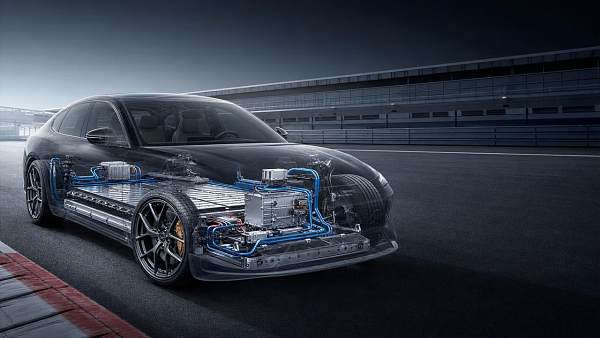
Recent testing priorities show a clear trend. Engineers now compare sustained power behavior, cooling effectiveness, and repeatability rather than relying on isolated headline figures.
That change reflects maturing EV markets. In earlier stages, impressive range claims and launch speed supported adoption. Today, technical benchmarking demands deeper evidence of stability under heat, load, and variable duty cycles.
For high-performance electric vehicles, thermal limits shape usable output. If battery temperature rises too quickly, control logic reduces power to protect cells, busbars, semiconductors, and contactors.
The result is a practical engineering trade-off. A larger battery can improve range, yet added mass raises energy demand and cooling burden. Higher output improves performance, yet it intensifies thermal stress.
This is why cross-sector platforms like GIM matter. EV benchmarking now intersects electronics packaging, thermal materials, fluid design, controls validation, and manufacturing consistency.
The strongest trend signals point to endurance, not just peak power
Several signals show where evaluation standards are moving for high-performance electric vehicles. These signals are visible in road testing, track validation, fleet duty analysis, and component qualification.
- More focus on repeated acceleration runs instead of single-run records.
- Greater scrutiny of charging heat buildup after aggressive driving cycles.
- Expanded use of inverter, motor, and battery temperature mapping.
- Higher interest in software-based torque limiting behavior.
- Closer comparison between laboratory range and real mixed-load range.
These indicators suggest a more mature market definition. The best high-performance electric vehicles are increasingly those that preserve output quality while protecting long-term system health.
What is driving the range versus thermal limits trade-off
The engineering tension behind high-performance electric vehicles comes from multiple interacting variables. Range and thermal control are linked through architecture, component efficiency, and operational strategy.
Among these factors, cooling strategy has become especially decisive. Even efficient motors and advanced cells underperform when the thermal path from source to sink is poorly optimized.
Where high-performance electric vehicles gain or lose real-world range
Nominal range often declines sharply in aggressive or sustained operation. That is not only a battery issue. It is a system-level effect involving tires, aerodynamics, current demand, and thermal management energy.
Cabin cooling, battery conditioning, and inverter temperature control all consume power. In high-performance electric vehicles, these auxiliary loads can become significant during hot weather, high speed, or repeated acceleration events.
Thermal preconditioning also changes the equation. Preparing the battery for fast charging or maximum discharge improves response, but it can reduce immediate efficiency if temperature targets are aggressive.
Another hidden factor is temperature uniformity. A pack with acceptable average temperature may still trigger limits if local hotspots appear near tabs, connectors, or dense module zones.
This is why benchmark programs should avoid single-value conclusions. High-performance electric vehicles need range analysis across ambient conditions, driving profiles, and thermal states.
The industrial impact reaches far beyond the vehicle itself
The range versus thermal limits issue affects multiple business and engineering layers. It changes sourcing decisions, validation schedules, maintenance assumptions, and platform scalability.
In electronics, higher thermal density raises demand for better substrates, interface materials, sensors, and packaging reliability. In mobility systems, drivetrain integration now depends on thermal coordination across subsystems.
Infrastructure is also affected. Charging networks must account for vehicles arriving with elevated battery temperatures, which influences charge acceptance, turnaround time, and site energy planning.
- Validation cycles become longer because thermal repeatability must be proven.
- Material selection becomes more strategic due to heat aging and insulation risk.
- Field performance data gains value because lab tests cannot cover every duty cycle.
- Benchmarking requires wider datasets spanning electronics, mechanics, and controls.
For integrated intelligence platforms, this creates a clear opportunity. Cross-domain comparison becomes essential when high-performance electric vehicles are assessed as complex industrial systems rather than isolated products.
What should be monitored most closely in technical benchmarking
A stronger evaluation framework for high-performance electric vehicles should prioritize measurable endurance indicators, not just promotional metrics. The following points deserve consistent attention.
- Power retention after repeated high-load events.
- Battery temperature spread across modules and cell groups.
- Inverter and motor derating thresholds under sustained demand.
- Energy consumed by thermal conditioning systems.
- Range loss under combined speed, grade, and ambient heat stress.
- Cooling recovery time between load cycles.
- Fast-charge acceptance immediately after performance driving.
- Long-term degradation linked to thermal exposure patterns.
These indicators create a more realistic picture of platform capability. They also support better comparison across suppliers, architectures, and future design revisions.
A practical way to judge future-ready high-performance electric vehicles
A useful judgment model should separate short-term appeal from durable engineering quality. That means pairing dynamic performance data with thermal endurance evidence and operational efficiency data.
This approach is especially important as high-performance electric vehicles expand into broader use cases. What works on a short demonstration route may fail under repeated, demanding industrial or mobility scenarios.
How to respond as the benchmark standard keeps rising
The next step is not simply collecting more data. It is structuring comparable data across batteries, semiconductors, cooling hardware, and software behaviors.
High-performance electric vehicles should be assessed with synchronized test conditions, consistent thermal logging, and clear duty-cycle definitions. Without that, conclusions about range or thermal limits remain incomplete.
GIM’s cross-sector benchmarking perspective fits this direction well. When EV performance is linked to electronics reliability, infrastructure readiness, and materials validation, decision quality improves significantly.
For any organization tracking high-performance electric vehicles, the priority is clear: compare sustained capability, not isolated claims. The platforms that win long term will be those that deliver range, repeatability, and thermal control together.
A disciplined next step is to build evaluation matrices around endurance, heat rejection, derating behavior, and real-use efficiency. That framework will reveal which architectures are truly ready for scalable deployment.

The Archive Newsletter
Critical industrial intelligence delivered every Tuesday. Peer-reviewed summaries of the week's most impactful logistics and market shifts.