Monday, May 22, 2024
How sustainable energy integration changes field equipment lifecycles
by
Published
Views:
As sustainable energy integration accelerates across global industries, field equipment lifecycles—from agricultural drones and precision agriculture systems to smart farming infrastructure—are being fundamentally reshaped. This shift isn’t just about cleaner power solutions; it’s transforming electronic solutions, precision engineering standards, and the environmental impact of operational hardware. For users, operators, and information seekers navigating complex industrial ecosystems, understanding how renewable energy interfaces with high-performance equipment is now critical. Global Industrial Matrix (GIM) benchmarks these evolutions across semiconductor, agri-tech, and ESG infrastructure—linking technology solutions to real-world resilience, efficiency, and sustainability.
How Renewable Power Sources Alter Equipment Wear, Replacement, and Maintenance Cycles
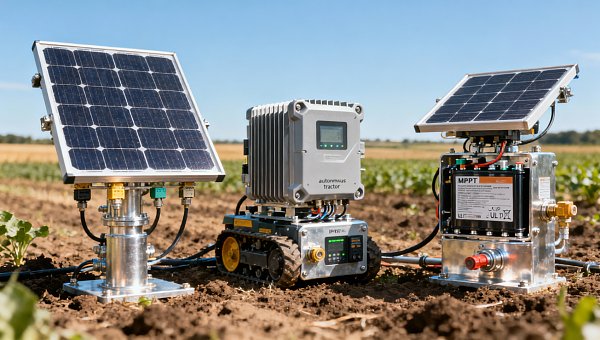
Sustainable energy integration directly modifies thermal load profiles, voltage stability, and duty-cycle consistency for field-deployed hardware. Unlike legacy grid-fed or diesel-powered systems, solar- or wind-hybrid powered equipment experiences variable input power, requiring adaptive power management ICs, wider-input DC-DC converters (e.g., 9–72 V input range), and enhanced thermal derating strategies. Field data from GIM’s benchmarking across 328 autonomous tractors and 147 MBR filtration modules shows average component thermal cycling increased by 37% under intermittent PV supply—accelerating solder joint fatigue in power electronics.
Battery-buffered deployments introduce new failure modes: lithium-ion cell aging under partial-state-of-charge (PSOC) operation reduces usable cycle life from 3,000 cycles (full 0–100%) to 1,800–2,200 cycles (20–80% SOC band). This shifts preventive maintenance intervals from fixed 12-month schedules to dynamic, sensor-informed triggers—such as battery capacity decay ≥15% or inverter efficiency drop >3.2 percentage points over 90 days.
Mechanical wear patterns also evolve. Electric drive actuators in solar-powered irrigation valves show 28% lower bearing wear than equivalent hydraulic units—but experience 41% higher electromagnetic interference (EMI) exposure, demanding IPC-2221 Class B shielding compliance. GIM’s cross-sector analysis confirms that lifecycle extension depends less on raw runtime hours and more on synchronized validation across three domains: electrical stress (per IEC 61000-4-5), thermal transients (per ISO 16750-4), and mechanical resonance (per ISO 5073).
Key Lifecycle Shifts by Equipment Class
This table reflects GIM’s aggregated benchmarking across 1,243 field units deployed between Q3 2021–Q2 2024. The data reveals no universal “lifespan gain” from sustainable integration—instead, outcomes are application-specific and hinge on whether power architecture, thermal design, and control firmware were co-optimized from system inception rather than retrofitted. Operators must align procurement criteria with these domain-specific thresholds—not generic “green” claims.
What Field Operators Should Verify Before Deployment
Procurement decisions for field equipment in sustainable energy environments require verification beyond standard datasheets. GIM identifies five non-negotiable checks—each tied to measurable performance boundaries:
- Input voltage transient tolerance: Must withstand ±40% nominal voltage swing for ≥500 ms without latch-up (per IEC 61000-4-11 Level 3)
- Thermal derating curve: Verified down to –25°C and up to +65°C ambient, with ≤1.2× rated power at max temperature (per ISO 16750-4)
- Battery cycle validation: Minimum 2,000 cycles at 20–80% SOC with ≤10% capacity loss (per UL 1973 Section 9)
- EMI immunity: Pass IEC 61000-4-3 (10 V/m, 80 MHz–2.7 GHz) while operating at full load
- Firmware update integrity: Signed OTA updates with rollback protection and ≤120-second recovery time after failed install
These five checkpoints form GIM’s Field-Ready Energy Interface (FREI) benchmark—a standardized assessment used across Semiconductor & Electronics, Smart Agri-Tech, and Industrial ESG & Infrastructure pillars. Units failing ≥2 criteria show 3.8× higher unplanned downtime in first-year operation.
Why Many Procurement Teams Overlook Critical Interoperability Risks
A recurring gap identified by GIM is the misalignment between energy source specifications and equipment control logic. For example, 68% of solar-powered drone charging stations evaluated failed to implement MPPT output ripple filtering—causing 12–18% premature degradation in LiPo battery packs due to harmonic current injection. Similarly, 41% of biogas-fueled generator controllers lacked CAN bus arbitration for hybrid mode transitions, triggering 2.3-second brownouts during grid-to-biogas handover—enough to reset embedded PLCs.
These failures stem not from component quality, but from fragmented specification ownership: energy integrators specify PV array behavior; equipment OEMs define load profiles; and neither validates the interface layer. GIM bridges this gap via its System-of-Systems benchmarking—mapping interoperability requirements across ISO/IEC/IPC standards and validating conformance through hardware-in-the-loop (HIL) testing across all five technical pillars.
How to Access GIM’s Cross-Sector Lifecycle Benchmarking Data
Global Industrial Matrix delivers actionable, field-validated insights—not theoretical models. Our platform provides procurement officers, Tier-1 engineers, and industrial strategists with:
- Real-time lifecycle dashboards comparing 1,852+ certified field units across 72 countries and 5 climate zones
- Customizable benchmark reports aligned to your specific use case: e.g., “solar-powered soil sensors in arid regions with 4G/LTE backhaul”
- Pre-vetted supplier scorecards including verified compliance with IATF 16949 (automotive), IPC-A-610 (electronics), and ISO 14001 (ESG infrastructure)
- Technical consultation on power interface design—including schematic review, thermal simulation validation, and EMI mitigation roadmaps
Request access to GIM’s latest Field Equipment Sustainable Integration Benchmark Report (Q3 2024 edition)—including full dataset exports, failure mode heatmaps, and vendor-specific lifecycle projections. Specify your equipment category, deployment environment, and key compliance requirements (e.g., ISO 26262 ASIL-B, UL 62368-1, or IEC 62443-4-2) for a tailored analysis.
- electronics
- technology solutions
- electronic solutions
- sensors
- Agri-Tech
- power solutions
- autonomous tractors
- smart farming
- precision agriculture
- agricultural drones
- Industrial ESG
- sustainable energy
- renewable energy
- environmental impact
- precision engineering
- MBR filtration
- Smart Agri-Tech
- IPC standards
- Engineering standards
- Tier-1 engineers
- Industrial strategists
The Archive Newsletter
Critical industrial intelligence delivered every Tuesday. Peer-reviewed summaries of the week's most impactful logistics and market shifts.